To get appointed personal representative in Oklahoma, petition the district court in the county where the decedent lived, attach the will (if any) and an heir list, give notice, post bond unless waived, take an oath, and receive Letters Testamentary or Letters of Administration. Once Letters issue, you can act for the estate, including signing wrongful death pleadings and settlement releases.

What the personal representative does in a wrongful death case
A personal representative is the court-appointed fiduciary who stands in for the decedent. Older statutes call this an “executor” (named in a will) or “administrator” (no will). Cornell’s overview of the personal representative explains the role’s fiduciary nature: loyalty to the estate and the beneficiaries.
Under 12 O.S. § 1053, the wrongful death action must be brought “by the personal representative of the deceased.” A surviving spouse, parent, or adult child cannot file in their own name; they recover through the representative. See our the probate steps for opening a wrongful death estate guide and the rules on which surviving relatives have standing under § 1053.
Why the appointment matters in a wrongful death case:
- Carriers will not negotiate, and courts will not accept filings, until Letters issue.
- Settlement checks are payable to the representative, not to individual family members.
- The two-year wrongful death deadline keeps running while appointment is pending. Petition early.
- The same person can serve for both the wrongful death claim and any survival action.
Who has priority to be appointed
Title 58 sets the priority order: 58 O.S. § 122 (intestate heirs) and 58 O.S. § 101 (executor named in the will). A named executor serves unless disqualified or declines. When there is no will, the court appoints from this list:
| Tier | Person entitled | Source |
|---|---|---|
| 1 | Surviving husband or wife (or competent person they request) | 58 O.S. § 122(1) |
| 2 | Children | 58 O.S. § 122(2) |
| 3 | Father or mother | 58 O.S. § 122(3) |
| 4 | Brothers or sisters | 58 O.S. § 122(4) |
| 5 | Grandchildren | 58 O.S. § 122(5) |
| 6 | Next of kin entitled to share in the estate | 58 O.S. § 122(6) |
| 7 | Creditors | 58 O.S. § 122(7) |
| 8 | Any legally competent person | 58 O.S. § 122(8) |
A higher-priority person can decline and nominate someone else. When two or more share the same tier, the court chooses based on competence, willingness, and absence of conflict. Disagreement between siblings, or between a surviving spouse and adult children from a prior marriage, is the common reason for an evidentiary hearing.



Who is disqualified from serving
Under 58 O.S. § 102 and § 126, four categories are disqualified:
- Minors (under 18).
- Persons judicially declared incompetent.
- Convicted felons, unless pardoned and civil rights restored.
- Persons the court finds unfit by reason of drunkenness, improvidence, or want of understanding or integrity. The catch-all for documented mismanagement or active substance abuse.
Out-of-state residency is not a disqualification, but a non-resident may need to designate an in-state agent for service of process and may face a higher bond.
What goes in the petition for appointment
File in the district court of the county where the decedent was domiciled at death (or, for a non-resident, where the decedent owned property). Under 58 O.S. § 23 and § 128, the petition must state:
- The decedent’s name, age, date of death, and last residence.
- Whether the decedent died testate or intestate.
- Names, ages, and addresses of all heirs at law and devisees.
- Estimated value of the estate, including the wrongful death claim itself.
- The petitioner’s relationship to the decedent and statutory priority.
- A request for Letters Testamentary or Letters of Administration.
If a will exists, the original is filed with the petition and the court sets a hearing on admission. Notice goes to all heirs and devisees; for wrongful death claims, this includes the people who will ultimately receive the recovery under 12 O.S. § 1054.
Document checklist for the appointment hearing:
- Certified death certificate (one per insurance claim, plus one for the court).
- Original will and any codicils.
- Petition with verified heir list (name, address, relationship, age).
- Notice of hearing with proof of mailing or publication.
- Renunciations from anyone with higher priority who declines.
- Proposed order appointing the petitioner.
- Bond, or motion to waive if the will or all heirs agree.
- Oath of office form.
Bond, oath, and issuance of Letters
Bond. Under 58 O.S. § 162, the representative posts a bond fixed by the court, generally equal to estimated personal property value plus probable annual rents and profits of any real property. The will can waive bond, or all adult heirs can consent. When the estate’s only significant asset is the wrongful death claim, courts often set a nominal bond and raise it before settlement.
Oath. Under 58 O.S. § 281, the representative takes a written oath to perform the duties faithfully and files it with the court clerk.
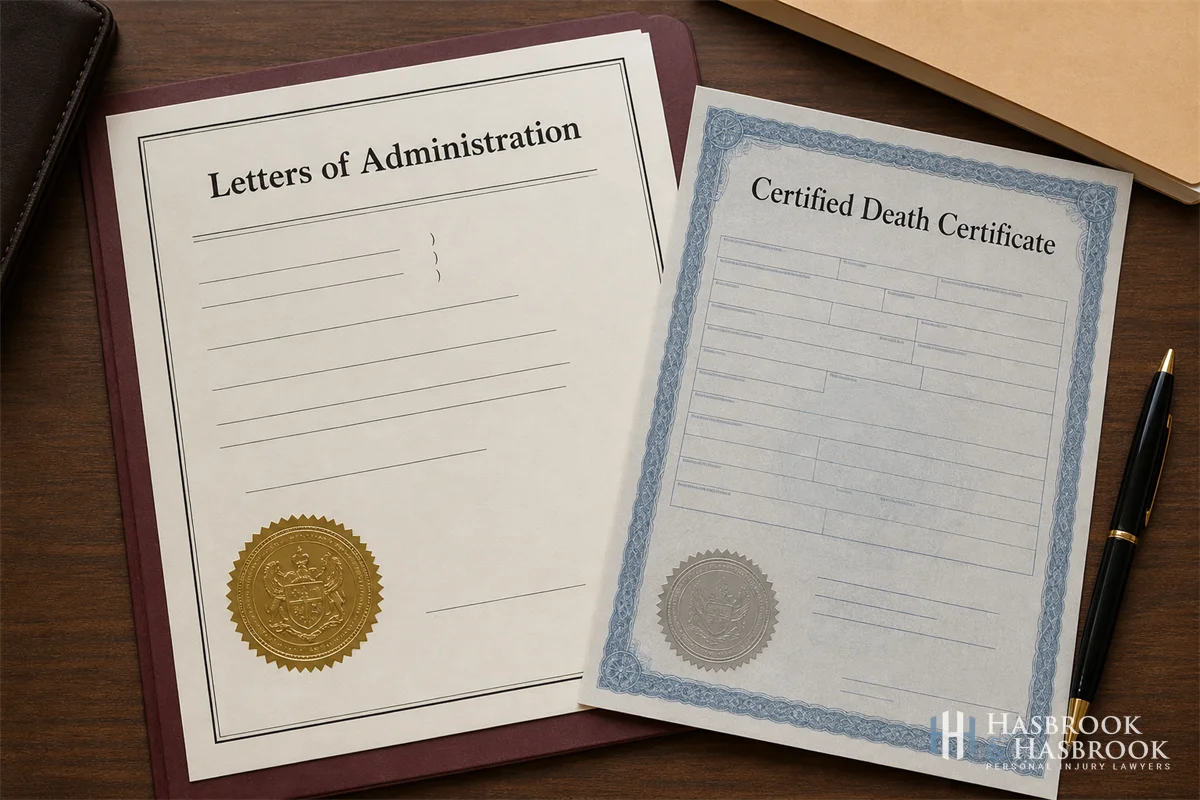
Letters. Once bond is approved and oath filed, the clerk issues Letters Testamentary (executor) or Letters of Administration (administrator). Certified copies are what the representative shows carriers, banks, and opposing counsel. Order five to ten at the outset.

Ongoing fiduciary duties
Appointment is the start of the work, not the end. The American Bar Association’s overview of the probate process outlines the framework Oklahoma applies under Title 58.
- Inventory and notice to creditors. File a verified inventory (with the wrongful death claim listed as a contingent asset), publish notice to creditors, and mail actual notice to known creditors. Late claims are barred.
- Pursuing the wrongful death claim. The representative retains counsel, signs discovery responses and settlement releases, and may dismiss. The representative is the named plaintiff; family members are statutory beneficiaries, not plaintiffs.
- Tax filings. File the decedent’s final income tax return and any required estate returns. The IRS guide for deceased taxpayer filings covers Form 1040 and Form 1041. Compensatory wrongful death proceeds are generally excluded from federal gross income; punitive damages are taxable.
- Apportionment and final accounting. Once the case settles, apply to the probate court for apportionment. The court hears the application, divides the recovery among spouse, children, and next of kin, and enters an order. For allocation, see what damages are available and survival vs. wrongful death damages. Minor beneficiaries require additional steps; their shares typically go into court-supervised guardianship accounts or structured settlements.
Special Letters and removal for cause
The deadline to file a wrongful death lawsuit is two years from the date of death under 12 O.S. § 95, with the limited discovery rule extending the start date when the cause of death was not immediately known. The clock runs while appointment is pending. An uncontested appointment usually takes three to six weeks; a contested matter can run 60 to 120 days.
When the deadline is close, courts can issue Special Letters of Administration under 58 O.S. § 213 limited to filing and prosecuting the wrongful death claim. Removal for cause is available under 58 O.S. § 232 (neglect, mismanagement, felony conviction, absconding). For cluster reading, see the Oklahoma survival action overview, preexisting conditions and wrongful death claims, and Edmond wrongful death lawyer.
How an attorney supports the process
Oklahoma does not require counsel for the probate appointment, but almost every wrongful death case involves both a probate attorney for the estate and a personal injury attorney for the underlying claim. They coordinate the appointment, the wrongful death suit, and the apportionment hearing.
At our firm, we work on contingency on the wrongful death claim; the family pays no attorney fees unless the case results in a recovery. We coordinate with probate counsel to open the estate, draft the petition for appointment, and prepare the apportionment application after settlement or verdict. Call us at (405) 605-2426 or visit our metro-area wrongful death practice page covering apportionment and settlement, or our Tulsa wrongful death lawyer page in eastern Oklahoma. Hasbrook & Hasbrook Personal Injury Lawyers is a two-generation Oklahoma City firm.


Frequently asked questions
How long does it take to get appointed personal representative in Oklahoma?
Three to six weeks in an uncontested matter. Sixty to 120 days when contested. File early; the wrongful death deadline keeps running.
Do I need to live in Oklahoma to serve as personal representative?
No. A non-resident may need to designate an in-state agent for service of process and may face a higher bond, but residency itself is not a bar.
What is the difference between an executor and an administrator?
An executor is named in the will and receives Letters Testamentary. An administrator is appointed when there is no will (or the named executor cannot serve) and receives Letters of Administration. Both have the same powers and duties under Title 58.
Can more than one person serve as personal representative at the same time?
Yes. Co-representatives both take the oath, are both on the bond, and both sign filings and settlement releases. Common when adult children share priority and want shared responsibility.
What happens if the personal representative is also a beneficiary of the recovery?
That is the typical situation, not a conflict. The fiduciary duty runs to all beneficiaries; the representative cannot favor their own share at apportionment. When the family is divided, courts sometimes appoint a neutral third party.
Does the personal representative have to post a cash bond?
Not always. The will can waive bond, all adult heirs can consent to waiver, or the court can set a nominal bond when the estate has no liquid assets. If a settlement comes in, the court usually requires a supplemental bond before funds are deposited.