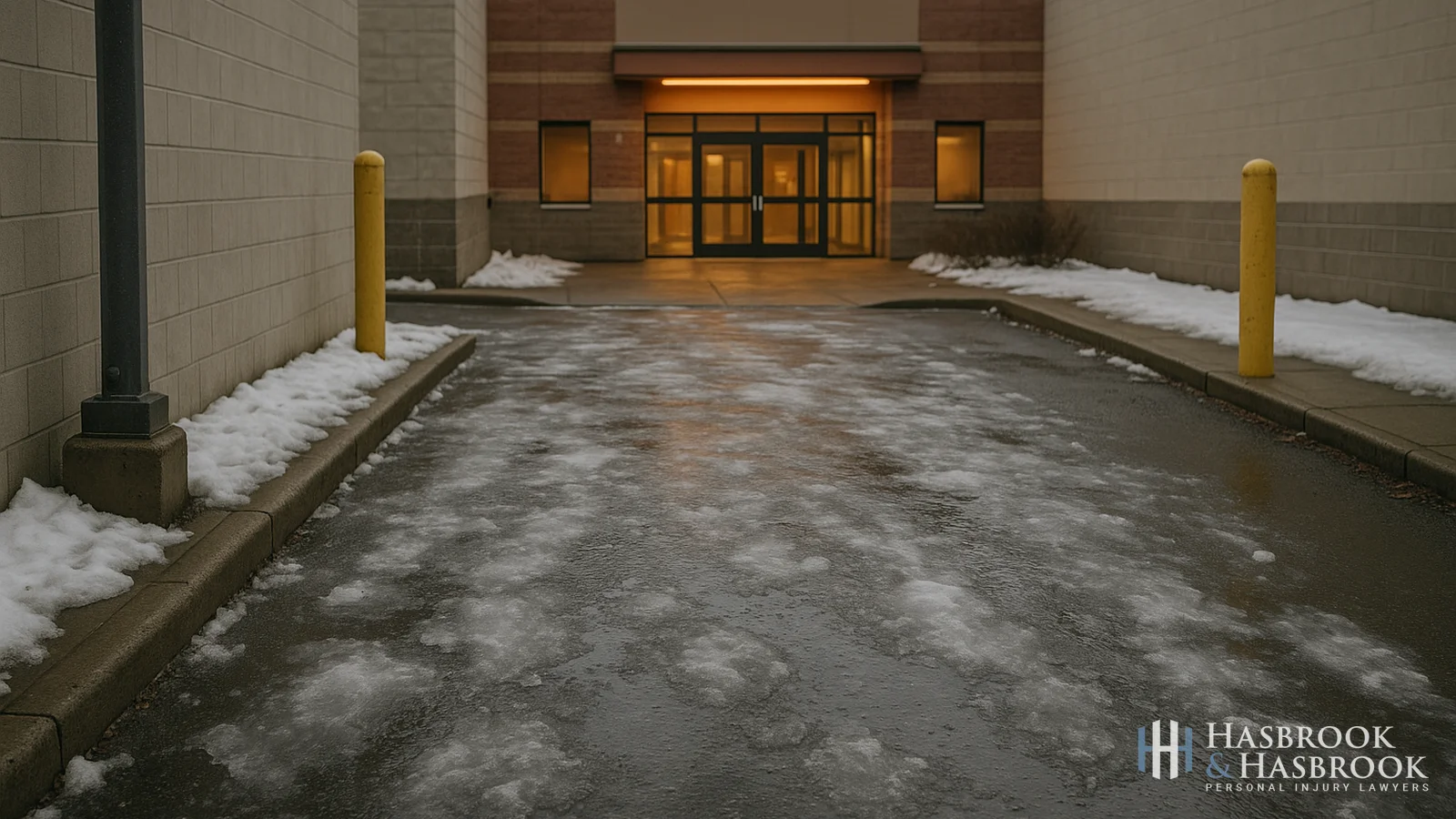
Oklahoma winters bring ice storms that turn parking lot entrances, building approaches, and sidewalks into hazards overnight. When you slip and fall on ice or snow at someone else’s property, your right to compensation is not automatic. Oklahoma’s premises liability law includes a natural accumulation defense that property owners and their insurers regularly invoke to resist claims. Understanding when that defense holds and when it does not is the central question in every ice and snow slip-and-fall case.
Oklahoma’s natural accumulation defense: what it means and what it doesn’t
Under Oklahoma common law, property owners generally are not held liable for falls caused by snow and ice that accumulates directly from weather events. No property owner can be expected to clear every surface the moment a storm ends.
But this defense is far narrower than insurance adjusters often suggest. It does not protect a property owner who:
- Created or worsened the ice accumulation through the design or condition of the property
- Directed drainage, roof runoff, or snowmelt onto walkways used by invitees
- Had actual notice of a hazardous condition and failed to address it within a reasonable time after the storm
- Allowed ice to thaw and refreeze, creating a second distinct hazard separate from the original weather event
“Natural accumulation” describes ice or snow that falls from the sky and stays where it lands. Any owner action that redirects, compresses, or refreezes that moisture takes the claim out of natural accumulation territory.



Premises liability and property owner responsibilities
Oklahoma premises liability law places visitors in one of three categories: invitees, licensees, or trespassers. The category determines what duty the property owner owes.
Business invitees, meaning people who enter a property for a commercial purpose such as shoppers, restaurant customers, or office visitors, receive the highest protection. A property owner must inspect the premises, discover dangerous conditions, and either fix them or give adequate warning. When a business opens after an ice storm, it takes on an obligation to make the approach reasonably safe for customers.
Licensees, such as social guests at a private home, receive a lower duty. The owner must warn of known hazards but is not required to actively inspect for new ones.
Oklahoma courts have addressed the open and obvious doctrine in ice and snow cases. Even when ice is visible, a property owner cannot rely on it as an automatic defense if the invitee had no practical alternative to crossing the hazardous surface to reach the business entrance.
Property owners have a duty to remove snow and ice
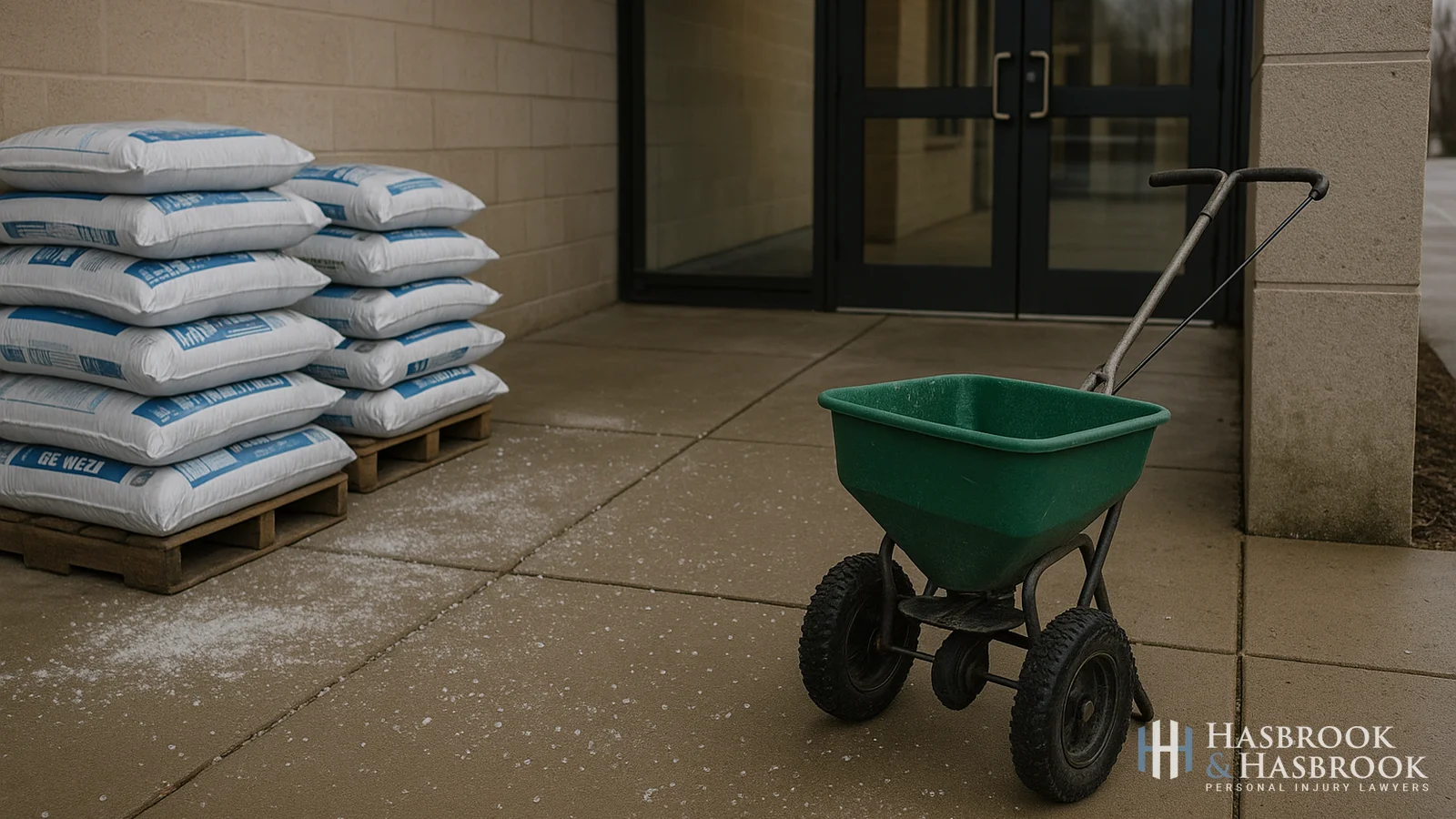
The duty to address ice and snow on commercial property arises once a reasonable time has passed and conditions allow safe remediation. Courts evaluate factors such as:
- How long the ice or snow had been on the surface before the fall
- Whether the storm had fully ended or was still producing precipitation
- Whether temperature and conditions allowed safe clearance
- Whether the owner had a maintenance schedule or snow removal contract
- Prior complaints or similar incidents at the same location
A fall two hours after a storm ends presents a different factual picture than one two days later when the owner had ample opportunity to act.
What constitutes negligence in winter conditions?
To prevail on an ice or snow slip-and-fall claim in Oklahoma, you must establish four elements of negligence:
- Duty: The property owner owed you a duty of reasonable care based on your status as an invitee or licensee.
- Breach: The owner failed to meet that duty by creating an unsafe condition, failing to remediate a known hazard, or not providing adequate warning.
- Causation: That breach directly caused your fall and your injuries.
- Damages: You suffered actual harm, including physical injury, medical costs, or lost income.
Oklahoma uses a modified comparative fault system under 23 O.S. § 13. Your recovery is reduced by your percentage of fault, and you lose the right to recover if your fault exceeds 50 percent. Insurance adjusters defending ice and snow cases routinely argue that the injured person assumed the risk by walking on a visible icy surface. Documentation of what the property owner knew and how long the hazard existed is the most effective counter to that argument. For more, see our page on Oklahoma’s negligence allocation rules.


Documenting the scene after a fall in Oklahoma
Evidence in ice and snow cases disappears fast. Temperatures rise, surfaces melt, and the property owner has no obligation to preserve the hazard. These steps protect your claim before that evidence is gone.
At the scene:
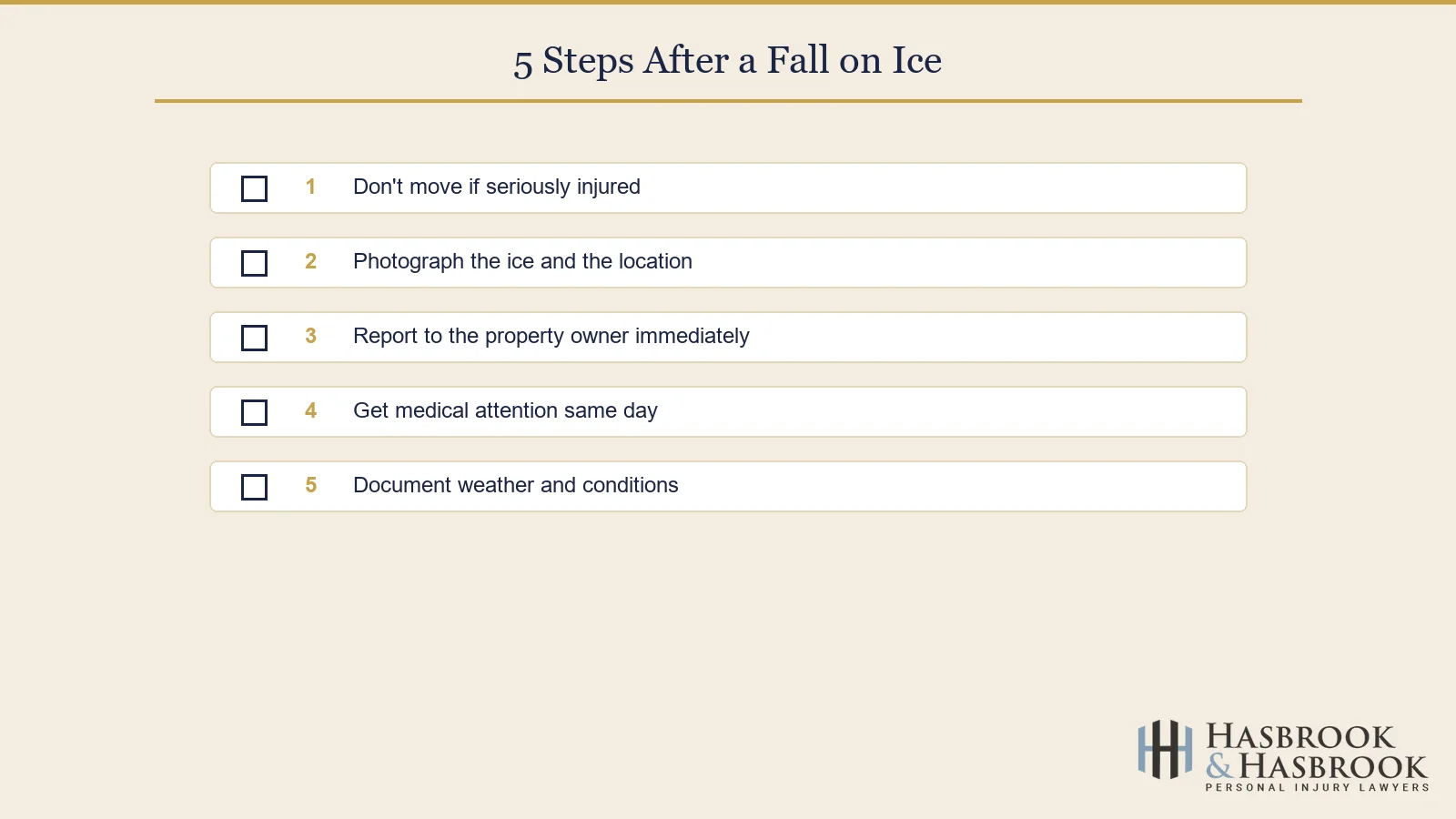
- Photograph the surface where you fell, including ice, drainage grates, roof edges, or downspouts nearby
- Capture the timestamp in each photo
- Photograph your footwear and clothing before changing
- Collect names and contact information from witnesses
- Report the fall to property management or store staff and request a written incident report
After you leave:
- Seek medical attention the same day, even when injuries feel minor
- Request a National Weather Service report for the date and time of your fall to establish when the storm ended
- Write a detailed account of what happened while it is fresh
- Check whether the property has a prior history of similar incidents
Our guide on documenting injuries for a personal injury claim covers the full process, and the step-by-step guide after a slip-and-fall accident walks through the process from scene to claim.
The role of insurance in slip-and-fall claims
Most commercial properties carry general liability insurance that covers slip-and-fall incidents. The claim runs through that policy, and the insurer handles the defense.
Carriers handling ice and snow claims lead with the natural accumulation argument because it is legally recognized in Oklahoma and hard to overcome without solid evidence. Common adjuster tactics include:
- Requesting a recorded statement before you have legal counsel, looking for admissions about what you saw before the fall
- Disputing injury severity by pointing to any gap between the fall date and your first medical visit
- Arguing comparative fault based on your footwear or whether you chose to walk on a surface you could see was icy
- Making a low early settlement offer before the full scope of your injuries is known
You are not required to accept any offer the insurance company makes. Our overview of negotiating with insurance adjusters explains how early offers compare to fully developed case values. The Oklahoma Insurance Department at oid.ok.gov provides consumer resources on insurer obligations under state law.
Common premises liability accident scenarios in winter
Ice and snow fall claims arise across different property types. The legal analysis shifts based on the owner’s relationship to the injured person.
Parking lots: Commercial lots are high-risk because owners often delegate maintenance to snow removal contractors. If the contractor treated the surface inadequately, liability may reach both the contractor and the property owner.
Retail stores and restaurants: Customers entering through an icy entrance are the classic business invitee scenario. Courts examine whether the business had staff and equipment to address the hazard and whether management had prior notice. Our attorneys have handled slip-and-fall claims at Walmart in Oklahoma City and similar retail environments where notice and response time were central issues.
Apartment complexes: Tenants and their guests have a right to reasonably safe common areas. Landlords who fail to address known ice accumulations on entry steps, parking areas, or shared walkways may face premises liability exposure despite a natural accumulation argument.
Government property: Claims against government entities fall under the Oklahoma Governmental Tort Claims Act, with different procedures and shorter notice deadlines. Our page on Oklahoma City governmental tort claims covers those requirements.

What compensation can you recover?
A successful ice and snow slip-and-fall claim in Oklahoma may include recovery for:
- Medical expenses, including emergency care, surgery, physical therapy, and projected future treatment
- Lost wages during recovery and reduced earning capacity if injuries affect your ability to work long-term
- Pain and suffering, including physical pain and emotional distress
- Out-of-pocket costs directly related to the injury
Oklahoma’s noneconomic damages framework under 23 O.S. § 61.3, effective September 2025, sets a cap on certain noneconomic damages that has not yet been reviewed by the Oklahoma Supreme Court, so its enforceability remains an open question. For a breakdown of damages and how case values are assessed, see our pages on types of recoverable damages in slip-and-fall cases and how much a slip-and-fall case is worth in Oklahoma.
How to handle legal matters after a slip-and-fall incident
Oklahoma’s statute of limitations for personal injury claims is two years from the date of injury under 12 O.S. § 95. Missing that deadline ends your right to recover. Claims against government entities have shorter notice requirements. See our blog post on the Oklahoma statute of limitations for personal injury for details on the exceptions.
Steps to take after an ice or snow slip-and-fall:
- Get medical treatment and follow your care plan without gaps
- Preserve all documentation: photographs, incident reports, medical records, and receipts
- Avoid posting about the fall or your injuries on social media
- Do not give a recorded statement to the property owner’s insurance company without speaking to an attorney first
- Contact a premises liability attorney promptly, before weather changes destroy the physical evidence
Frequently asked questions: ice and snow slip-and-fall claims in Oklahoma
Is a property owner always responsible when I slip on ice in Oklahoma?
No. Oklahoma’s natural accumulation defense protects property owners from liability for falls on ice or snow that accumulated directly from weather. It does not apply when the owner created or worsened the condition, when ice resulted from artificial drainage or roof runoff, or when the owner had sufficient time to remediate and failed to act. Whether the defense holds depends on the specific facts of each case.
How long do I have to file a slip-and-fall lawsuit in Oklahoma?
Two years from the date of the fall under 12 O.S. § 95. Claims against government entities have a shorter notice window. Missing the deadline ends your right to recover. Our page on how long after a slip-and-fall you can sue covers deadline details for different defendant types.
What if the property owner says the fall was my fault?
Oklahoma’s modified comparative fault rule under 23 O.S. § 13 reduces your recovery by your percentage of fault but does not eliminate it unless your fault exceeds 50 percent. Partial recovery may still be available. Our page on valid defenses in slip-and-fall cases covers how comparative fault arguments are raised and challenged in Oklahoma.
What compensation can I receive from an ice and snow fall claim?
Recoverable damages include medical expenses, lost wages, pain and suffering, and out-of-pocket costs. The specific recovery depends on injury severity, your ability to work, and how clearly negligence can be established. Our FAQ on maximizing slip-and-fall case value details the factors that influence recovery amounts in Oklahoma.
Do I need a lawyer for an ice and snow slip-and-fall claim?
Most ice and snow claims are actively defended using the natural accumulation argument. Overcoming it requires weather records, maintenance logs, prior complaint history, and knowledge of Oklahoma’s invitee duty standards. An attorney experienced in Oklahoma premises liability knows how to gather and preserve that evidence before conditions change. Our page on why slip-and-fall cases can be difficult to win explains the specific challenges these claims present.

Talk to an Oklahoma City slip-and-fall attorney
our oklahoma city personal injury law office represent Oklahomans injured in ice and snow falls at businesses, parking lots, and residential properties throughout Oklahoma City and the surrounding metro area. If you were hurt on someone else’s property this winter, our injury law team for a free consultation to discuss what your claim may be worth.