Yes, but only through proper legal channels. Oklahoma insurance companies can request your cell phone records after a crash, but they generally need your consent or a valid subpoena under 12 O.S. § 2004.1 to compel a carrier to produce them. You can refuse an informal request, and an attorney should review any subpoena you receive.
If your insurer has already asked for your phone records, or you are still deciding whether to call your insurance company or an attorney first, do not sign a broad release or hand over records on your own. Have the request reviewed first, since consent forms and subpoenas both have limits on what they can actually reach.



Why Do Insurance Companies Want Your Phone Records After a Crash?
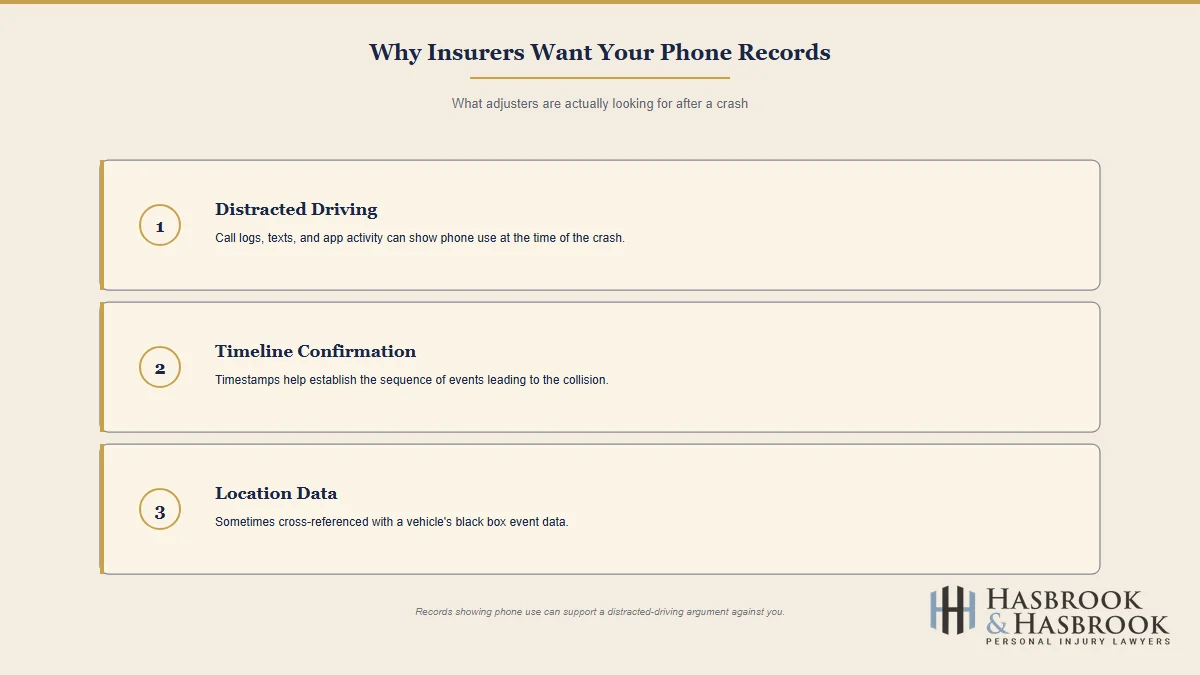
Insurers investigating a claim look at phone records for a few specific reasons:
- Distracted driving: Call logs, texts, and app activity can show whether you were using your phone when the crash happened.
- Timeline confirmation: Timestamps help establish the sequence of events leading up to the collision.
- Location data: Some records include location information, which adjusters sometimes cross-reference with a vehicle’s black box event data to build a fuller picture of the crash.
Distracted driving is common enough that NHTSA’s research on distracted-driving crashes now shapes how insurers approach these investigations nationwide, not just in Oklahoma.
How Insurers Can Legally Obtain Your Records
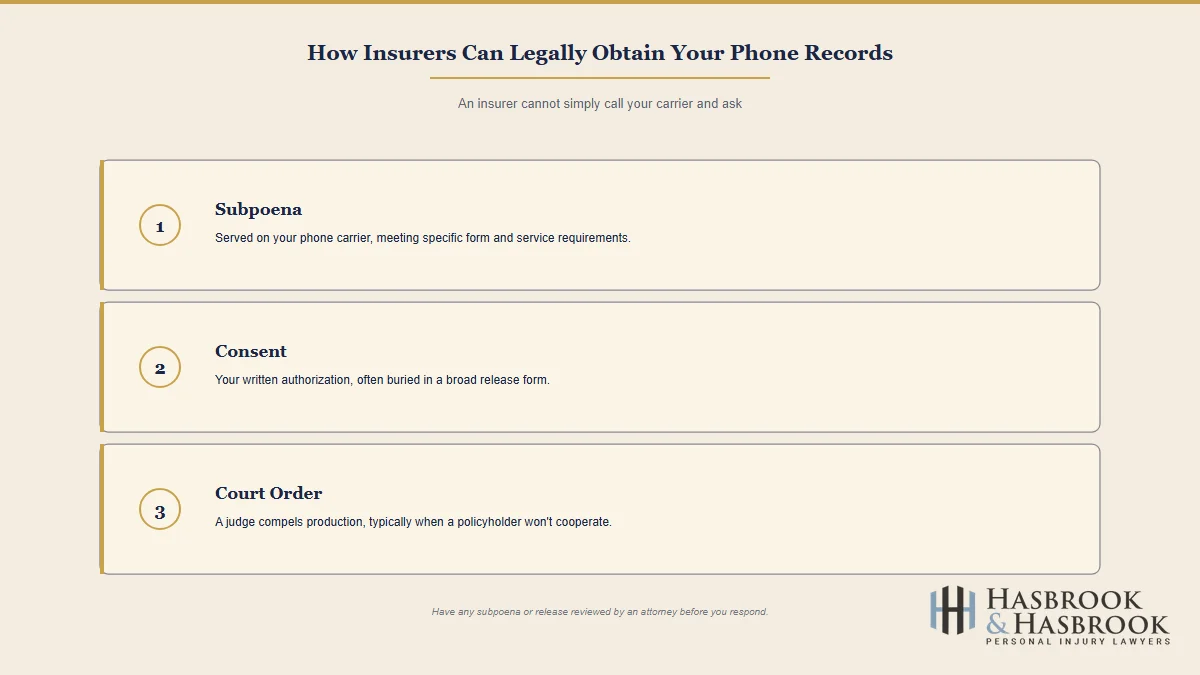
An insurance company cannot simply call your cell phone carrier and ask for your records. It generally has to use one of three routes:
- Subpoena: A subpoena served on your carrier, meeting the requirements described above.
- Consent: Your written authorization, often buried in a broad release form.
- Court order: A judge’s order compelling production, typically sought when a policyholder will not cooperate.
Phone carriers are also bound by the federal Stored Communications Act, which limits when they can hand over customer records even after a subpoena arrives.

Your Privacy Rights and What You Have to Cooperate With
Oklahoma’s Security of Communications Act generally prohibits your carrier from disclosing your communications without your consent or another narrow exception recognized under 13 O.S. § 176.4, such as a law enforcement request made with proper authority. That protection exists alongside your obligations as a policyholder:
- Most policies include a cooperation clause requiring you to assist with the investigation. Refusing to cooperate at all can risk a denial of your claim, but cooperation does not mean signing away broad access to your records.
- You can push back if a request seems overly broad or unrelated to the crash, and you are not required to sit for a recorded interview with the claims adjuster just because a records request is pending.
- If you believe an insurer is misusing your information, the Oklahoma Insurance Department handles consumer complaints against carriers licensed in the state.
What Should I Do If I Receive a Subpoena for My Cell Phone Records?
Contact an attorney before you respond. A subpoena has to meet specific form and service requirements to be valid, and an attorney can review whether it was properly issued, object to it, or move to limit what it actually covers. Do not assume a subpoena is automatically enforceable just because you received one.
Can My Phone Records Be Used Against Me in My Claim?
Potentially. Texting while driving is illegal in Oklahoma under 47 O.S. § 11-901d, so records showing phone use at the time of the crash can support an argument that you were distracted. That does not automatically end your claim: under Oklahoma’s comparative negligence law, 23 O.S. § 13 only bars recovery when your share of fault exceeds 50 percent, and 23 O.S. § 14 reduces your recovery proportionally rather than eliminating it. If an insurer is using phone records to shift blame or is otherwise stonewalling your claim, the team at Hasbrook & Hasbrook can review what the records actually show and push back on the insurer’s characterization of the crash.