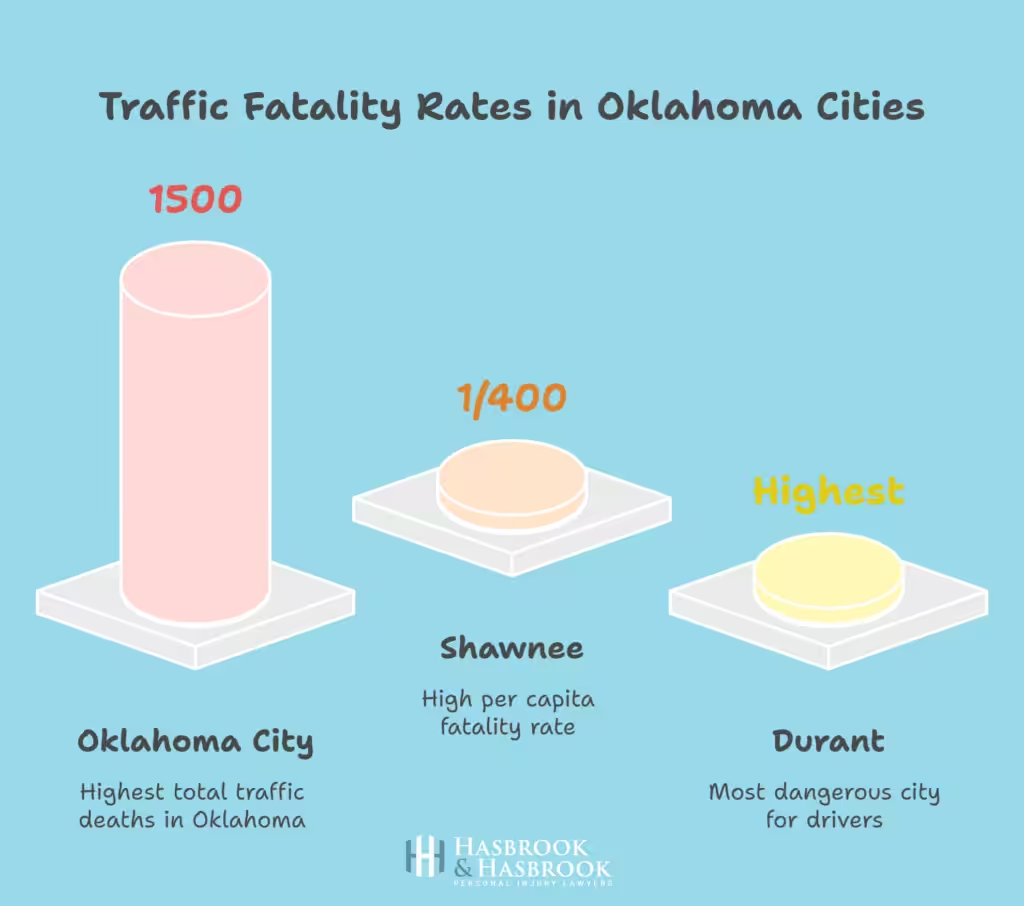
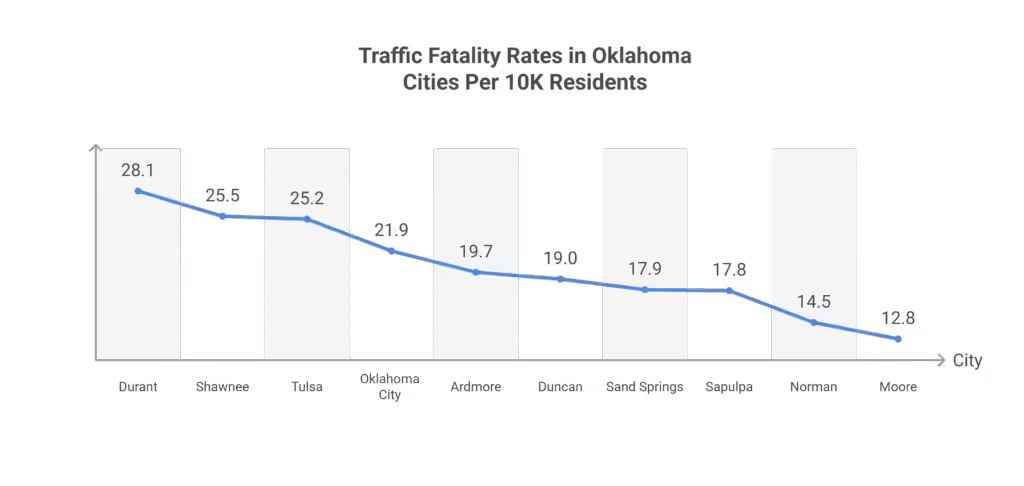
Durant is the most dangerous city to drive in Oklahoma, with 28.1 traffic deaths per 10,000 residents over a five-year span, the highest fatality rate of any Oklahoma city with at least 20,000 people. Shawnee and Tulsa follow closely behind, while Oklahoma City records the most total traffic deaths of any city in the state.
The 10 Most Dangerous Cities for Drivers in Oklahoma
- Durant has the highest traffic fatality rate in Oklahoma, at 28.1 deaths per 10,000 residents.
- Oklahoma City has the most total traffic deaths of any city in the state: 1,537 over five years.
- In Shawnee, roughly 1 in 400 residents died in a traffic crash over the past five years, one of the highest per-capita rates in Oklahoma.
Traffic crashes cost the United States an estimated $1.85 trillion a year, according to the national research group TRIP – $460 billion in direct economic losses and roughly $1.4 trillion more in the broader toll crashes take on quality of life. Oklahoma has its own version of that problem, and it isn’t spread evenly across the state.
Hasbrook & Hasbrook Personal Injury Lawyers reviewed five years of fatal crash and pedestrian death data across 27 Oklahoma cities with at least 20,000 residents. We added up total fatalities for each city, then weighed that number against the most recent population estimate to calculate a fatality rate per 10,000 residents. Ranking cities by that rate, rather than by raw death totals, surfaces smaller cities that a simple body count would hide – places where the odds of a fatal crash are actually higher than in Oklahoma’s biggest metro areas.
| Rank | City | Population | Fatalities (5 Years) | Fatalities per 10,000 |
|---|---|---|---|---|
| 1 | Durant | 20,296 | 57 | 28.1 |
| 2 | Shawnee | 31,803 | 81 | 25.5 |
| 3 | Tulsa | 411,894 | 1,039 | 25.2 |
| 4 | Oklahoma City | 702,767 | 1,537 | 21.9 |
| 5 | Ardmore | 24,847 | 49 | 19.7 |
| 6 | Duncan | 23,170 | 44 | 19.0 |
| 7 | Sand Springs | 20,075 | 36 | 17.9 |
| 8 | Sapulpa | 22,981 | 41 | 17.8 |
| 9 | Norman | 130,046 | 189 | 14.5 |
| 10 | Moore | 63,470 | 81 | 12.8 |
1. Durant – 28.1 Deaths per 10,000 Residents
Durant has the highest traffic fatality rate in Oklahoma: 28.1 deaths for every 10,000 residents over five years. That works out to nearly 3 in every 1,000 people in the city dying in a traffic-related incident over that span. With a population of just over 20,000, Durant’s 57 total deaths point to a serious, ongoing safety problem for a city its size.
2. Shawnee – 25.5 Deaths per 10,000 Residents
Shawnee ranks second, with a fatality rate of 25.5 per 10,000 residents – nearly as high as Durant’s. Our Shawnee-area clients live in a city that recorded 81 deaths over five years despite a population under 32,000, showing that a mid-sized city can carry a fatal-crash burden close to that of the state’s most dangerous small city.
3. Tulsa – 25.2 Deaths per 10,000 Residents
Tulsa is the largest city on this list and the third-most dangerous for drivers, with a fatality rate of 25.2 per 10,000 residents. Because Tulsa’s population tops 411,000, that rate translated into 1,039 total deaths over five years – by far the highest death toll of any city besides Oklahoma City itself. Our Tulsa office’s crash-injury team sees firsthand how a fast-growing metro area strains road capacity built for a smaller city.
4. Oklahoma City – 21.9 Deaths per 10,000 Residents
Oklahoma City has the most total traffic deaths in the state: 1,537 over five years, roughly 1 in every 450 residents. Its fatality rate of 21.9 per 10,000 is lower than Tulsa’s, Shawnee’s, or Durant’s simply because the city’s population is so much larger, but the sheer number of lives lost keeps it near the top of this list. See the fuller year-by-year OKC crash breakdown for more detail on how that total adds up.
5. Ardmore – 19.7 Deaths per 10,000 Residents
Ardmore lands in fifth place with a fatality rate of 19.7 per 10,000 residents – 49 total deaths in a city of about 24,800 people. The Ardmore cases our office takes on often involve that same pattern: a concentration of risk in a smaller population base that repeats throughout the back half of this list.
6. Duncan – 19.0 Deaths per 10,000 Residents
Duncan recorded 44 traffic deaths over five years and a fatality rate of 19.0 per 10,000 residents, putting it just behind Ardmore despite having roughly 1,700 fewer people. The two cities’ numbers are close enough to suggest similar underlying risk factors.
7. Sand Springs – 17.9 Deaths per 10,000 Residents
Sand Springs takes seventh place with 36 total deaths and a rate of 17.9 per 10,000 – about 1 in every 560 residents killed in a crash over five years.
8. Sapulpa – 17.8 Deaths per 10,000 Residents
Sapulpa follows closely with 41 deaths and a population just under 23,000, giving it a fatality rate of 17.8 per 10,000 – nearly identical to Sand Springs, another sign that similar-sized Oklahoma cities tend to share similar risk.
9. Norman – 14.5 Deaths per 10,000 Residents
Norman’s fatality rate of 14.5 per 10,000 is lower than the cities above it, but its 189 total deaths are the third-highest count in the state, behind only Oklahoma City and Tulsa. A population of more than 130,000 keeps the rate down even as the death toll stays significant. Our Norman injury practice handles claims arising from that same steady volume of serious crashes.
10. Moore – 12.8 Deaths per 10,000 Residents
Moore rounds out the top ten with a fatality rate of 12.8 per 10,000 residents – 81 deaths, the same total as Shawnee, spread across a population nearly twice as large. It’s the lowest rate on this list, but still a meaningful number of preventable deaths.
Clayton Hasbrook, who has practiced Oklahoma personal injury law since 2008, sees a pattern in these numbers: “Smaller cities are showing some of the highest fatal crash rates in Oklahoma. It’s not just a big-city issue. In fact, people in smaller communities may be facing even greater risks on the road. These numbers highlight the need for targeted safety improvements across cities of all sizes.”



Why Smaller Cities Are Turning Up With Oklahoma’s Highest Fatality Rates
A city’s fatality rate isn’t just a function of how many people live there – it reflects the roads those people actually drive. Durant, Shawnee, Ardmore, Duncan, Sand Springs, and Sapulpa share a few things in common that Oklahoma’s biggest metro areas don’t: more driving happens on two-lane highways with higher speed limits and less lighting, there are fewer traffic signals and crosswalks to slow things down, and the nearest trauma center can be a much longer drive away when minutes matter. None of that shows up in a simple population count, which is exactly why ranking cities by raw fatality totals – the way Oklahoma City and Tulsa usually top these lists – can miss where the risk is actually highest.
What’s Behind Oklahoma’s Fatal Crash Numbers
The specific facts behind any one of these deaths vary, but a handful of causes show up again and again in the fatal crashes our office reviews across Oklahoma:
- Speeding, especially on rural highways where higher speed limits meet sharper curves and less forgiving shoulders
- Distracted driving, including composing, sending, or reading a text message while a vehicle is in motion, which Oklahoma law makes illegal
- Impaired driving, whether from alcohol or another substance
- Road design and maintenance gaps – missing signage, worn lane markings, or an intersection that was never built for the traffic it now carries
The National Highway Traffic Safety Administration studies all of these factors at a national level, and Oklahoma’s numbers largely track the national pattern: a small number of preventable driver behaviors account for most of the fatal crashes on our roads.


Your Legal Rights After a Crash in One of These Cities
If you were hurt in a crash in Durant, Shawnee, Tulsa, Oklahoma City, or any other Oklahoma city, you generally have two years from the date of the crash to file a personal injury lawsuit under 12 O.S. § 95, though a handful of exceptions can shorten or extend that window depending on the facts.
Oklahoma also follows a comparative negligence rule under 23 O.S. § 13: if you were partly at fault for the crash, you can still recover as long as your share of fault doesn’t outweigh the combined fault of everyone else responsible. Your own percentage of fault reduces the award – it doesn’t automatically wipe it out.
If a city, county, or state road authority may share responsibility – for example, a poorly maintained intersection or a missing guardrail – Oklahoma’s Governmental Tort Claims Act requires written notice within one year of the crash under 51 O.S. § 156, a much shorter window than the ordinary deadline that applies to a claim against another driver.
When a crash proves fatal, Oklahoma law lets the personal representative of the estate bring a wrongful death claim against the at-fault party, generally within two years of the date of death. That claim can recover the family’s medical and funeral expenses, lost financial support, and the loss of the spouse’s and children’s companionship, among other categories of loss – separate from any claim the injured person could have brought personally had they survived. See what Oklahoma law gives a family after a loss like this for more on how that process works.
Frequently Asked Questions About Oklahoma’s Most Dangerous Cities for Drivers
What is the most dangerous city to drive in Oklahoma?
Durant, based on a five-year review of fatal crash and pedestrian death data. Durant’s rate of 28.1 deaths per 10,000 residents is the highest of any Oklahoma city with at least 20,000 people, narrowly ahead of Shawnee and Tulsa.
Which Oklahoma city has the most total traffic deaths?
Oklahoma City, with 1,537 traffic deaths over five years. Its large population keeps its per-capita fatality rate lower than smaller cities like Durant and Shawnee, but the total number of lives lost is the highest in the state.
How long do I have to file a claim after a car accident in Oklahoma?
Generally two years from the date of the crash for a personal injury claim, under 12 O.S. § 95. If a city, county, or state agency may share fault, a separate and much shorter one-year notice deadline applies instead, so it’s worth talking to an attorney early.
What if my family lost someone in a fatal crash in one of these cities?
Oklahoma law allows the personal representative of the estate – or the surviving spouse or next of kin if none has been appointed yet – to bring a wrongful death claim under 12 O.S. § 1053, generally counting from the date of death rather than the date of the crash. That claim is separate from, and in addition to, any injury claim the person could have brought had they survived.

Contact Hasbrook & Hasbrook
Some cities carry a higher risk behind the wheel than others, but a serious crash can happen anywhere in Oklahoma. If you or someone you love was hurt or killed in a traffic crash in Durant, Shawnee, Tulsa, Oklahoma City, or anywhere else in the state, talk to our office about your crash or call (405) 605-2426 for a free consultation. We handle every crash case on contingency, so there’s nothing owed up front and nothing owed at all unless we recover for you.