After an Oklahoma car accident, the at-fault driver’s insurer typically pays for the other side’s damage and injuries, while a collision insurance claim runs through your own policy for vehicle repairs regardless of fault. The insurer assigns an adjuster, investigates the crash, and calculates your payout from police reports, repair estimates, and medical records before it makes a settlement offer.

A car accident claim sounds simple until you’re the one filing it. Two vehicles, one police report, and suddenly you’re juggling calls from your own insurer, a claims adjuster for the other driver, and a body shop asking about your deductible. Behind the scenes, that company is running a process with its own steps, its own math, and often its own incentive to pay you as little as possible.
This page walks through what actually happens after you report a crash in Oklahoma: which policy pays for what, how adjusters investigate and value a claim, and the tactics companies lean on when a payout looks too high. None of it is secret. Insurers follow a fairly predictable playbook, and knowing the steps ahead of time makes it much harder for an adjuster to catch you off guard. Where an insurer stalls or lowballs a claim we’re handling, Hasbrook & Hasbrook steps in to push it back on track.
The Role of Insurance After an Oklahoma Car Accident
Car insurance exists to cover the financial fallout of a crash: vehicle repairs, medical bills, lost income, and the other costs that pile up once the adrenaline wears off. Oklahoma requires every driver to carry liability coverage under state law, and most drivers carry more than that minimum through their own auto insurance policy.
Once a wreck happens, filing a claim is the first real step toward getting those costs paid. Skip it, or wait too long, and a body shop bill, a rental car invoice, and a stack of medical statements can land squarely on you instead of the insurance company.



Types of Auto Insurance Coverage That Apply to Your Claim

Not every policy pays for the same things, and knowing the difference matters before you ever pick up the phone to report a crash.
Liability-Only Coverage
This is the minimum protection Oklahoma law allows. It covers the other driver’s vehicle damage and injuries when you’re at fault, but it pays nothing toward your own car or your own medical bills. If you carry liability-only and cause a wreck, repairing your own vehicle comes out of your pocket unless another coverage applies.
Collision Coverage
Collision coverage pays to repair or replace your car after it hits another vehicle or object, regardless of who caused the crash. This is the coverage most people mean when they mention a collision insurance claim. It applies whether you rear-ended someone or slid into a guardrail, and it comes with a deductible you pay before the insurer covers the rest.
Comprehensive Coverage
Comprehensive coverage handles damage that has nothing to do with a collision: hail, theft, vandalism, a deer in the road. If a hailstorm hits your car in a parking lot, comprehensive coverage is what pays for it, not collision or liability.
Between the three, your policy determines what an insurer owes you before you ever file. Checking your own policy limits and deductibles before a crash happens saves a lot of confusion after one.
Whose Insurance Pays for Your Car’s Damage in Oklahoma
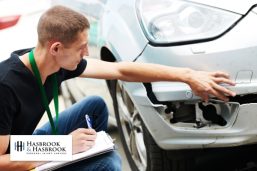
Oklahoma follows an at-fault system, so the driver who caused the crash, or more precisely that driver’s insurance company, is generally on the hook for the other side’s damage and injuries. Fault isn’t always all-or-nothing, though. Oklahoma applies shared-fault rules for split-liability crashes under 23 O.S. § 13, so if you share some blame for the wreck, your own recovery can be reduced accordingly rather than wiped out entirely for any fault at all.
If the at-fault driver’s insurer accepts responsibility, it typically pays for vehicle repairs, medical bills, and other losses directly. Your own insurer can also play a role: if you carry collision coverage, your company can pay to fix your car right away and then recover its cost from the other driver’s insurer later, which is often faster than waiting on a disputed liability decision. When the other driver has too little coverage, or none at all, uninsured and underinsured motorist coverage (36 O.S. § 3636) on your own policy can step in to cover the gap. Our page on pursuing a claim against an underinsured driver covers that process in more detail.
Filing a Collision Insurance Claim: Steps Insurers Follow After a Crash
Once you report a wreck, most insurers move through the same basic sequence, though the pace varies company to company.
Filing the Claim and the Initial Review
You start by giving your insurer the basics: policy information, the date and location of the crash, and a description of the damage or injuries involved. That report opens the file and gets a claims adjuster assigned. Have your police report, photos, and any medical paperwork ready. Oklahoma law requires insurers to furnish proof-of-loss forms and respond to a settlement demand in writing (36 O.S. § 3629), whether that response is an offer or a formal rejection of the claim.
Investigating the Accident
From there, the adjuster digs into what actually happened: pulling the police report, talking to witnesses, inspecting vehicle damage, and reviewing any other evidence from the scene. Photos from the scene, dashcam footage, and traffic camera or business surveillance video can all factor in when the two drivers tell different stories. The goal is to reconstruct the crash well enough to assign fault and decide how much the claim is worth, and a thin investigation file tends to work against whichever side did less to document the scene.
Calculating the Claim’s Value
Once fault is settled, the insurer prices the claim using repair estimates, medical bills, lost wages, and a formula for pain and suffering that varies by company. That number is supposed to reflect your actual losses, but insurers build in room to negotiate down from there, and that gap is exactly where how an Oklahoma City car accident settlement gets calculated starts to diverge from what a claim is genuinely worth.


Common Tactics Insurance Companies Use to Reduce Payouts

Insurers aren’t neutral referees. They’re businesses managing payout costs, and some lean on tactics that push claimants toward accepting less than a claim is worth. Oklahoma’s insurance code specifically bars a list of unfair claim settlement practices (36 O.S. § 1250.5), including several of the patterns below. When an insurer crosses that line, it may cross into bad-faith territory rather than ordinary hardball negotiating.
Quick, Lowball Settlements
Some adjusters move fast with a low offer, hoping you’ll accept before you know the true cost of your damage or injuries. An early check might cover the tow bill but fall far short of ongoing medical treatment.
Denying or Delaying Claims
Others slow-walk a file or deny it outright, often citing disputed fault or insufficient evidence. Delay by itself can pressure a claimant into settling for less just to end the wait.
Disputing Fault or Downplaying Injuries
Adjusters may also argue your injuries are minor, pre-existing, or unrelated to the crash, or suggest your account of what happened doesn’t match the evidence. Solid documentation, including the police report, medical records, and photos, is the best counter to this tactic.
How Adjusters Evaluate a Car Accident Insurance Claim
Adjusters decide what a claim pays out, and understanding what they’re actually looking at makes the process less of a black box.
Police Reports and Medical Records
Adjusters lean on the police report to figure out who caused the crash, then cross-reference your medical records to see whether your treatment lines up with the injuries you’re claiming. Gaps in treatment or missing records give an adjuster an opening to discount the claim.
Vehicle Damage and Repair Costs
Repair or replacement costs get calculated from industry pricing tools and body shop estimates. An independent appraisal and your own photos of the damage can push back on a lowball repair figure.
Time Limits and Liability
Every policy sets its own deadlines for reporting a loss and submitting documentation. That is separate from Oklahoma’s legal deadline to sue. If a claim can’t be resolved through the insurance company directly, Oklahoma’s general limitation period for injury claims (12 O.S. § 95) gives you two years from the date of the crash to file a lawsuit, not two years to simply notify your insurer. Miss a policy deadline and you can lose leverage on an otherwise valid claim. Miss the lawsuit deadline and you can lose the claim entirely.
How a Lawyer Can Help When an Insurer Won’t Cooperate
Insurance companies have adjusters, in-house counsel, and years of practice minimizing payouts. Hasbrook & Hasbrook levels that playing field: we deal directly with the adjuster, gather the police reports and medical records that support your claim, calculate what the claim is actually worth instead of what the first offer says, and negotiate or file suit when a fair settlement isn’t on the table.
That work looks different depending on the file, but it’s the same work the attorney who has pushed back against lowball settlement offers since his 2008 bar admission does on car accident claims across the Oklahoma City area, alongside the rest of our car accident injury practice.

Talk to an Oklahoma Car Accident Lawyer About Your Claim

If an insurance company is stalling, lowballing, or denying your claim after a wreck, have us take over the conversation with the adjuster. We’ll look at what’s actually owed and push back on what isn’t. Call 405-605-2426 for a free consultation.