In Oklahoma premises liability law, the natural accumulation defense is one of the most frequently cited grounds for denying a slip-and-fall claim. Property owners and insurers invoke it whenever a fall traces to rain, ice, standing water, or other weather-deposited conditions. The doctrine creates real protection for landowners, but it is not a blanket bar. Four established exceptions can defeat it, and knowing which one applies is the starting point for any claim analysis.
The Natural Accumulation Defense in Oklahoma Premises Liability
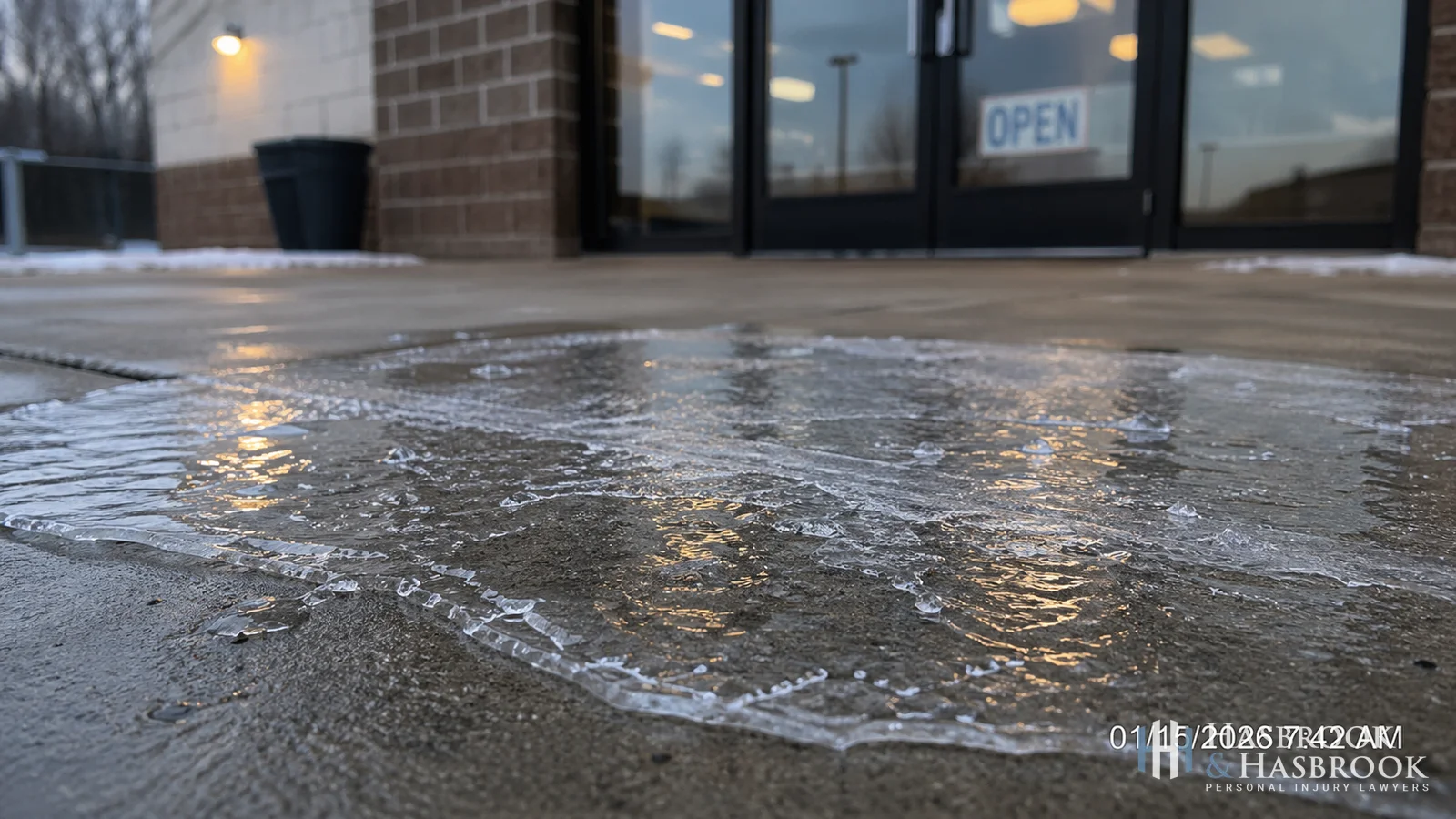
Under Oklahoma’s common-law premises liability framework, a landowner owes invitees a duty of reasonable care to inspect the property, discover dangerous conditions, and either repair them or warn visitors. The natural accumulation defense limits that duty for conditions created solely by natural weather forces that are open and obvious to a person exercising ordinary care.
The theory is that weather-deposited rain, snow, or ice does not reflect a failure by the landowner. Nature created the hazard; the owner did not. Because the risk is visible and apparent, courts have generally declined to impose liability when a reasonable person would have recognized and avoided it.
The doctrine is common law, not statute. No section of the Oklahoma Statutes codifies it. Under 76 O.S. § 1, every person carries a legal obligation not to injure another’s rights through negligence. Whether a naturally accumulated condition satisfies or defeats that obligation is a fact-intensive inquiry courts resolve on the specific record.
When the Defense Does Not Apply: Four Recognized Carve-Outs
The natural accumulation defense has four recognized exceptions. Any one of them, supported by evidence, can remove the doctrine’s protection and restore the landowner’s full liability exposure.
Artificial accumulation. When the owner’s drainage design, grading, or maintenance directs water, ice, or debris to a location it would not have naturally reached, the hazard is owner-created and the defense does not apply. Common examples include roof drains discharging onto pedestrian walkways and parking lots graded toward building entrances. This issue arises frequently in cases against large retailers, including Target slip-and-fall claims and Walmart premises liability cases in Oklahoma City.
Prior actual knowledge of a recurring risk. An owner with documented actual knowledge of a specific dangerous condition at a specific location, who chose not to address it, may be liable despite a natural-accumulation argument. The key is knowledge of the particular hazard, not just general awareness that weather events occur.
Design defect. If the surface itself was unreasonably unsafe in design (a slope that channeled runoff toward an entrance, a material that became dangerous at ordinary temperatures, a drain positioned to overflow periodically), the design defect rather than the weather may be the proximate cause of the fall. The doctrine does not insulate design failures.
Active maintenance negligence. An owner who applies products or performs maintenance that makes a natural condition more dangerous than it would otherwise be has stepped outside the doctrine’s protection. Partial sanding that directs foot traffic into an untreated area, or de-icer that concentrates and refreezes at a single point, are examples of active owner conduct that can convert a natural hazard into an owner-created one.



The Property Owner’s Reasonable Care Duty to Invitees
Oklahoma distinguishes three categories of entrants: invitees, licensees, and trespassers. Invitees receive the highest duty of care because they enter with the landowner’s express or implied invitation. The natural accumulation doctrine modifies that duty for open-and-obvious weather conditions, but courts have resisted reading the modification broadly.
Whether a condition is truly open and obvious turns on the specific facts at the time of the fall. Poor lighting, a surface finish that conceals ice beneath standing water, or an entrance requiring a visitor to cross the hazard to exit each affects whether a reasonable person would have appreciated and avoided the specific risk. For how courts weigh these factors, see valid defenses in Oklahoma slip-and-fall cases and why these claims can be difficult to win.
Natural Accumulation Beyond Ice and Snow
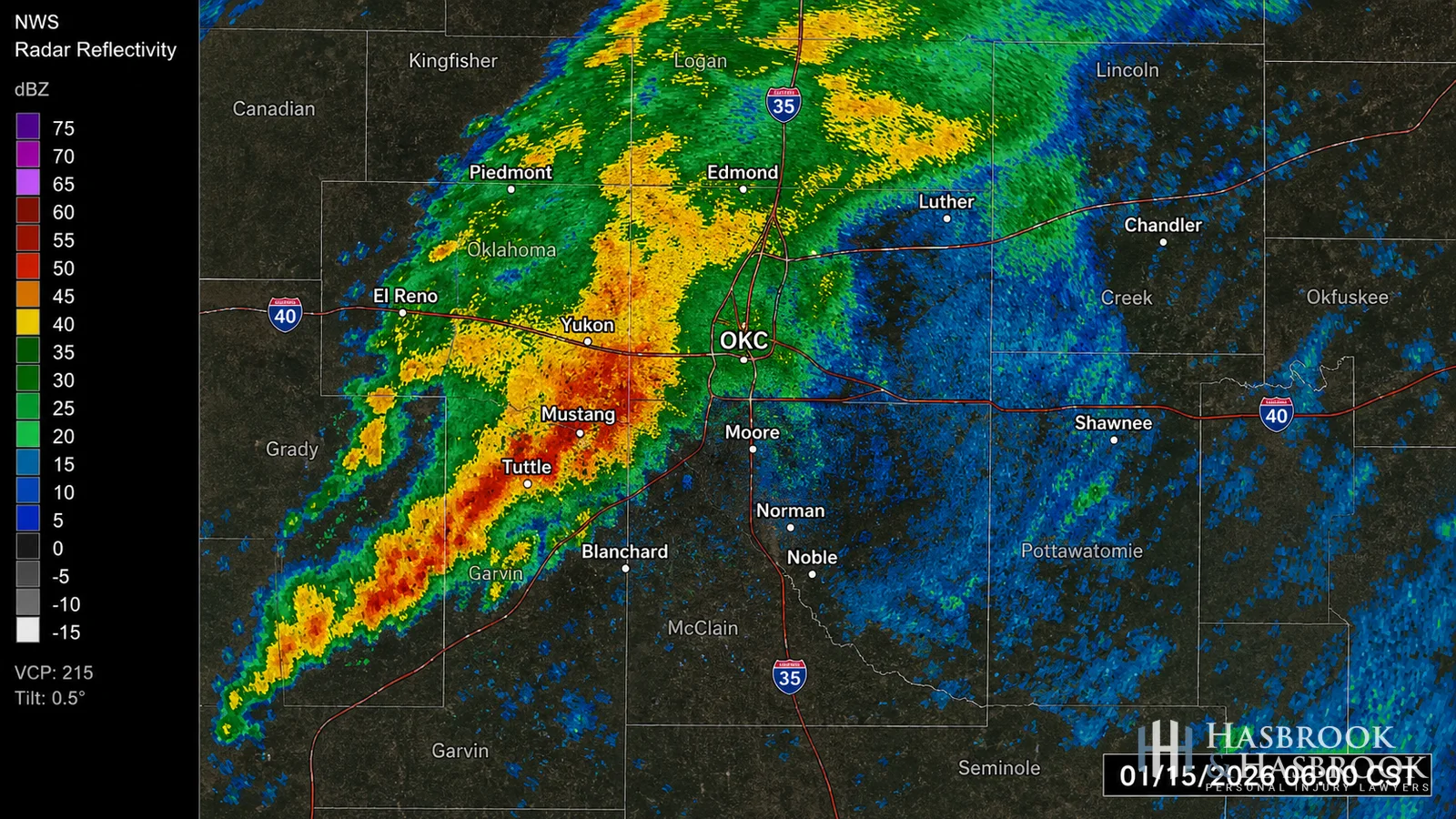
Many claimants assume the doctrine applies only to winter falls. Oklahoma courts have applied it to a wider range of weather-deposited conditions:
- Pooled rainwater in commercial parking lots and building entrances
- Wet leaves on outdoor walking surfaces during fall months
- Mud carried from unpaved areas by rain runoff onto paved surfaces
- Organic debris, such as pollen or seeds, that becomes slick when wet
The common thread is that nature, not the owner, deposited the hazard. For the specific question of how the doctrine operates in winter conditions, including evidence standards for ice-and-snow claims, see our related blog post on ice and snow slip-and-fall liability in Oklahoma.
Key Takeaways for Plaintiffs Challenging the Defense
Before accepting an insurer’s position that the doctrine ends your claim, work through these questions:
- Did nature alone deposit the hazard? Trace the origin of the water, ice, or debris. If grading or drainage contributed, the artificial accumulation exception may apply.
- Did the owner have documented, actual knowledge? Maintenance logs and prior incident reports can establish awareness of a specific recurring condition at a specific location.
- Was the hazard truly open and obvious at the time? Lighting, surface finish, and context all affect whether the risk was apparent to a reasonable person.
- Did the owner take partial remediation steps? Incomplete treatment can transform a natural condition into an owner-modified one.
- What is your visitor status? Invitees receive the highest duty of care; confirm your classification before evaluating the defense.
For how these factors translate to settlement value, see the FAQ on maximizing the value of a slip-and-fall case.


Building an Evidence Record When the Defense Is Raised
When a property owner asserts the natural accumulation defense, rebutting it depends on evidence gathered close in time to the incident. The steps you take at the scene determine what is recoverable when litigation begins.
Time-stamped photographs are the foundation: the fall surface, surrounding drainage features, any warning signage, and ambient lighting. National Weather Service station data preserves precipitation amounts and timing. Divergences between the recorded precipitation and the scene as photographed can support an artificial accumulation argument.
Maintenance records often prove central to whether the defense holds. An owner who kept a written inspection protocol but cannot produce logs for the period surrounding the fall faces difficulty arguing the hazard was monitored adequately. For guidance on preserving evidence, see gathering evidence of your injuries.
Comparative Fault and Open-and-Obvious Hazards
Even when the natural accumulation defense fails, owners routinely argue that the claimant’s own conduct contributed to the fall. Under 23 O.S. § 13, Oklahoma follows modified comparative fault: recovery is reduced by the claimant’s fault percentage, and a claimant whose fault is of greater degree than the defendant’s is barred entirely.
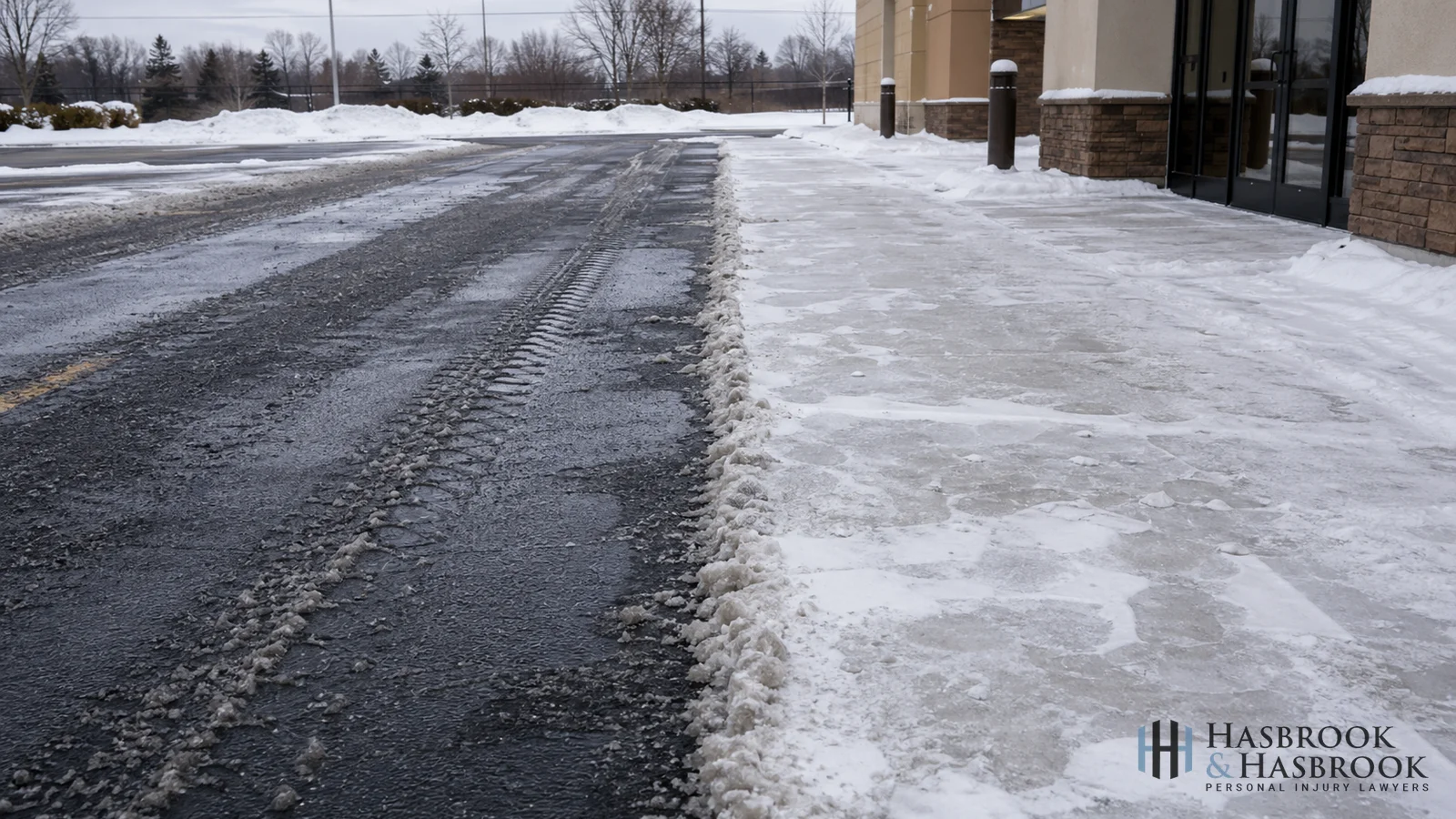
Insurers often argue that a plaintiff who crossed a visibly icy or wet surface bears significant comparative fault. Whether that argument succeeds depends on whether an alternate route existed, whether warnings were posted, and whether a reasonable person in the claimant’s circumstances would have recognized and avoided the risk. Evaluating both doctrines is necessary before assessing how much a slip-and-fall case is worth. See the guide on comparative vs contributory fault for the full framework.
How Insurers Deploy the Natural Accumulation Defense in Claims
Commercial general liability policies cover most business premises liability claims. Insurers have strong financial incentives to invoke the natural accumulation defense early. An adjuster’s opening denial is a negotiating position, not a final legal determination. The defense can be challenged.
For guidance on communicating with insurers, see managing insurance company communications. Claimants must also track the filing deadline: under 12 O.S. § 95, the limitations period for personal injury claims in Oklahoma is two years from the date of injury. Extended negotiations do not toll that clock. See the Oklahoma statute of limitations for personal injury and how long after a slip-and-fall you can sue for detail on exceptions.

Frequently Asked Questions
Does the natural accumulation defense always bar a slip-and-fall claim in Oklahoma?
No. The doctrine limits liability for open-and-obvious, weather-deposited conditions, but four exceptions can defeat it: artificial accumulation, prior actual knowledge, design defect, and active maintenance negligence. Whether any exception applies requires a fact-specific analysis of the property, the conditions at the time of the fall, and the owner’s conduct before the incident.
What distinguishes natural accumulation from artificial accumulation?
Natural accumulation is material deposited solely by weather forces, without any contribution from the owner’s design or maintenance. Artificial accumulation occurs when the owner’s drainage layout, grading, or conduct directed water, ice, or debris where it would not naturally reach. The distinction typically turns on drainage plans, grading surveys, and maintenance records.
Can I still recover if I saw the hazard before I fell?
Visibility does not automatically eliminate a claim. “Open and obvious” is a legal standard, not a synonym for visible. Courts examine whether a reasonable person would have appreciated the full extent of the risk and had a realistic means of avoiding it. Visibility alone does not end the inquiry. See the burden of proof standards in Oklahoma personal injury cases for context.
What evidence is most useful for challenging the defense?
Key evidence includes time-stamped photographs of the fall surface and drainage features; National Weather Service precipitation records; the property’s drainage plans and grading surveys; maintenance and inspection logs for the period surrounding the fall; and prior incident reports from the same location. Early preservation matters because retention schedules vary.
How long do I have to file a slip-and-fall lawsuit in Oklahoma?
For most personal injury claims, the two-year limitations period under 12 O.S. § 95 runs from the date of injury. Claims against government entities carry shorter notice requirements under the Governmental Tort Claims Act. Missing the deadline forfeits the right to sue regardless of the underlying claim’s strength. See the discussion of how long after a slip-and-fall you can sue for detail on tolling rules.
Does the doctrine apply to hazards other than ice and snow?
Yes. Oklahoma courts have applied the principle to pooled rainwater, wet leaves, mud, and other weather-deposited conditions beyond frozen precipitation. The core question is whether nature deposited the hazard without any contribution from the owner’s design or conduct. Where the owner played a role, the doctrine weakens regardless of hazard type. See the types of recoverable damages in Oklahoma slip-and-fall cases to understand what a successful claim may yield.
speak with our injury lawyers represent Oklahomans in slip-and-fall and premises liability claims where the natural accumulation defense has been raised. A free consultation can help identify whether a carve-out applies to your situation and what evidence would support the claim. Contact our firm through the request your free consultation to schedule a review.