Security camera footage at Oklahoma businesses is typically overwritten within 30 to 90 days, and no statute forces a business to preserve it. Once you report the accident or send a written preservation letter, destroying the footage afterward can trigger spoliation sanctions under 12 O.S. § 3237, including an adverse inference against the property owner. Act within days, not weeks.
After a slip-and-fall or other injury on someone else’s property in Oklahoma, video footage from the property’s surveillance system is often the most powerful evidence available. Recordings show what the floor, lighting, and hazard conditions looked like at the moment of the accident. The problem is that surveillance footage overwrites itself, and businesses face no legal obligation to preserve it unless they receive written notice. Acting quickly to demand and preserve this evidence often separates a strong premises liability claim from one built on memory alone.
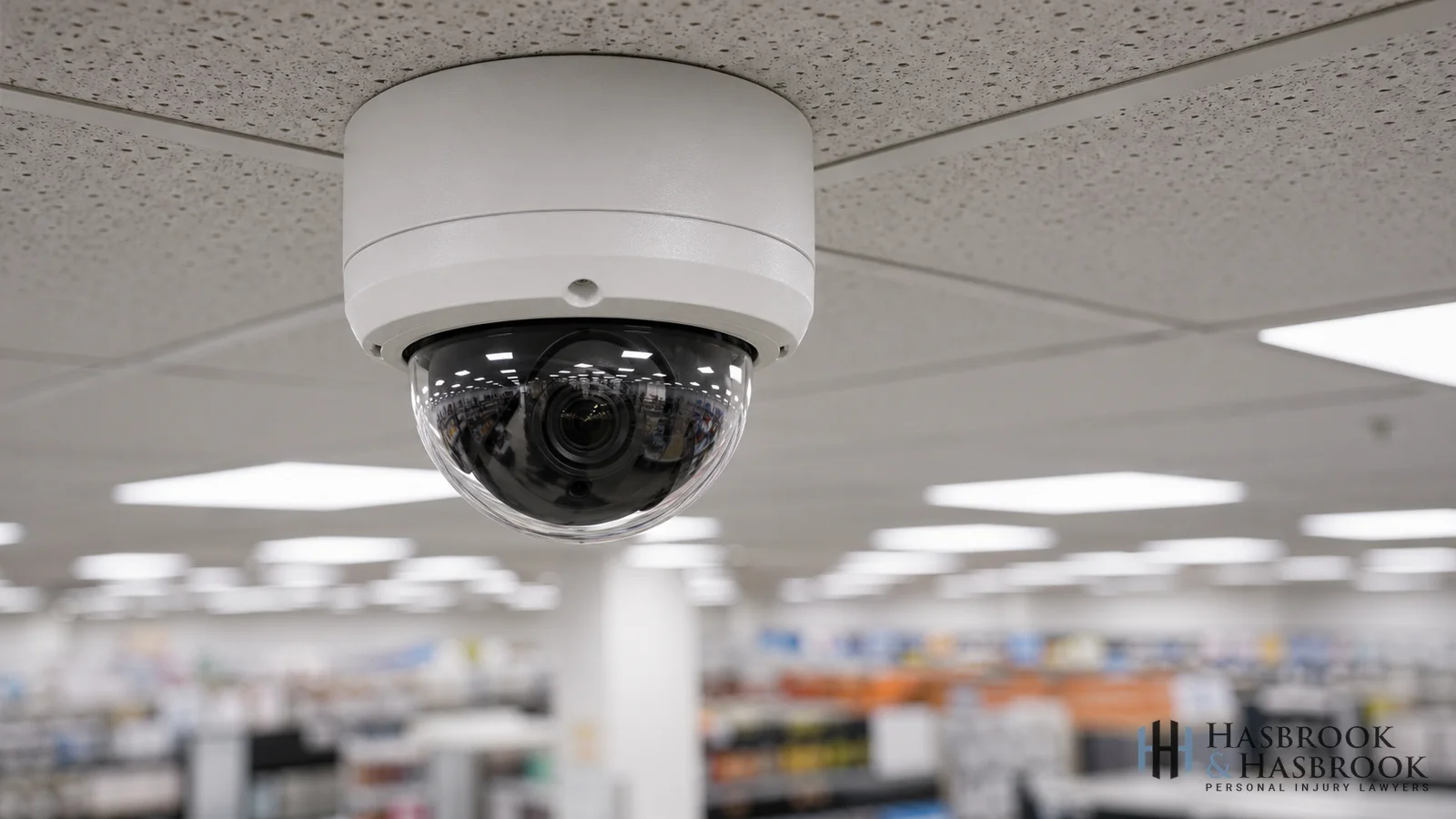
What security camera footage can prove in a premises liability case
Oklahoma premises liability claims require showing that a property owner or occupier knew or should have known about a dangerous condition and failed to correct it or warn visitors. Surveillance footage can directly support each part of that proof.
- Duration of the hazard. If video shows a spill sitting on the floor for 40 minutes before your fall, it directly contradicts any defense that the condition appeared seconds before the accident.
- Employee awareness. Workers passing the danger zone without acting is evidence of actual notice and a failure to meet the duty owed to business invitees. See our page on how Oklahoma courts evaluate whether a business knew about a hazard.
- The fall itself. Footage preserves details that incident reports and witness memories routinely distort or omit.
- Your condition immediately after impact. It captures whether you were unable to rise, visibly injured, or in obvious pain.
Common premises accidents where footage is critical include slip-and-falls in grocery stores, big-box retailers, restaurants, icy parking lots, and poorly lit stairwells. Our page on the full range of Oklahoma City premises liability claims we handle covers the evidence required for each.



How long do businesses keep surveillance footage?
No Oklahoma statute sets a mandatory retention period for private businesses’ surveillance recordings. Each business sets its own schedule based on system capacity, industry practice, and internal policy.
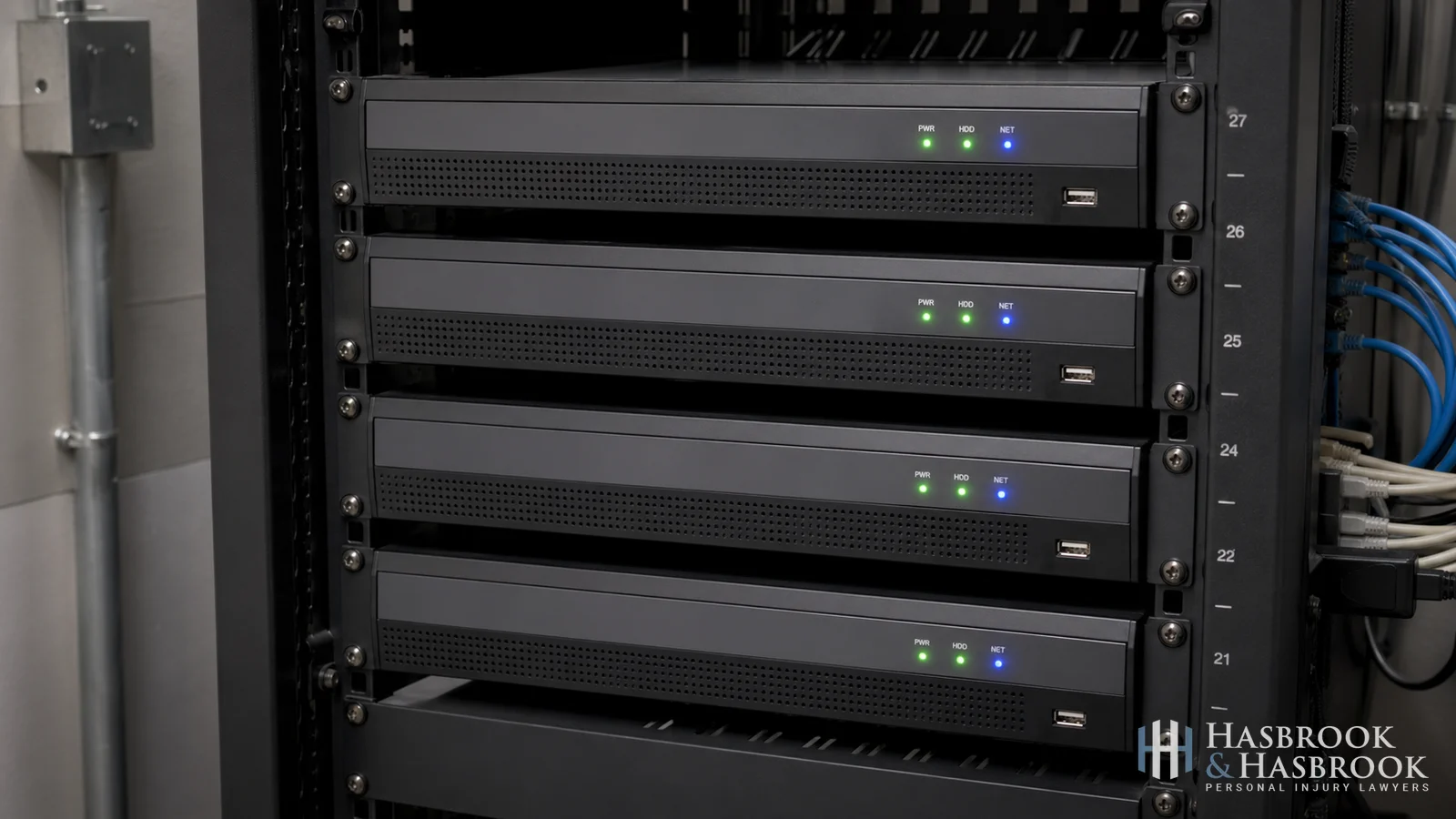
In practice, many retail stores and restaurants overwrite footage on a cycle of 30 to 90 days, though exact windows vary by retailer and recording system. Large chains with centralized storage may retain recordings longer; smaller businesses on older equipment sometimes overwrite within two weeks. Public facilities may follow longer retention schedules under their own records policies.
The practical reality is that no guaranteed window exists. A preservation demand sent the same week as the accident is on solid ground; one sent six weeks later may arrive too late. The shorter the gap, the stronger the position against any argument that footage was already overwritten.
Timing is everything: why you must act before footage disappears
The most common evidence preservation mistake in premises liability cases is assuming the footage will still exist when you get around to requesting it. Once a recording overwrites, it is gone permanently. Oklahoma courts cannot order a party to produce evidence that no longer exists, but they can address what happened to it once a preservation obligation was in place.
From a practical standpoint, the evidence timeline looks like this:
- Day of accident: Report the incident to the property manager in writing and photograph the hazard yourself if possible.
- Within 48 to 72 hours: Retain an attorney and authorize a preservation demand to go out immediately.
- Within 7 days: If the property owner is unresponsive, an attorney can escalate to filing suit early or seeking court relief to compel preservation before footage overwrites.
Our guide on the immediate steps after a slip-and-fall accident and our article on keeping thorough records for a personal injury claim cover the parallel steps that protect the rest of your case.
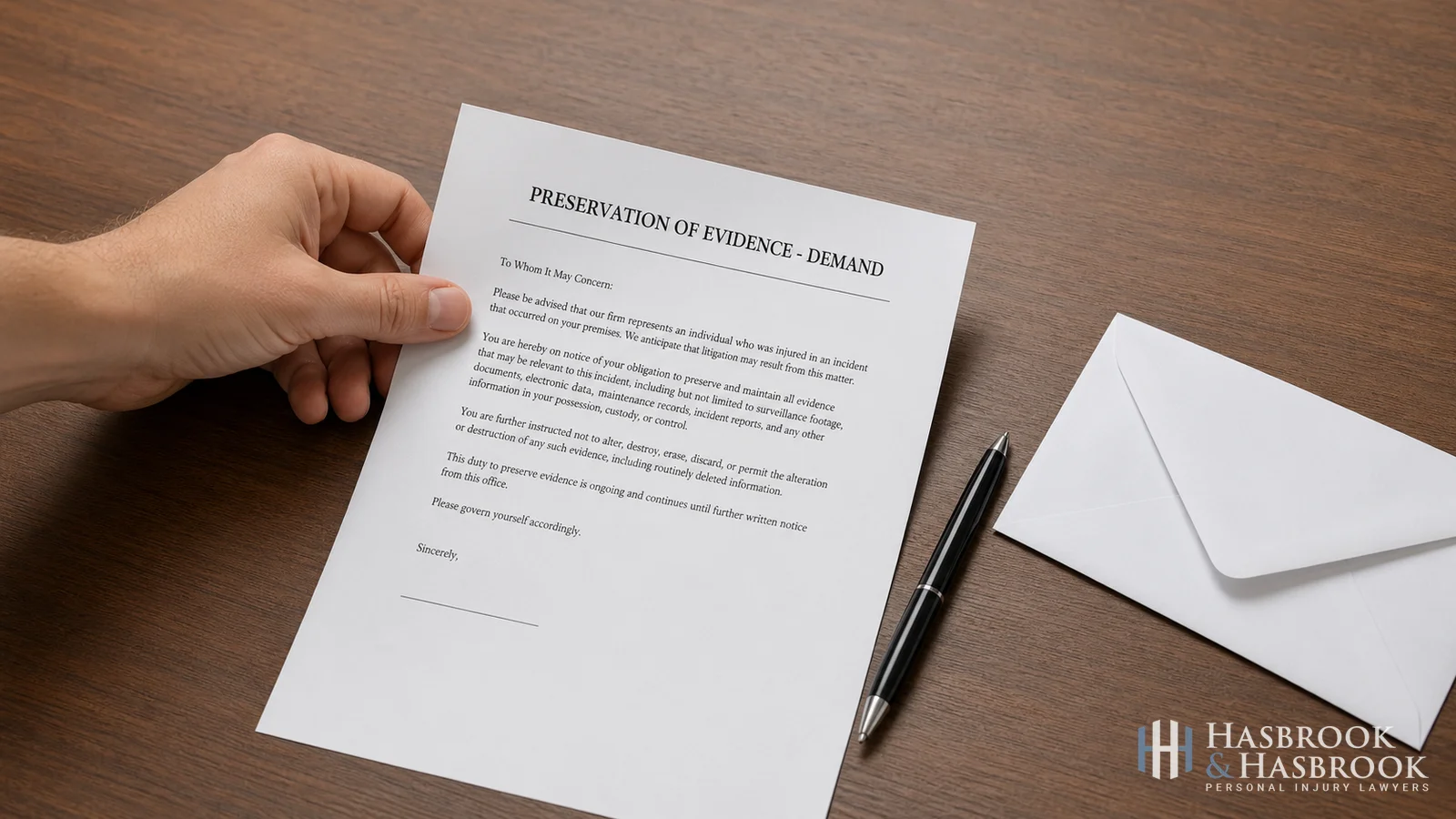
What a preservation letter must include
A preservation letter is a formal written notice to the property owner, its insurer, or its attorney putting them on record that litigation is likely and demanding that specific evidence be retained. It does not require a filed lawsuit, but it creates the documented notice that can be used against the property owner if evidence later disappears.
An effective preservation letter should identify:
- The date, time, and precise location of the accident (the camera’s section of the store or specific entry point, not just “inside the building”)
- The date range of footage requested (typically the day of the incident plus 24 to 48 hours prior, to capture how long the hazard existed before you arrived)
- Any footage of the same area from prior days or prior incidents that may show the property owner had prior notice of the same hazard
- All incident reports, maintenance logs, and inspection records for the area where the accident occurred
- Identity and contact information of witnesses listed in the incident report
- Explicit notice that destruction of the evidence after receipt of this letter will be treated as spoliation
Send the letter by certified mail with return receipt, and by email if an insurer or defense attorney is involved. Keep a copy of everything, including proof of delivery. Our page on representing injured Oklahomans in slip-and-fall claims explains how we use evidence like this to build an active case.


Getting surveillance footage through Oklahoma civil discovery
If the property owner refuses to produce footage after receiving a preservation demand, Oklahoma civil discovery rules provide the tools to compel production. These are state court rules governing Oklahoma premises liability cases, not federal court procedures. Under 12 O.S. § 3233, a party can issue interrogatories demanding identification and production of documents and recordings. Oklahoma’s subpoena statute, 12 O.S. § 2004.1, allows an attorney to command production from non-parties such as neighboring businesses or shared facility operators who may have captured the incident on their own cameras.
For a broader overview of how these tools work in an active claim, see our page on how discovery unfolds in an Oklahoma injury lawsuit.
Proving negligence in an Oklahoma premises liability lawsuit
Surveillance footage supports each element of a negligence claim, but it does not replace them. To succeed in an Oklahoma premises liability case, a plaintiff must establish:
- Duty. The property owner owed a duty of care. Invitees (customers, business visitors) receive the highest duty: the owner must inspect for hazards and remedy or warn of known dangerous conditions.
- Breach. The owner failed to meet that standard. How long the hazard existed before the accident is central to this element, which is why footage duration is so significant.
- Causation. The breach caused the accident and the resulting injuries.
- Damages. The plaintiff suffered compensable harm. Under 23 O.S. § 61, a person who breaches a legal obligation not arising from contract is liable for the resulting losses.
Oklahoma applies comparative fault under 23 O.S. § 13. A plaintiff whose fault exceeds 50 percent cannot recover; at exactly 50 percent fault, the plaintiff still recovers, reduced proportionally. Insurers routinely raise comparative fault arguments against slip-and-fall claimants, which is exactly why footage showing a plainly unmarked and unaddressed hazard is so important. See our pages on how Oklahoma’s fault-sharing rule applies here and the challenges of winning a slip-and-fall case in Oklahoma, as well as our coverage of how footage has factored into Walmart slip-and-fall claims and Target slip-and-fall lawsuits in Oklahoma for examples of how liability and footage evidence interact in retail cases.
What happens if the property owner destroys the surveillance footage
When a party destroys evidence after receiving a preservation notice, or when the party reasonably should have anticipated litigation before the destruction, that conduct is called spoliation. Under Oklahoma law, courts have discretion to sanction spoliation through 12 O.S. § 3237, which governs failure to make or cooperate in discovery.
Remedies available in Oklahoma state court premises cases include:
- Adverse inference instruction. The jury may be told it can infer that destroyed footage would have been unfavorable to the party that destroyed it.
- Exclusion of evidence. The court may bar the property owner from introducing contradictory evidence at trial.
- Default or dismissal in severe cases where destruction was willful and prejudicial to the plaintiff.
- Cost and fee awards. The court may require the offending party to pay attorney fees and discovery expenses caused by the spoliation.
Oklahoma courts have discretion in selecting the appropriate remedy. If destruction was negligent rather than intentional, the remedy may be limited to an adverse inference instruction. If it was willful and occurred after documented notice, courts are more likely to impose severe sanctions. The outcome depends on how clearly the obligation was communicated and how quickly destruction followed the accident. Early legal involvement matters because a timely preservation letter creates the formal notice that makes spoliation sanctions available. For context on how documentation shapes case outcomes from the start, see our page on what an injured Oklahoman must prove to win a claim.

Frequently asked questions about security camera footage in premises cases
Can I request the surveillance footage on my own without an attorney?
You can send a written preservation demand yourself, and doing so immediately is better than waiting. A written demand from the injured party does put the property owner on notice. Without a filed lawsuit and formal discovery, however, you cannot compel production through the courts. An attorney can file suit, issue subpoenas under Oklahoma state court rules, and enforce compliance if the owner refuses. See our page on hiring a personal injury attorney if you are weighing whether legal representation is worth it at this stage.
What if there were no security cameras covering the accident area?
If no cameras captured the incident, your case relies on other evidence: witness statements, employee incident reports, maintenance and inspection logs, and prior complaint records. Prior complaints about the same hazard are especially significant for establishing that the property owner had notice. Our page on boosting the value of a slip-and-fall claim covers alternative evidence strategies.
Does a business have a legal duty to save surveillance footage after a reported accident?
No Oklahoma statute automatically requires a business to retain footage once an accident is reported. The duty to preserve evidence attaches when litigation is reasonably foreseeable, which is typically from the moment the injury is reported or a preservation demand is received. Once that obligation attaches, destroying footage can trigger the spoliation remedies described above. Promptly reporting the accident in writing and sending a preservation demand are the two steps that create this obligation.
How does the statute of limitations relate to surveillance footage?
Oklahoma’s general personal injury statute of limitations is two years under 12 O.S. § 95 (full text of § 95 also on Justia). That filing deadline has no bearing on the footage itself. Recordings are gone long before two years pass, regardless of when you file. The evidence clock runs on a separate, shorter timeline set by the business’s own retention schedule. For filing deadline exceptions, including cases involving government-owned property, see our overview of Oklahoma’s two-year filing deadline for injury claims and our page on the filing deadline after an Oklahoma slip-and-fall injury.
Can the property owner argue the footage was deleted in the ordinary course of business?
Yes, and this is a common defense. If the property owner can demonstrate that footage was overwritten on a routine schedule before any preservation notice was received, spoliation sanctions may not apply. This is why the timing of your demand is consequential. A demand that arrives after the ordinary retention window has already closed leaves the court with much less leverage. Getting a written demand out before the footage overwrites is the best protection against this argument.
What damages are recoverable if a premises liability case succeeds?
Recoverable damages in a successful Oklahoma premises liability case include medical expenses (past and future), lost wages, reduced earning capacity, pain and suffering, emotional distress, and loss of enjoyment of life. See our page on the damages available after an Oklahoma slip-and-fall for a breakdown of each category, and our page on what adjusters and courts weigh when valuing these claims.
If you were injured on someone else’s property in Oklahoma and need to act before surveillance footage is overwritten, do not wait. Hasbrook & Hasbrook Personal Injury Lawyers have represented injured Oklahomans for decades and can send a preservation demand the same day you contact us. Reach us through our online case-review form or call (405) 605-2426 for a free consultation.