

At Oklahoma premises liability intake, the two threshold questions are the client’s visitor status (invitee, licensee, or trespasser) and how much scene evidence remains preservable, since footage often overwrites within days. Dog bites carry separate strict liability under 4 O.S. Section 42.1, and claims generally must be filed within two years under 12 O.S. Section 95.
This checklist covers premises liability intake across Oklahoma personal injury cases, with separate tracks for invitees, licensees, trespassers, dog-bite claimants, and attractive nuisance situations. Work through it before the consultation ends.
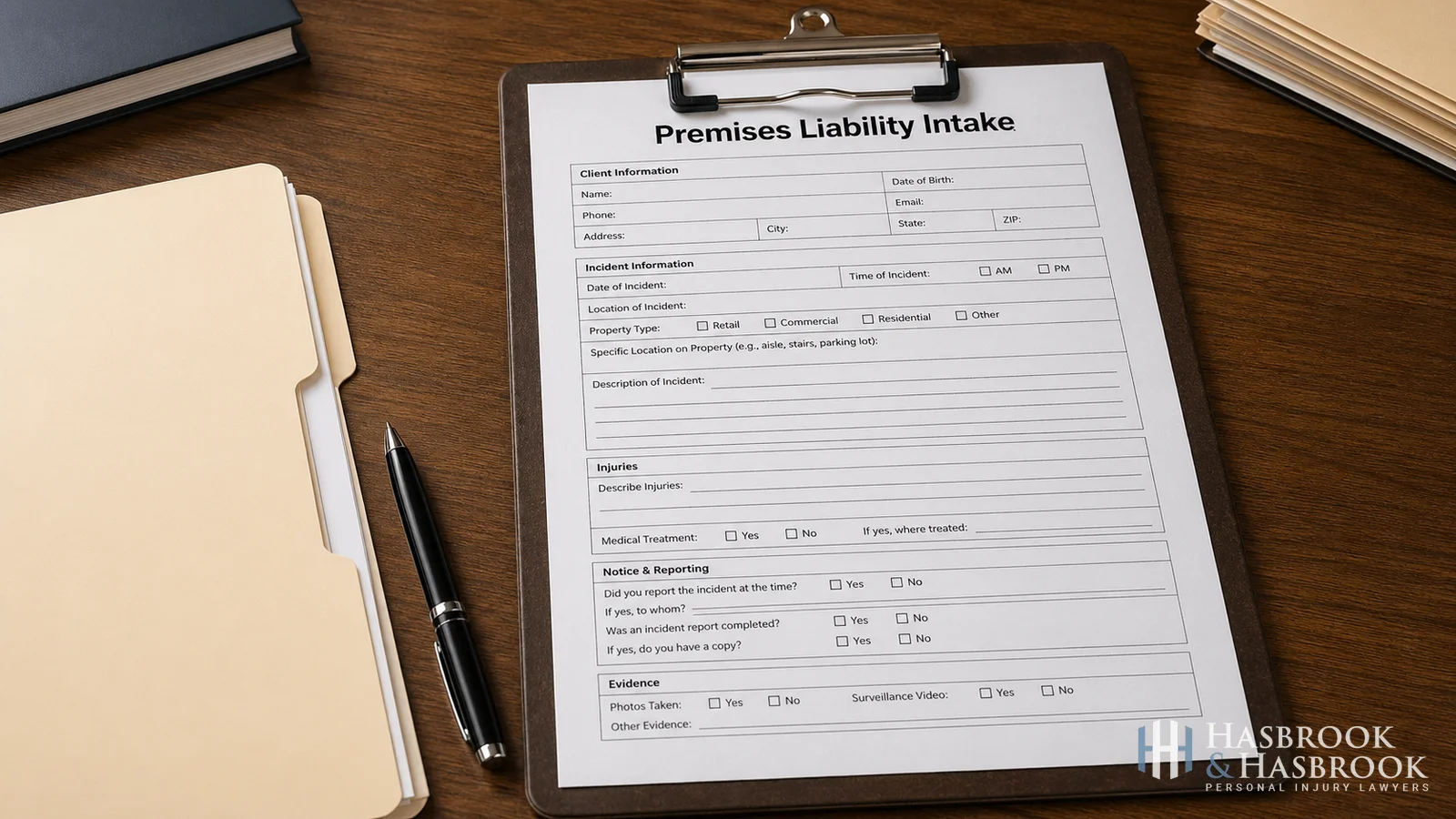



Why preparation before the consultation changes outcomes
Premises liability cases are often decided before discovery begins. The hazard may have been repaired the same day; surveillance footage at retail and commercial locations commonly overwrites within 24 to 72 hours; and an incident report prepared by the property owner may be the only contemporaneous record of notice. A client who waited several days to call may have already forfeited the most probative evidence. Knowing what to ask before the client arrives lets you act during intake rather than chasing records afterward.
Visitor status and intake questions by category
Oklahoma law assigns different duties of care based on why the person was on the property (see Justia’s summary of premises liability duty standards). Identifying the correct classification determines which duty standard applies and which defenses are most likely. The property owner liability standards in Oklahoma FAQ covers how Oklahoma courts apply each standard.
An invitee enters with express or implied invitation for a purpose connected to the owner’s business or land. The owner owes the highest duty: reasonable inspection, discovery, and correction of hazardous conditions. At intake, confirm the business relationship or public invitation, ask about posted warnings, and obtain any incident report. A companion resource on slip-and-fall intake questions for retail claims covers store and restaurant scenarios; the Oklahoma City premises liability representation page covers the broader duty framework.
A licensee enters with permission for personal purposes, such as a social guest. The owner owes only a duty to warn of known concealed hazards; there is no duty to inspect or discover unknown conditions. At intake, ask what the owner knew about the condition and whether any warning was given before or at entry.
A trespasser enters without permission. Adult trespassers receive only protection from willful or wanton injury. The attractive nuisance doctrine applies a separate standard for child trespassers, covered below.


Documents to gather before the first meeting
Ask the client to bring whatever they have to the consultation. Missing documents at intake delay the demand letter.
- Incident report or complaint form prepared by the property owner or manager
- Medical records and bills from the date of injury forward
- Photographs or video taken at the scene
- Written or electronic communications with the owner or their insurer
- Witness names and contact information
- Health insurance information and known liens
For multi-unit residential properties, obtain the lease agreement. See how common-area maintenance duties bind Oklahoma landlords for how those provisions affect the owner’s duty of care.
Preserving evidence from the scene
Dispatch a written preservation demand to the property owner within 24 hours of the initial call. Identify the security system vendor and confirm whether footage records on a rolling overwrite cycle.
A separate resource on preserving evidence in slip-and-fall claims includes a demand template for common venue types. The security camera footage retention practices FAQ explains what to expect at retail, apartment, and commercial locations. For notice-proof arguments, documenting actual and constructive notice covers what Oklahoma courts require.

Dog bites and attractive nuisance: separate intake tracks
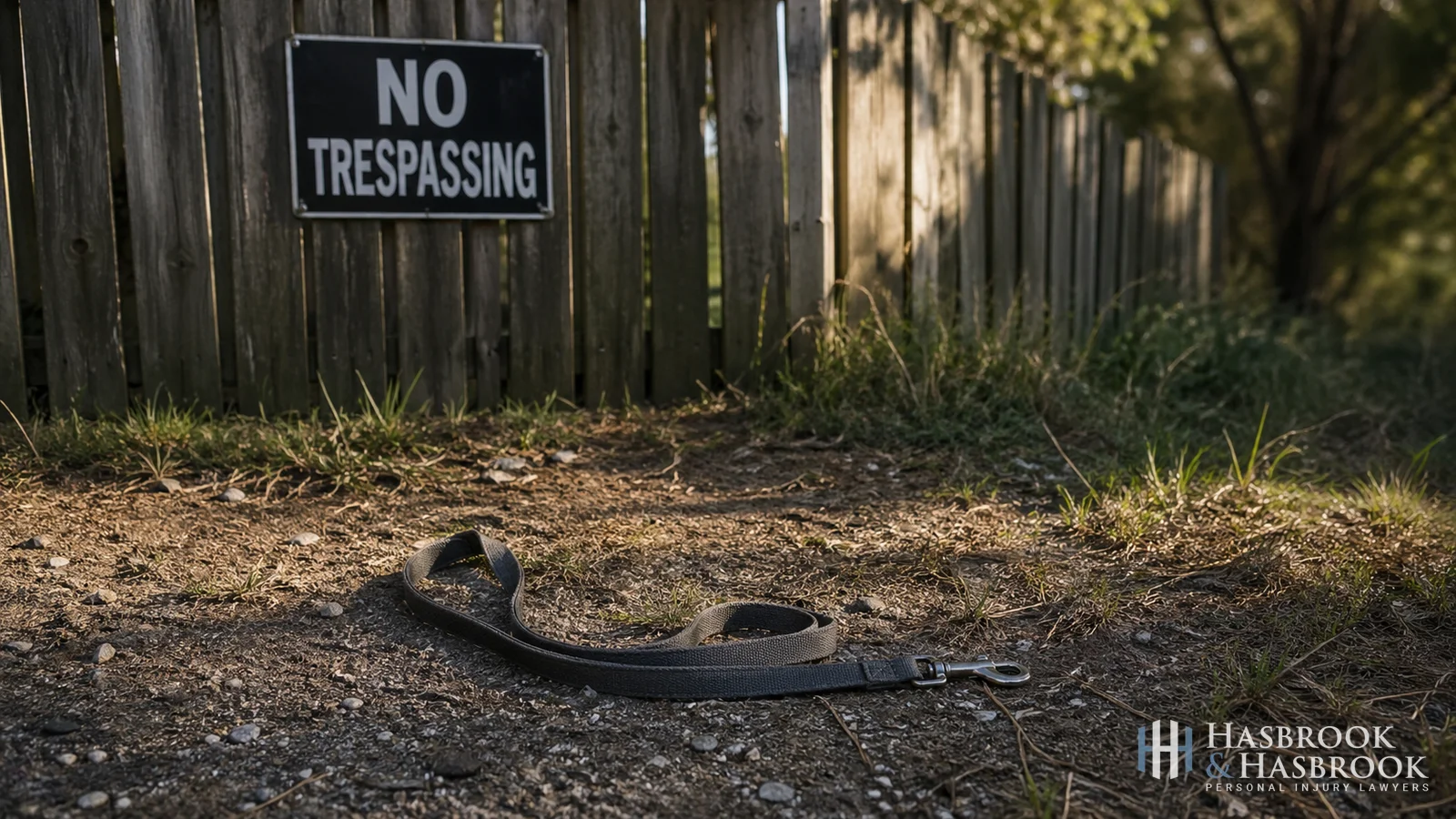
If the claim involves a dog bite, keep the statutory theory separate from any general negligence framing. Under 4 O.S. Section 42.1, an owner is strictly liable when a dog bites a person in a public place or lawfully on private property. Prior bite history is not an element of the statutory claim. Confirm where the bite occurred and whether the client had permission to be on that property. For child bite cases, see when a dog bites a child in Oklahoma. The full Section 42.1 framework is on the Oklahoma dog-bite liability page.
Attractive nuisance claims arise when a child trespasser is injured by a dangerous artificial condition on the owner’s property. The child’s trespasser status does not bar the claim. At intake, confirm the child’s age, the nature of the condition, whether children are foreseeably attracted to it, and whether eliminating or guarding the hazard was practical relative to the risk.
Deadlines and comparative fault
Under 12 O.S. Section 95, the limitations period for premises liability personal injury claims is two years from the date of injury. Government-owned property adds urgency: the Governmental Tort Claims Act requires written notice within one year of the incident (51 O.S. Section 156). Flag government ownership at intake.
Under 23 O.S. Section 13, recovery is barred only when the plaintiff’s fault exceeds fifty percent. At exactly fifty percent fault, the client still recovers, with the award reduced by that percentage. At intake, identify client conduct the defense would frame as contributory: inattention, improper footwear, or ignoring a visible warning. Comparative fault defenses in Oklahoma slip-and-fall claims covers the arguments property owners raise most frequently.

What happens after intake
After completing intake, the immediate tasks are the preservation demand, medical records authorization, and confirming the property owner’s insurance carrier. For large retailers or multi-location operators, identify the correct legal entity before drafting the demand. Structuring a premises liability demand letter covers the elements for this claim type. If the claim has a negligent security component, work through the negligent security theory questions before filing.



