Oklahoma negligent security claims turn on foreseeability: under Bray v. St. John Health System, an owner owes a duty when it knew or should have known, from past experience, that criminal conduct on the premises was likely. Attorneys screening these claims should pull prior-incident logs, CCTV and lighting records, and security staffing schedules before filing.
Hasbrook & Hasbrook’s Oklahoma personal injury attorneys handle negligent security claims statewide. The central question is always whether a property owner’s failure to maintain adequate security contributed to a foreseeable criminal attack. This is a practitioner-facing issue spotter: intake signals, records to request, and what the foreseeability analysis requires. The framework for negligent security liability in Oklahoma covers the underlying law.
Intake triggers: what facts signal a negligent security analysis
Not every crime on someone else’s property is a viable claim. Look for facts suggesting the owner knew or should have known criminal activity was a risk and failed to respond:
- The crime occurred on commercial or multi-unit residential property where the owner controlled access, lighting, and surveillance
- The client was an invitee owed the highest duty of care; the invitee, licensee, and trespasser distinctions under Oklahoma law control how that duty is framed
- Prior crimes at the property or nearby are documented in police logs, incident reports, or management records
- Locks, lighting, cameras, or guard coverage were visibly inadequate or absent at the time of the attack
- Management had received written complaints about security conditions beforehand
When two or more of these facts appear, pursue negligent security alongside any premises liability claim, using the full visitor-status and evidence inventory for premises claims.



Foreseeability: the element that controls everything else
Foreseeability is the predicate for duty in every negligent security case (Cornell Law’s general foreseeability standard sets the doctrinal baseline). The controlling authority is Bray v. St. John Health System, Inc., 187 P.3d 721 (Okla. 2008), adopting Restatement (Second) of Torts § 344 comment f: duty arises when the owner “knows or has reason to know, from past experience, that there is a likelihood of conduct on the part of third persons… likely to endanger the safety of the visitor.” Lewis v. Wal-Mart Stores, 225 P.3d 6 (Okla. Civ. App. 2009), held Oklahoma does not require the owner to have foreseen the exact crime or location. Prior similar incidents are persuasive but not an absolute threshold.
Look first for documented prior incidents: police call logs (three to five years back, via open records request), incident reports, guard shift logs, and written complaints. Even lower-level crime, such as vandalism or vehicle break-ins, can establish foreseeability for a later assault if the pattern is consistent. The FAQ on how courts weigh prior-incident evidence goes further.
What to look for in CCTV, lighting, and security personnel records
Security infrastructure records are the most direct evidence of whether the owner met the reasonable care standard. Request the following in a preservation demand sent within the first week of representation.
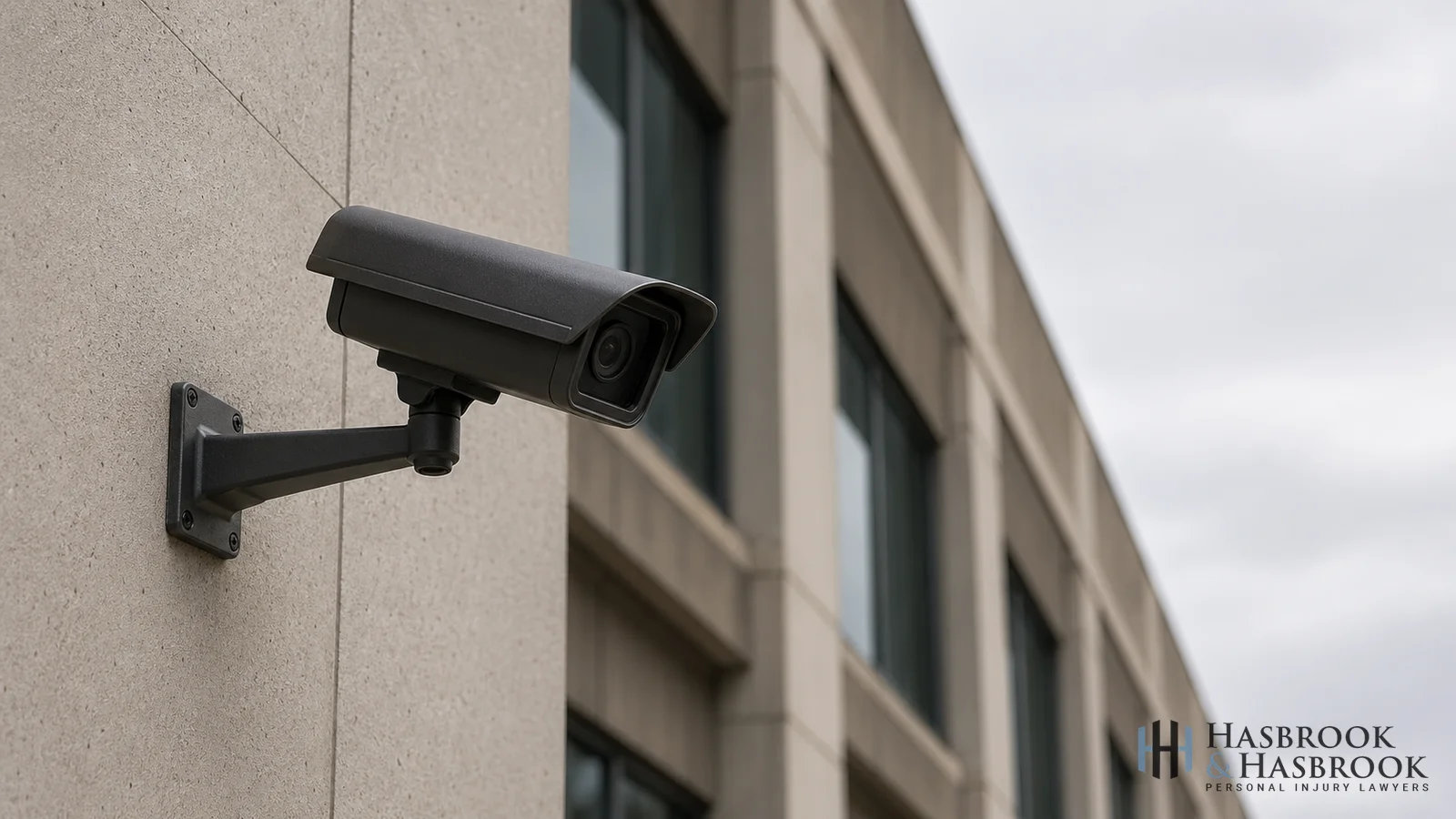
Cameras: vendor, installation date, placement diagram, and retention schedule. Confirm whether cameras were functional during the incident and whether footage was preserved before the overwrite cycle, typically 30 days. See what Oklahoma courts do about spoliation when footage disappears after notice.
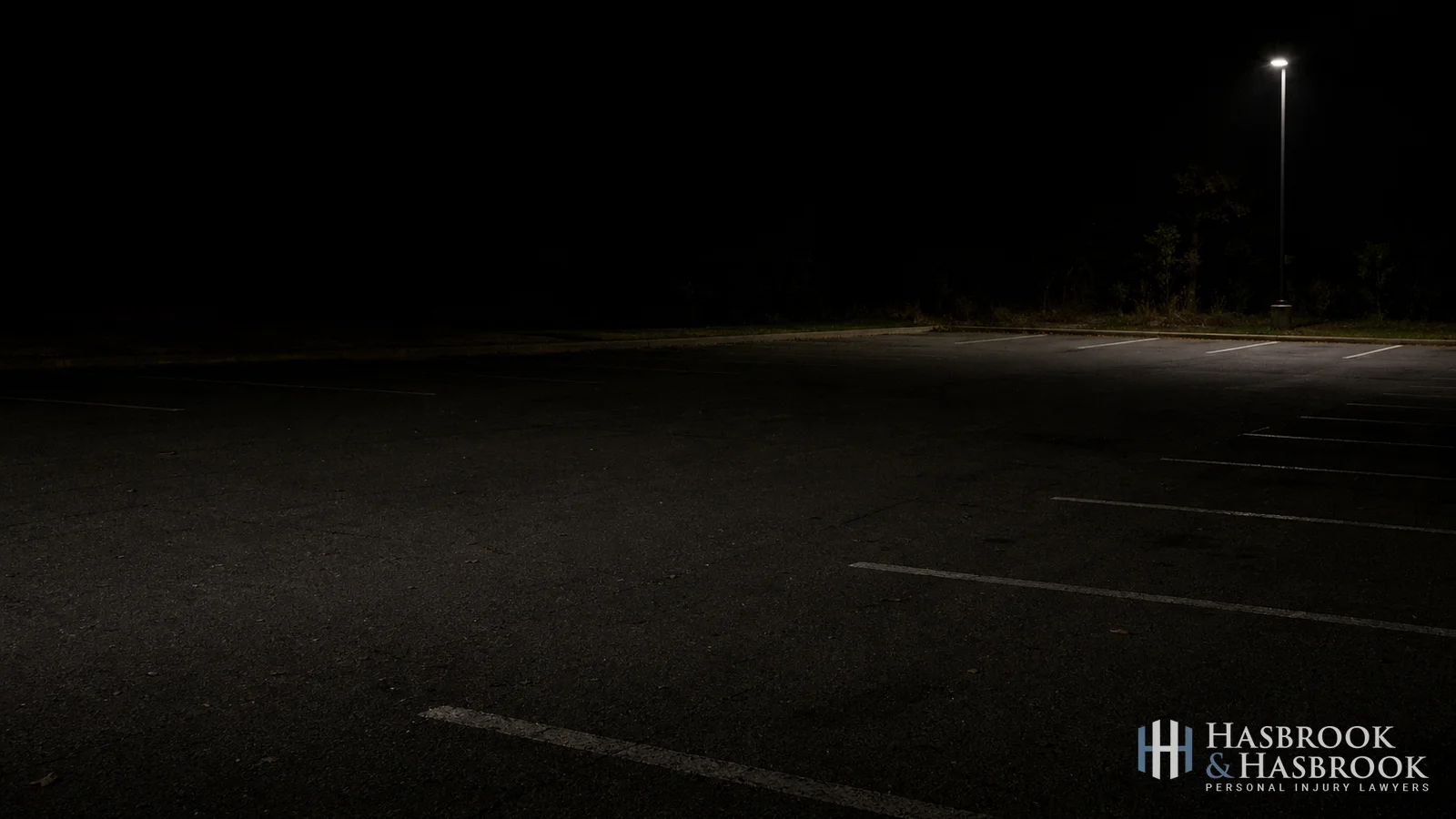
Lighting: maintenance logs, work orders for non-functioning fixtures, and any responding officer’s photographs of illumination at the scene, plus building code compliance records where a minimum foot-candle requirement applies.
Security personnel: staffing schedules, post orders, training certifications, and the contractor’s full contract. An understaffed schedule can be as probative as no guards at all. See the framework for documenting notice of a security deficiency.
Common fact patterns that generate negligent security claims
Negligent security claims concentrate where owners control access and invite the public onto the property. Bureau of Justice Statistics data shows violent and property crime disproportionately occurs where security is within the owner’s control.
- Apartment complexes: attacks in stairwells, garages, or common areas where management knew of broken entry systems or prior assaults. See how Oklahoma courts hold landlords responsible for shared-area conditions.
- Hotels and motels: non-functioning room hardware or poorly lit parking with limited camera coverage.
- Parking lots and structures: lighting, camera placement, and staffed security show whether precautions matched the known crime environment; prior break-ins in the same lot are often the strongest evidence available.
- Bars and nightclubs: operators who fail to control a known violent patron, or who re-admit someone previously ejected, face exposure alongside any dram shop theory.
- Retail and shopping centers: inadequate lighting or absent surveillance at locations with documented prior crime; CDC violence-prevention data identifies assault as a leading cause of injury-related emergency visits.

CPTED analysis as a framework for expert testimony
Crime Prevention Through Environmental Design (CPTED) is the methodology security experts use to evaluate whether a property’s design and management reduced or increased criminal opportunity: natural surveillance (lighting, sightlines), access control (entry barriers), and territorial reinforcement (signage distinguishing public from restricted space). A documented CPTED-design failure moves expert testimony beyond a prior-incident count toward a systematic design analysis. Build the evidentiary foundation first by working through what to preserve before the scene changes.
Foreseeability proxies when prior incident records are thin
Small landlords and independent operators often keep poor records. When the management file is sparse, look to:
- Area crime and 911 call data for surrounding blocks, supporting a reasonable-care argument even without on-site reports
- Industry security standards from hotel, apartment, or retail loss-prevention groups; a material gap is probative independent of prior incidents
- Security audits the owner commissioned, valuable when its own consultant flagged the risk and nothing changed
- Insurance loss-control correspondence, which sometimes shows notice from the owner’s insurer
Damages, comparative fault, and the limitations period
Compensatory damages follow the standard categories: medical expenses, lost wages and earning capacity, and non-economic damages for pain and suffering, which Oklahoma juries weigh using a multi-factor framework rather than a fixed formula.
Punitive damages. Under 23 O.S. § 9.1, Category I punitives require clear and convincing evidence of “reckless disregard for the rights of others,” defined in Therrien v. Target Corp., 617 F.3d 1242 (10th Cir. 2010), as conduct creating a substantial, unnecessary risk of serious harm. No Oklahoma appellate decision has affirmed a § 9.1 award here; the theory is record-driven.
Comparative fault. Defense counsel will argue assumption of risk, provocation, or a purpose outside the invitation. Under 23 O.S. § 13, recovery is barred only when the claimant’s negligence exceeds the defendant’s; at exactly 50% the claim still survives, reduced in proportion to the claimant’s share. See how that reduction plays out in a premises case.
Several liability. Under 23 O.S. § 15, liability among multiple defendants is several only: each tortfeasor pays its own allocated share. Whether a jury may allocate fault to a criminal co-defendant alongside a negligent owner is unsettled; a judgment-proof assailant on the verdict form can sharply reduce recovery. Warn the client about collectability before engagement.
Under 12 O.S. § 95, the limitations period for a negligent security personal injury claim is two years from injury. Flag government property ownership at intake: the Governmental Tort Claims Act’s notice requirements can shorten the window. The exceptions for minors and the discovery rule are covered separately.

Intake questions that sharpen the issue-spotting analysis
These questions surface evidentiary gaps early and give the client a realistic picture of the claim before the investigation opens.
- Was the client an invited guest, tenant, or customer? Trespasser status is a threshold defense counsel will raise immediately.
- Had anything similar happened here before? Ask about reputation for danger or visible security problems on earlier visits.
- What security was visible on site? Guards, working cameras, functioning lights, and locked entry points help identify failures before formal records arrive.
- Was a police report filed? The officer’s report documents scene conditions and witness statements; obtain it immediately, along with the agency’s call log.
- Who controls the property? Individual, LLC, management company, or institutional operator. Early identification directs preservation demands before routine purges eliminate evidence.
After intake, send the preservation demand to the owner and its insurer, request police call logs, and canvass the scene while conditions still match.