

Negligent security is a premises liability claim holding an Oklahoma property owner responsible when inadequate security, such as broken lighting or missing cameras, allowed a foreseeable crime to injure someone on the property. Under 76 O.S. § 1, property owners owe a duty of reasonable care to protect invitees from known safety risks.
When a crime happens on someone else’s property in Oklahoma, two parties may bear responsibility: the person who committed it, and a property owner who failed to take reasonable security precautions. This FAQ from Hasbrook & Hasbrook covers when a property owner can be held liable for inadequate security under Oklahoma law.
What Is Negligent Security in Oklahoma?
Negligent security is a branch of how Oklahoma treats a property owner’s duty to protect visitors. Under 76 O.S. § 1, every person has a legal duty not to injure another through negligent acts or omissions. For property owners, that duty extends to maintaining reasonably safe conditions for invitees (customers, tenants, and guests), including reasonable protection against foreseeable third-party criminal acts.
A negligent security claim rests on four elements:
- The property owner owed you a duty of care as an invitee
- The owner breached that duty by failing to provide adequate security
- That breach was a proximate cause of the crime that harmed you
- You suffered recoverable damages as a result
The criminal actor bears primary responsibility for the harm. A property owner’s liability is secondary and conditional: it attaches only when the crime was reasonably foreseeable and the owner had the opportunity to take reasonable preventive steps. Property owners are not insurers against every possible crime on their premises; they are responsible for known, addressable security risks. For a broader look at when property owners face civil liability generally, see our FAQ on when property owners are liable for injuries on their land.



What Does Security Negligence Look Like?
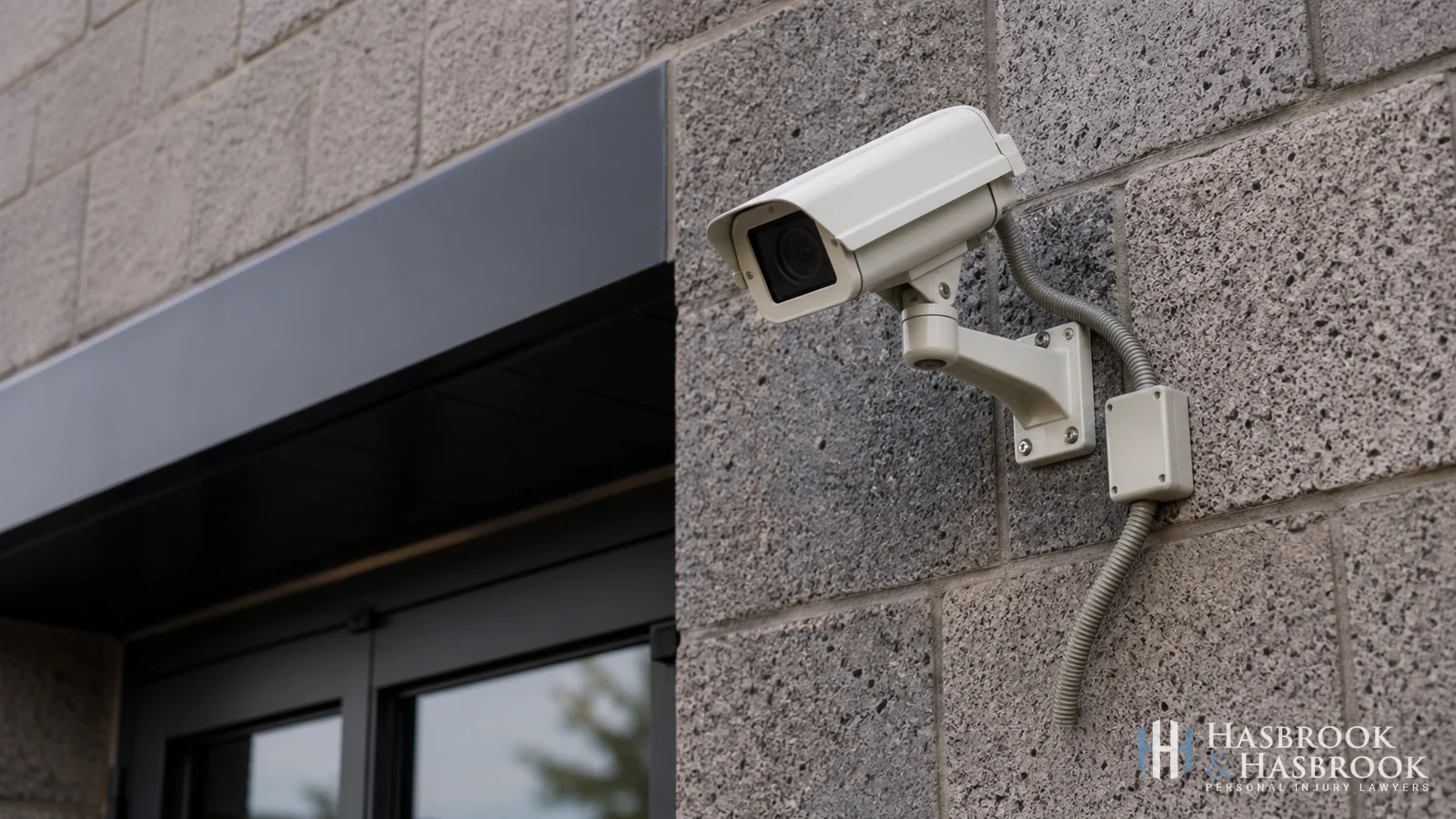
Security negligence often shows up as conditions the property owner knew about but failed to correct. Common examples include:
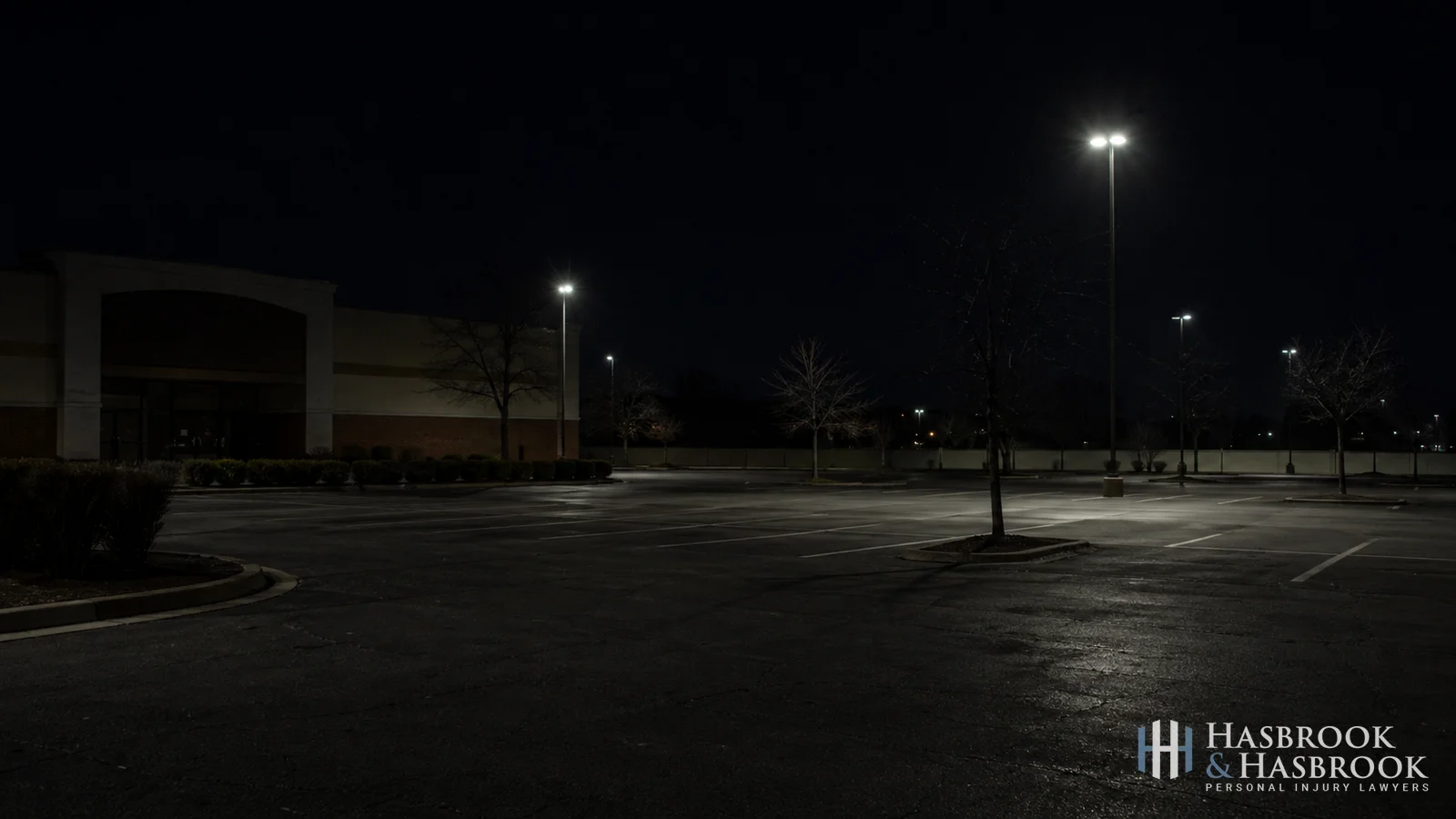
- Broken or inoperative exterior lighting in parking lots or common areas
- Non-functional or absent CCTV cameras in areas with documented prior incidents
- Failure to employ security personnel at locations with a history of violent crime
- Broken entry locks, gate mechanisms, or access control systems
- Absence of security patrols in large surface parking areas
- Failure to act on documented tenant or visitor complaints about security conditions
- Insufficient response to prior police reports from the same location
The question is not whether the property looks unsafe in a general sense, but whether the owner had notice of a specific risk and the opportunity to address it before the crime occurred. Our attorney resource covers how these conditions factor into a liability analysis at case intake.
The Foreseeability Test: How Courts Decide Property Owner Liability
Foreseeability is the central question in every negligent security case: did the property owner know, or should have known, that this type of criminal act was likely at that location? Without foreseeability, liability does not attach regardless of what security measures were absent.
The strongest evidence of foreseeability is prior similar incidents at the same property. Courts examine:
- Police reports and dispatch calls for the same address or the immediately surrounding area
- Internal incident logs maintained by the property owner or management company
- Security camera footage and guard logs showing prior threats or confrontations
- Neighborhood crime statistics and news reporting
- Prior civil complaints or demand letters filed against the same property
Local resources such as the City of Oklahoma City’s public safety information and police call-for-service records can help establish whether an area has a documented history of criminal activity.
The prior similar incidents standard does not require an identical prior crime; a pattern of purse-snatching, for example, can make a subsequent armed robbery foreseeable. What matters is whether prior events put the owner on notice that this category of harm was a real, addressable risk.
Oklahoma courts also weigh the totality of circumstances, including area crime statistics and the nature of the property itself: a nightclub with a documented history of parking lot violence carries a higher security obligation than an office building with no prior incidents. This connects directly to what an injured person must prove in a negligence claim.
Who Is Liable When a Crime Occurs on Someone Else’s Property?
The person who commits the crime is the primary wrongdoer and bears the greatest share of responsibility. Under Oklahoma’s modified comparative fault system, responsibility is allocated among all parties whose negligence contributed to the harm: the criminal actor, the property owner, and sometimes the injured person.
A property owner can face civil liability when:
- The owner had actual or constructive notice that criminal activity was likely at that location
- The owner had a reasonable ability to take preventive precautions
- The owner failed to take those precautions
- That failure was a proximate cause of the injury
The fact that a third party directly caused the harm does not automatically release the property owner from civil liability. Oklahoma courts recognize that an owner’s failure to maintain adequate security can be a contributing cause of a foreseeable criminal act, even when the criminal is the direct cause of the injury.
Potential defendants in a negligent security claim include the property owner, a management company, a commercial tenant that controlled the relevant space, a contracted security company, or some combination of these parties. Our premises liability case-intake checklist outlines how to identify all potentially responsible parties early in a case.

How to Build a Negligent Security Claim
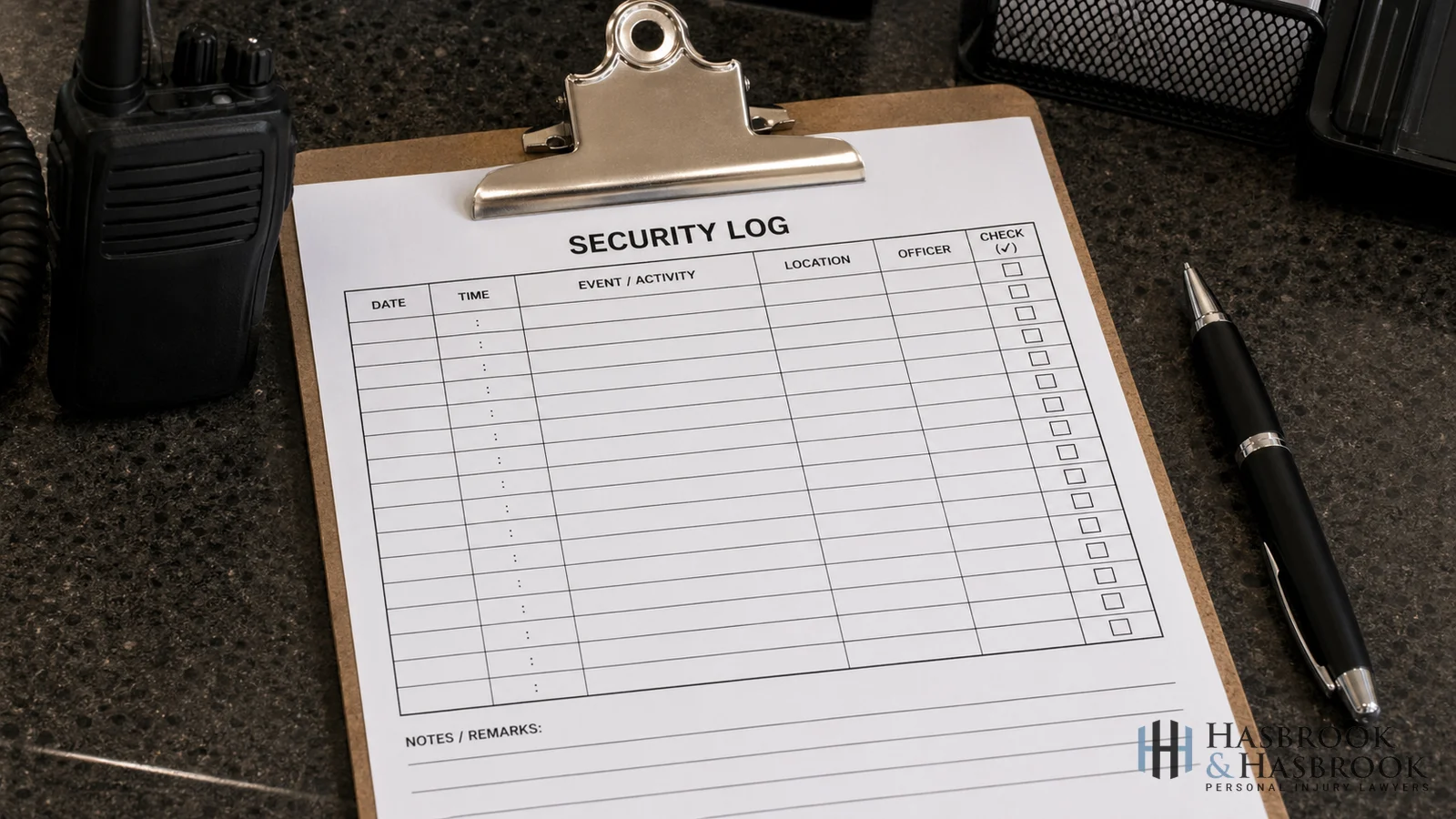
Evidence gathering begins immediately after the incident. The steps below cover the most time-sensitive items.
Preserve security camera footage. Most commercial properties retain footage for only 14 to 30 days before it overwrites automatically. Our FAQ explains how to preserve camera footage before it is lost. Attorneys can send written preservation demand letters within days of being retained on a case.
Obtain all incident and crime reports. Request the police report, any internal incident reports filed by the property, and dispatch logs for the same address. Dispatch records going back two to three years may reveal a pattern of criminal activity the owner was aware of long before the incident that injured you.
Document current security conditions. Photographs and video taken shortly after the incident can capture inadequate lighting, broken locks, and missing or damaged camera equipment. This evidence is time-sensitive because property owners frequently make repairs after a crime occurs on their premises.
Gather the prior incident history. A thorough records request covering incident logs, police reports, and internal security audits at the property builds the foreseeability foundation. Open records requests to the relevant Oklahoma police department can retrieve prior calls-for-service logs, which are generally available as public records.
Engage a qualified security expert. Expert witnesses review industry security standards for the property type (hotels, apartment complexes, parking garages) and compare them to actual conditions. The gap between what was provided and what was reasonably expected supports the breach element and helps quantify damages.
Common Locations Where Negligent Security Claims Arise
Claims are most common at properties with a higher concentration of people and an elevated exposure to criminal activity:
- Apartment complexes and rental housing: Crimes in hallways, stairwells, parking areas, and laundry rooms where landlords control access and lighting; federal housing rules enforced through HUD’s Office of Fair Housing and Equal Opportunity also inform habitability and safety expectations for rental housing
- Hotels and motels: Room intrusions and parking lot assaults at properties with inadequate access controls or poorly monitored entry points
- Bars, nightclubs, and entertainment venues: Assaults inside or near exits, particularly at locations where prior incidents were known to management
- Retail stores and shopping centers: Parking lot crimes and in-store assaults at locations where prior complaints were ignored or unaddressed
- Parking garages: A high-risk environment because of reduced visibility, limited bystander presence, and a history of prior incidents at many locations statewide
- Convenience stores and gas stations: Late-night robberies at locations with documented prior incidents and inadequate staffing or lighting
- Swimming pool and recreational areas: After-hours trespassing and assault at residential complexes where access controls were inadequate; see our page on swimming pool injury claims
Damages, Deadlines, and Comparative Fault in Oklahoma
Recoverable damages. A successful negligent security claim can result in compensation for past and future medical expenses, lost wages and reduced earning capacity, pain and suffering, and emotional distress, including the psychological trauma the CDC’s violence-prevention research documents after a violent crime. For a full list of compensable losses, see the types of compensation available in an Oklahoma injury claim. If the crime resulted in death, an Oklahoma wrongful death claim may be available to surviving family members.
Filing deadline. Under 12 O.S. § 95, personal injury claims in Oklahoma must be filed within two years from the date of the injury. Missing this deadline bars the claim regardless of the severity of the harm or the degree of fault. Our overview of exceptions that can extend Oklahoma’s injury filing deadline covers tolling rules in more detail. One of those rules matters here: if you were a minor when the crime occurred, 12 O.S. § 96 tolls the deadline during your minority, giving you until one year after your 18th birthday to sue, or the ordinary two-year period if that runs longer.
Comparative fault. Under 23 O.S. § 13 and 23 O.S. § 14, Oklahoma follows modified comparative negligence. If you were partly at fault (for example, by ignoring posted warnings or entering a restricted area), your recovery is reduced by your percentage of fault. Recovery is barred only once your share of fault exceeds 50 percent; at exactly 50 percent fault, you still recover, with your award reduced proportionally. The property owner’s defense often includes arguments that the injured person assumed the risk or acted carelessly. A documented record of the property’s security failures and the owner’s prior notice helps counter these arguments. For more on how fault allocation works in premises cases, see how a partial-fault finding affects a premises injury claim.

Quick Answers: Negligent Security FAQ
What is the statute of limitations for a negligent security claim in Oklahoma?
Two years from the date of injury, under 12 O.S. § 95. Cases involving minors may qualify for the minority-tolling rule described above.
Can I sue a business if I was robbed in their parking lot?
Yes, if the robbery was foreseeable. Courts look at whether the property had prior similar incidents, adequate lighting and camera coverage, and notice of the risk it failed to address. A business is not automatically liable for every crime on its premises; foreseeability is the threshold question.
Does the property owner have to know the specific person who committed the crime?
No. Foreseeability is assessed at the level of general risk: did the owner know, or should have known, that this type of criminal act was reasonably likely at this location? Prior incidents at the same address are the strongest evidence.
What if I was partly at fault for the incident?
Your recovery is reduced by your percentage of fault. Oklahoma’s rule bars recovery only once your share of fault exceeds 50 percent; at exactly 50 percent, you still recover a proportionally reduced award. A jury or a settlement determines how fault is allocated among you, the property owner, and the criminal actor.
Does the criminal also face civil liability?
Yes, the person who committed the crime may face both criminal prosecution and a civil lawsuit, though collecting a judgment against an individual perpetrator is often difficult in practice. The property owner’s liability insurance is typically the more practical source of recovery, which is why the negligent security claim against the property is usually the focus of civil litigation.
Can I sue a landlord for a crime committed in a common area of my apartment building?
Yes, if the landlord controlled the common area and the crime was foreseeable. Courts hold landlords to a duty of reasonable care in hallways, stairwells, laundry rooms, and parking areas. Prior incidents at the same complex and documented failures (broken locks, inoperative lighting, overwritten footage) support the foreseeability element. See our discussion of how landlord liability works for crimes in shared apartment areas.
Hasbrook & Hasbrook represents people hurt by inadequate security at commercial and residential properties across Oklahoma. Call (405) 605-2426 for a free consultation, or contact our office online to describe your situation and learn whether you have a viable claim.



