

Negligent security is a premises liability claim: a property owner who knew or should have known that criminal activity was foreseeable on their property, but failed to provide reasonable security such as working locks, adequate lighting, or functioning cameras, can be held civilly liable when that failure allows a criminal to harm a lawful visitor.
When a violent crime occurs on someone else’s property, the person who committed it carries primary responsibility. Oklahoma law recognizes a separate question: did the owner’s failure to maintain reasonable security create conditions that allowed the crime to happen? Our attorneys at Hasbrook & Hasbrook evaluate these claims for clients harmed where a known security risk went unaddressed and the harm was foreseeable.
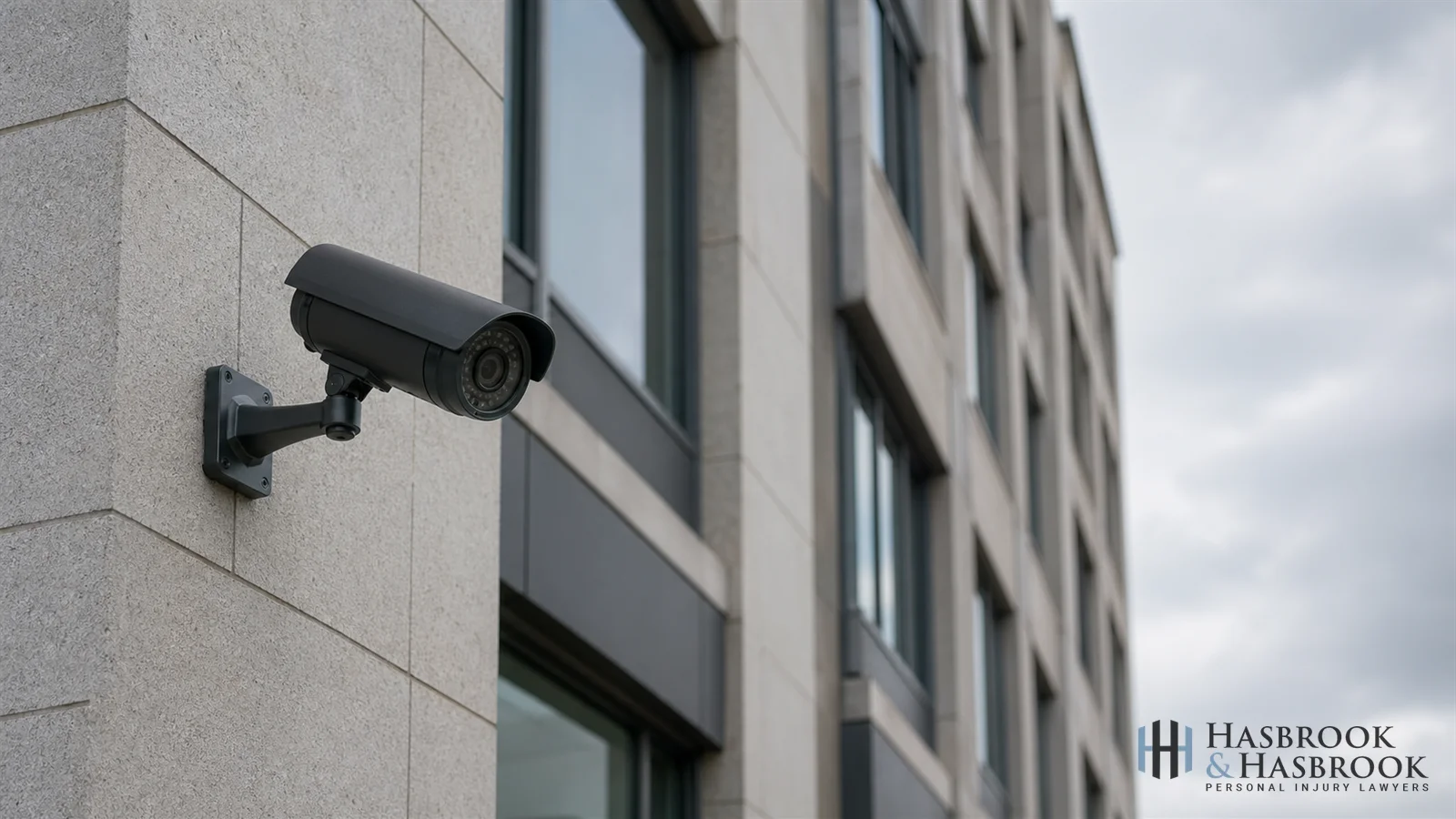
What Is Negligent Security Under Oklahoma Law?
Negligent security is a subcategory of how Oklahoma law defines a property owner’s duty of care. Owners who open their premises to the public owe lawful visitors a duty of reasonable care that is not limited to physical hazards like wet floors or broken stairs. When criminal activity on the property is reasonably foreseeable, that duty extends to providing security measures adequate to address the risk. Liability is conditional on foreseeability, not a guarantee against every crime. See how Oklahoma courts evaluate this duty in specific fact patterns.



Foreseeability: The Test That Controls Property Owner Liability
The central question in a negligent security case is whether the crime was foreseeable. Without foreseeability, there is no duty, and without duty there is no liability. As the Cornell Law Legal Information Institute explains, foreseeability asks whether a reasonable person in the owner’s position would have anticipated that a particular type of harm could occur.
Courts do not require proof that the exact crime was predicted. Foreseeability is typically established through:
- Prior criminal incidents at the property, documented in police call logs and incident reports
- The property’s location relative to documented area crime patterns, including Bureau of Justice Statistics victimization data
- Complaints from tenants, guests, or employees about known security deficiencies
- Physical conditions that created a criminal opportunity, such as broken entry locks or unlit parking areas
A property with a documented history of prior assaults is held to a higher foreseeability standard than one with no such history. Our structured checklist for building this foreseeability case covers how each factor is applied.
Property Owner Liability vs. the Criminal’s Primary Responsibility
The person who committed the crime is the primary tortfeasor. A property owner’s liability is secondary and conditional: it attaches only when security failures were a contributing cause of harm that was foreseeable, not merely a backdrop to a crime that could have happened anywhere. An owner is not responsible for every crime on their land, only for those reasonable security could have prevented given what the owner knew or should have known.
When both the criminal actor and a property owner are named as defendants, Oklahoma’s modified comparative negligence rule under 23 O.S. § 13 governs how fault is allocated. A plaintiff who bears some fault can still recover as long as that share does not exceed the combined fault assigned to the defendants; a plaintiff whose own fault equals the defendants’ combined fault still recovers, with damages reduced proportionally.
Where Negligent Security Claims Commonly Arise
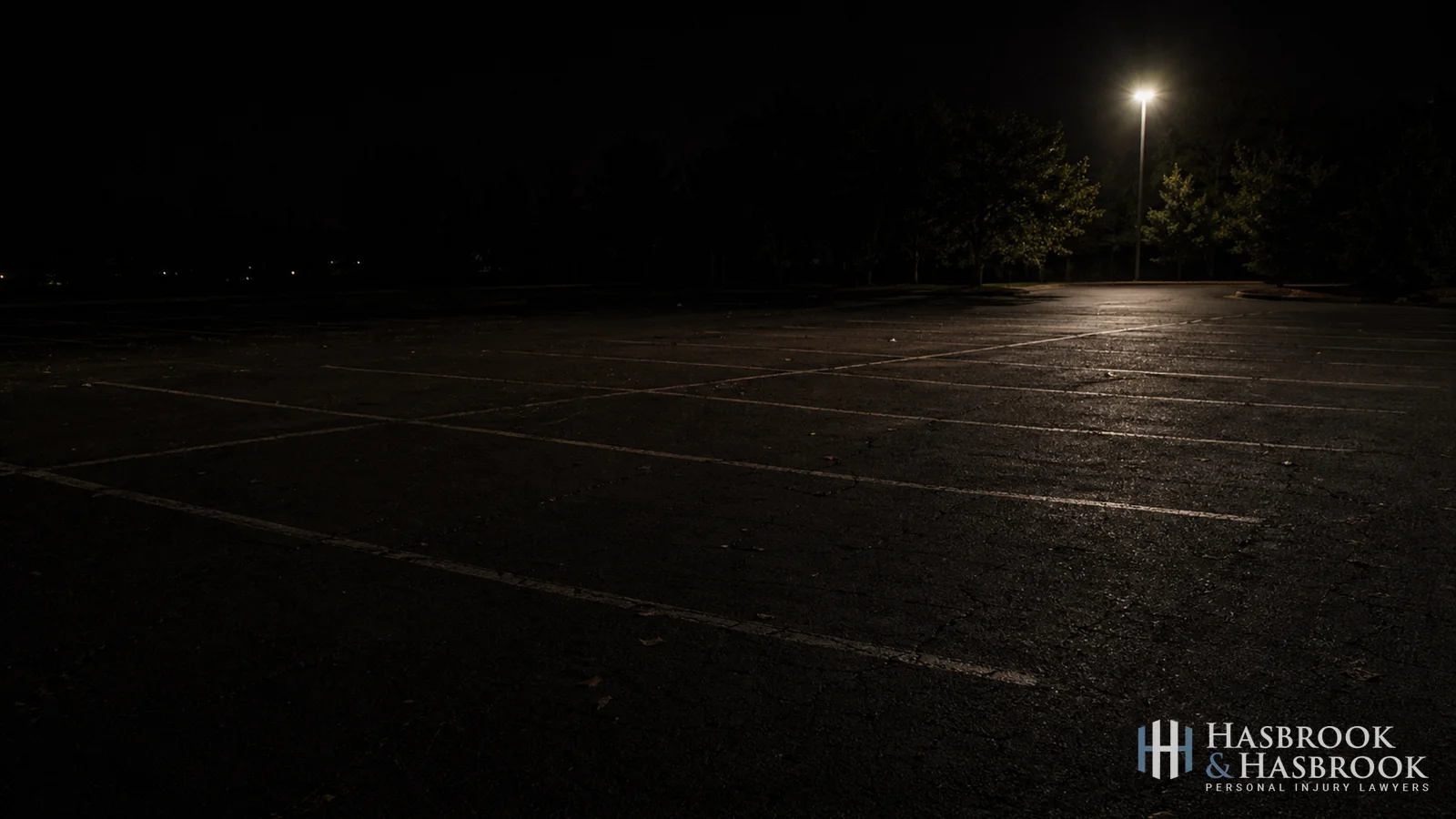
These claims arise wherever a property owner owes a duty to those invited onto the premises. Common settings include:
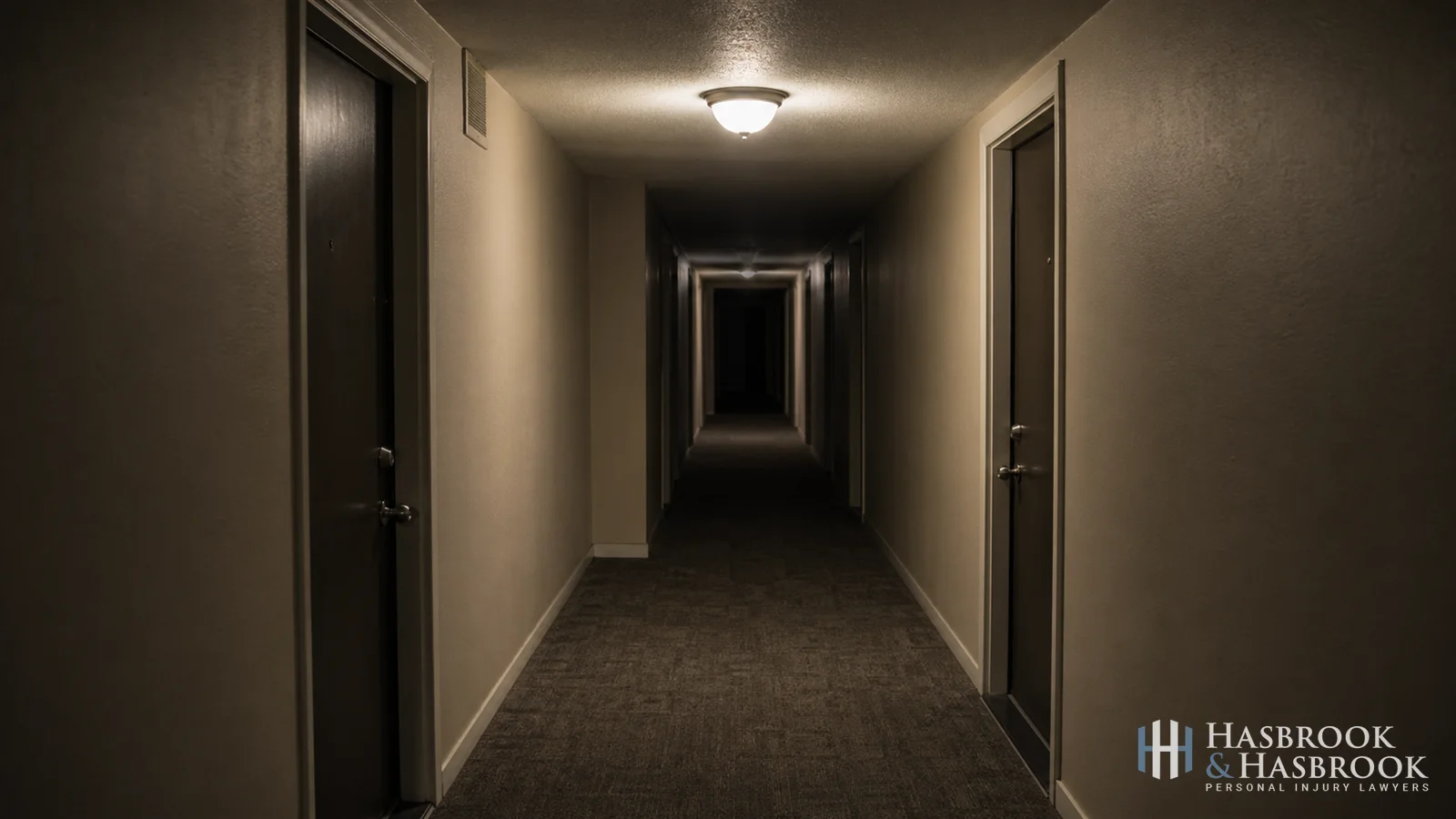
- Apartment complexes: tenants and guests attacked in stairwells or parking garages where management knew about broken entry systems or inadequate lighting, discussed further in our overview of a landlord’s duty to secure shared spaces
- Hotels and motels: guests assaulted in rooms with defective locks or in unmonitored parking areas
- Parking lots and garages: lighting, camera placement, and staffing bear directly on foreseeability, and preserving that footage before it is overwritten is time-critical
- Bars and nightclubs: operators who fail to control known violent patrons may face civil exposure separate from an establishment’s liability for over-serving a patron
- Retail and shopping centers: inadequate lighting and absent surveillance where prior crime is documented, consistent with CDC violence prevention data on assault as a leading cause of injury-related emergency visits
Even a pattern of lower-level crimes, including repeated trespass or vandalism, can establish foreseeability for a later violent incident.

Identifying Who Can Be Held Liable
Negligent security cases often involve more than one defendant, each with separate insurance and discovery obligations, so identifying each one early matters.
- The property owner, the individual or entity holding title
- The property management company, if a separate firm operated the premises
- A commercial tenant that controlled the specific area where the crime occurred
- A contracted security company hired to provide services but that failed to perform adequately
- The criminal actor, who retains primary liability for the intentional harm
Defendant identification turns on which party controlled the security measures that failed. Our explanation of how courts analyze control over a property covers this in more depth.
Evidence, Damages, and the Filing Deadline
A viable claim requires evidence of foreseeability, the security failure, and a causal link to the harm: crime and incident history, photos of broken locks or burned-out lights, surveillance records, security contracts, and expert opinions on whether the property’s measures met industry norms.
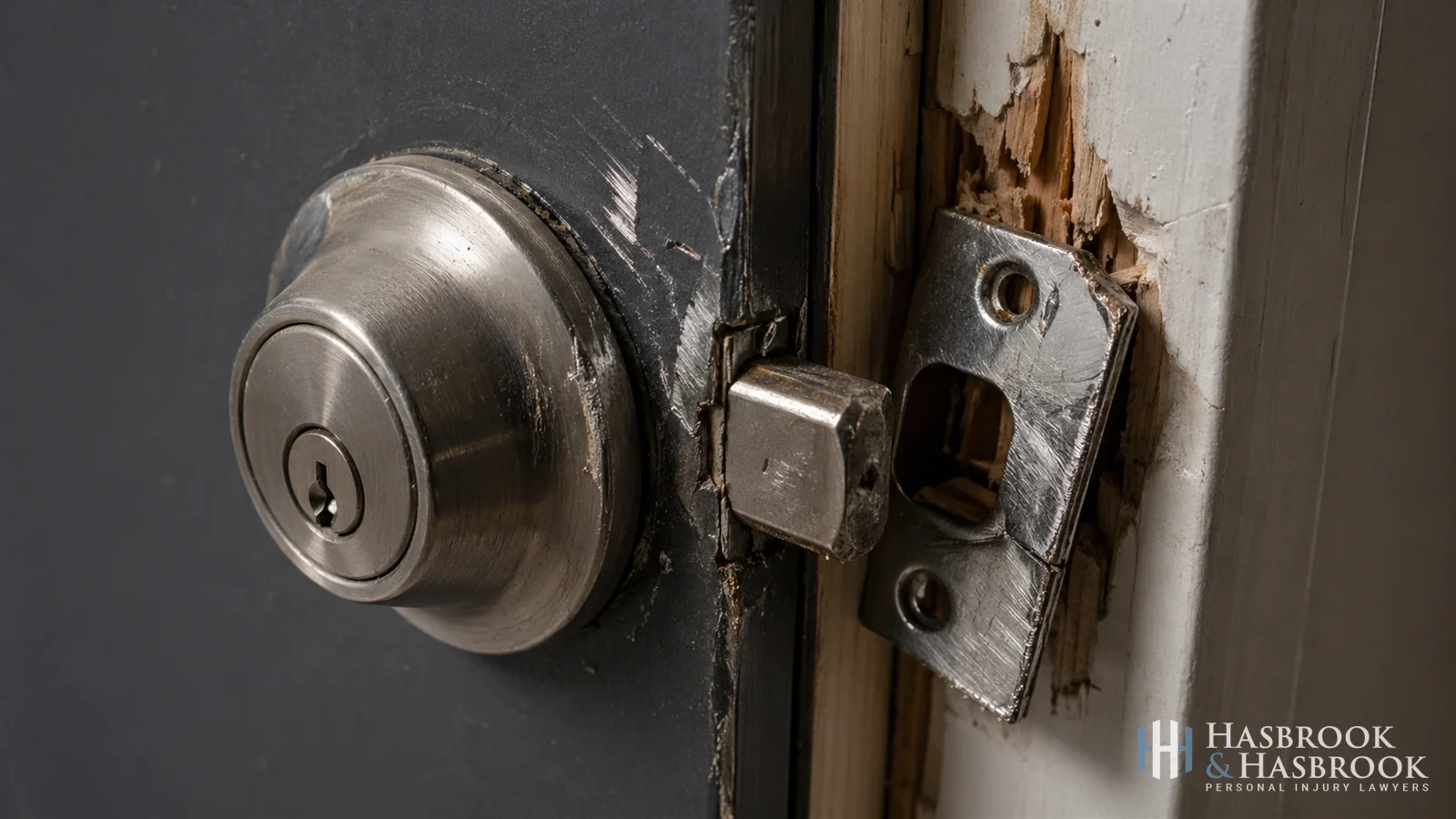
Because these records are frequently overwritten within weeks, an intake checklist used to preserve that evidence early is essential, and the process used to compel that production commonly reaches a property’s full security and incident history.
Recoverable damages can include medical expenses, lost wages, reduced earning capacity, and pain and suffering; when a family member did not survive, compensation available in a fatal case may apply. Our overview of the factors that drive a claim’s value covers what affects recovery amounts. Oklahoma’s general personal injury filing deadline under 12 O.S. § 95 gives most injured parties two years from the date of injury to file suit; see our overview of Oklahoma’s two-year filing window and its limited exceptions.
Frequently Asked Questions About Negligent Security Claims in Oklahoma
Can a property owner be liable even if no crimes had occurred there before?
Yes, in some cases. If physical conditions, such as poor lighting or broken entry points, made criminal activity foreseeable even without a documented prior incident at that address, a court may still find a duty existed. The analysis covers what the owner should have known, not only what was reported.
What happens if I was partially at fault for being in the area where the crime occurred?
Oklahoma’s modified comparative negligence rule allows recovery even when a plaintiff shares some fault, as long as that share does not exceed the combined fault of the defendants. Our page on how partial fault affects your recovery explains the calculation.
How long do I have to file a negligent security claim in Oklahoma?
Most claims must be filed within two years under 12 O.S. § 95. Because surveillance footage is frequently overwritten within 30 days, consulting an attorney early protects evidence regardless of the remaining deadline.
Can I sue both the criminal and the property owner?
Yes. They are separate defendants under separate theories of liability. The criminal’s primary responsibility does not eliminate a property owner’s conditional civil liability for foreseeable harm that adequate security could have prevented.


Speak with an Oklahoma City Premises Liability Attorney
If you were harmed at a property where security failures contributed, building a strong claim requires acting before evidence disappears. Hasbrook & Hasbrook represents clients throughout the Oklahoma City metro area in negligent security and premises liability claims and can evaluate what your claim may be worth and what steps to take first. Reach our team for a free case review.



