Witnesses can strengthen an Oklahoma slip-and-fall claim, but they are not required to win one. What the law requires is evidence that the property owner knew or should have known about a dangerous condition and failed to correct it. Witnesses are one component of that proof, alongside incident reports, surveillance footage, and medical records.
Do you need a witness to win a slip-and-fall claim?
No. Oklahoma premises liability claims require proof by a preponderance of the evidence: it is more likely than not that the property owner’s negligence caused the injury. Photographs, a completed incident report, security camera footage, maintenance logs, and medical records can meet that standard without a single eyewitness.
Many successful claims involve no independent witnesses at all. Witnesses help, but their absence alone does not end a case. Slip-and-fall cases can be difficult to win even with witnesses when the other evidence is weak, and they can succeed without witnesses when the documentary record is strong.
What makes a witness valuable in a slip-and-fall case
Independent witnesses, people with no relationship to either party, carry credibility that the injured person’s account alone cannot match. A bystander who observed the wet floor, broken step, or uneven surface before the fall directly addresses the central the plaintiff burden question: did the hazard actually exist?
Third-party testimony also becomes important when the property owner disputes the injured person’s version of events. Jurors understand that claimants have a financial stake in the outcome. A disinterested observer’s account reduces that credibility gap and can significantly influence settlement negotiations.




Essential evidence for a slip-and-fall claim
Witnesses are one part of a broader evidence file. A strong claim rests on several layers:
- Photographs. Take wide-angle and close-up shots of the hazard immediately. Once the property corrects the condition, that visual record disappears.
- Incident report. Ask the manager, supervisor, or property owner for a written report before leaving. Request a copy and note the name of anyone who refuses to generate one.
- Surveillance footage. Many commercial properties overwrite recordings on 30- to 90-day cycles. Preservation letters must go out quickly to stop the loop.
- Medical records. Same-day or next-day treatment ties the injury to the fall. Thorough injury documentation matters at every stage of the claims process.
- Maintenance and inspection logs. Records showing a known problem went unaddressed for days or weeks are direct notice evidence against the property owner.
How to collect witness information at the scene
If anyone saw the fall or was near the hazard, get their name and phone number before leaving. Ask what they observed and where they were standing at the time. Keep questions factual. Do not ask witnesses to speculate about fault or to describe more than they actually saw.
If your injuries prevented you from gathering information, ask someone who assisted you to collect contact details. Follow up within 24 hours. Memories fade and witnesses become harder to reach with each passing day.
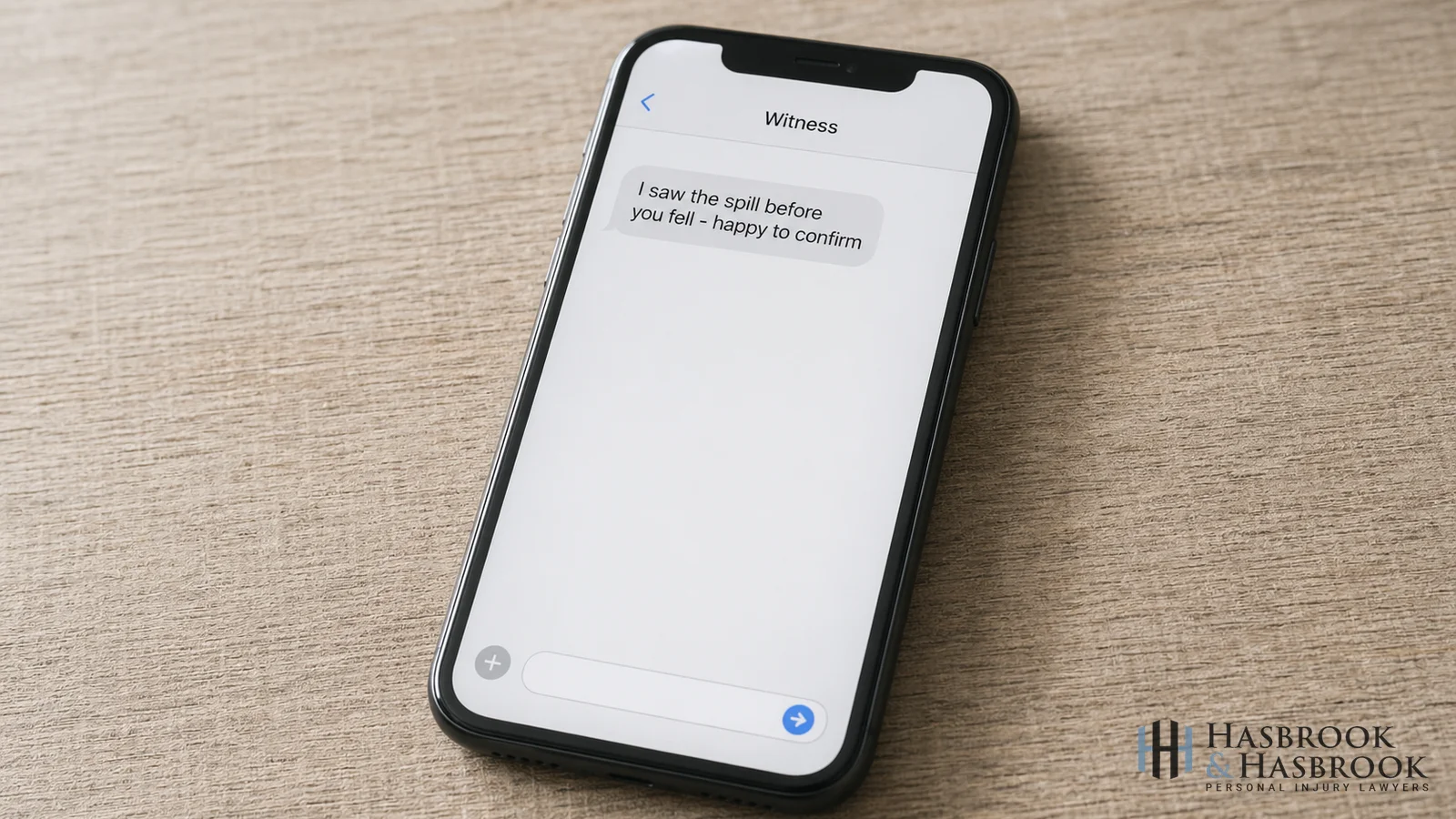
Unsworn witness statements vs. sworn affidavits
These two documents serve different purposes, and the procedural distinction matters for admissibility.
An unsworn witness statement is an informal account collected outside any legal proceeding. It is not made under oath and is not notarized. Unsworn statements lock in an account before details change, but they carry hearsay risks when offered as substantive evidence at trial. Opposing counsel will challenge admissibility under Oklahoma’s evidence rules if the statement is presented for the truth of the matter asserted rather than for impeachment.
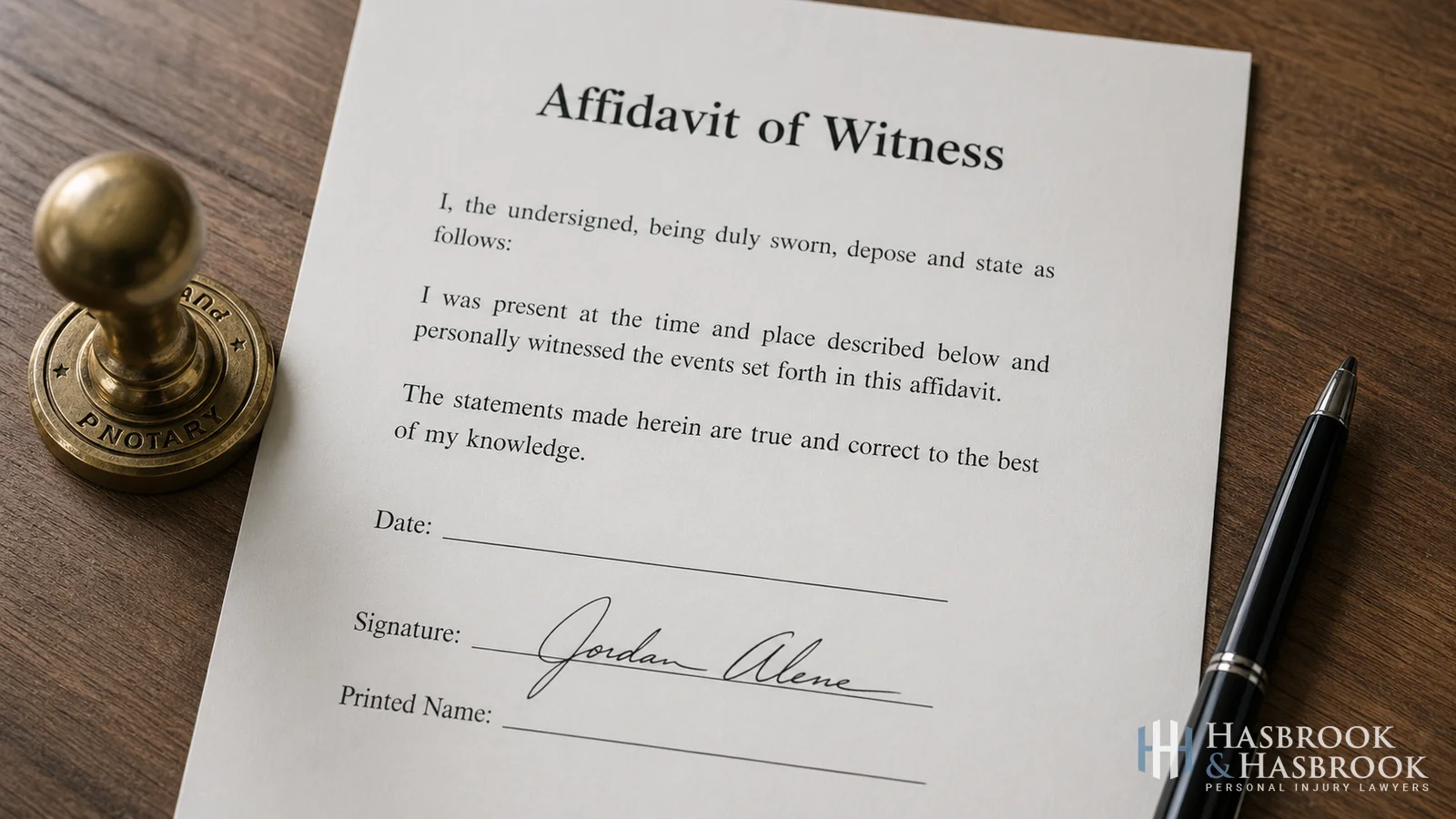
A sworn affidavit is signed under oath before a notary public. Because the signer attests to accuracy under penalty of perjury, sworn affidavits carry procedural weight in motions, can serve in lieu of live testimony in certain proceedings, and are treated as competent evidence when properly authenticated.
Attorneys typically gather unsworn statements first for speed, then obtain sworn affidavits from witnesses whose testimony will be central to the case. The two are not interchangeable. See how formal witness accounts fit into the discovery process in a personal injury lawsuit.


What to do after a slip-and-fall injury
The first 24 to 48 hours shape the strength of the claim. Follow these steps after a slip-and-fall accident:
- Report the fall to the property owner, manager, or landlord immediately. Get written confirmation when possible.
- Seek medical care the same day or within 24 hours. Treatment gaps give adjusters grounds to argue the injury was minor or pre-existing.
- Photograph the scene, your clothing, and your injuries. Save the shoes you were wearing.
- Avoid social media. Posts about physical activities during the claim period are routinely used to undercut injury severity arguments.
- Contact an attorney. A lawyer can send preservation letters for surveillance footage and maintenance records while you focus on recovery.
How comparative fault affects slip-and-fall claims
Oklahoma’s comparative fault rule under 23 O.S. § 13 bars recovery when a claimant’s fault exceeds 50%. Property owners and their insurers routinely argue that the injured person was not watching where they were going, ignored a visible warning sign, or wore improper footwear. Witness testimony that confirms no warning was posted, or that the hazard was not apparent to a reasonable person, directly counters those arguments. Without witnesses, strong photographic evidence and a preserved incident report fill that role. Learn how Oklahoma’s standard applies in comparative negligence and fault cases.
Damages in a successful claim include medical expenses, lost wages, reduced earning capacity, pain and suffering, and loss of enjoyment of life. Credible witness evidence typically raises settlement value because it limits the insurer’s ability to dispute liability or inflate comparative fault. See the full breakdown of recoverable damages in an Oklahoma slip-and-fall claim and get a preliminary sense of how much your case may be worth.
Common mistakes that hurt slip-and-fall cases
- Delaying medical care. Adjusters treat treatment gaps as evidence the injury was minor or unrelated to the fall.
- Leaving without an incident report. Without a written record, the property owner may claim the fall was never reported.
- Giving a recorded statement to the at-fault insurer without counsel. You are not required to provide one. Review your recorded statement rights before speaking with an adjuster.
- Leaving the scene without witness contact information. Once gone, those bystanders are rarely located.
- Waiting too long to consult a lawyer. Surveillance recordings are overwritten quickly, and consulting a personal injury attorney early preserves options that close fast.
Understanding the property owner’s available defenses is equally important. Review valid defenses in Oklahoma slip-and-fall cases to see what your attorney will need to overcome. For claims at major retailers in Oklahoma City, our coverage of slip-and-fall claims at large retail stores explains what that process typically looks like.
Oklahoma’s personal injury statute of limitations is two years from the date of injury under 12 O.S. § 95. Shorter deadlines apply when a government entity owns the property. Confirm how long you have to sue after a slip and fall with an attorney early, because evidence degrades quickly regardless of the filing deadline.
we work for injured plaintiffs represent slip-and-fall claimants throughout the Oklahoma City metro. Call (405) 605-2426 for a free consultation, or reach us online.

Frequently asked questions
Do I need a witness to file a slip-and-fall claim in Oklahoma?
No. Witnesses are helpful but not required. Oklahoma law asks whether the property owner knew or should have known about the hazard and failed to correct it. Photographs, incident reports, surveillance footage, and medical records can satisfy that standard without an eyewitness account.
What should I ask a witness at the scene of a slip-and-fall?
Ask for their name and phone number, what they observed, and where they were standing at the time of the fall. Keep questions factual. Asking witnesses to speculate about fault or to describe more than they actually saw can damage their credibility when the case proceeds.
What is the difference between a witness statement and a sworn affidavit?
A witness statement is informal, not made under oath, and may face hearsay challenges when offered as substantive trial evidence. A sworn affidavit is signed under oath before a notary and carries procedural weight in motions and, in some proceedings, as a substitute for live testimony. They serve different strategic purposes and are not interchangeable.
How does comparative fault work when there are no witnesses?
Oklahoma bars recovery when a claimant’s fault exceeds 50% under 23 O.S. § 13. Without witnesses, photographs, a preserved incident report, and prompt medical records counter arguments that you were at fault. See the slip-and-fall practice page for a fuller picture of how these claims are built.
How long do I have to file a slip-and-fall lawsuit in Oklahoma?
Generally two years from the date of injury under 12 O.S. § 95. Shorter deadlines apply when a government entity owns the property. Review Oklahoma’s personal injury statute of limitations and confirm your specific deadline early. Evidence and witnesses become harder to secure as time passes.
Does having a witness improve my settlement offer?
Often yes. A credible third-party account limits the insurer’s ability to dispute the hazard or argue elevated comparative fault. Cases supported by independent witness testimony tend to resolve for more than comparable cases without it. Read about maximizing the value of your slip-and-fall case for additional strategies.