Most people think if they fall on someone else’s property, it’s an easy case. It’s not. Property owners and their insurance companies spend millions every year denying slip and fall claims, arguing the hazard was “open and obvious,” blaming you for not watching where you stepped, or claiming they had no idea the danger existed. Oklahoma law puts the burden on you to prove the owner knew about the hazard — or should have known — and failed to fix it or warn you. Without an attorney who understands how premises liability actually works in Oklahoma courts, even a legitimate claim can be denied.

At Hasbrook & Hasbrook, we are third-generation Oklahoma personal injury attorneys. We have handled slip and fall cases across every corner of this state — from grocery store wet floors in Oklahoma City to icy apartment complex walkways in Tulsa. We know the defense tactics, the legal standards, and the evidence it takes to win. If you were hurt because a property owner failed to keep their premises safe, we can help you pursue the compensation you deserve.
Why Do You Need a Slip and Fall Lawyer in Oklahoma?
You need a slip and fall lawyer in Oklahoma because premises liability law is complex, property owners aggressively fight these claims, and the legal burden falls on you to prove negligence. Without experienced legal counsel, insurance adjusters will exploit procedural gaps and legal doctrines to deny or undervalue your claim.
Slip and fall cases are not as straightforward as they appear on the surface. Unlike a car accident where a police report documents the collision and fault is often clear, a slip and fall requires you to prove that the property owner had notice of a dangerous condition and failed to address it. This is where most claims fall apart without legal help.
Oklahoma recognizes two types of notice in premises liability cases:
- Actual notice: The property owner knew about the hazard. For example, an employee was told about a spill and did nothing.
- Constructive notice: The hazard existed long enough that a reasonable property owner should have discovered and corrected it through regular inspection.
Proving constructive notice often requires evidence like surveillance video timestamps, maintenance logs, employee shift schedules, and inspection records. An experienced attorney knows how to demand this evidence before the property owner destroys it — and in many cases, requesting preservation of surveillance footage within the first 24 to 48 hours is critical because many systems automatically overwrite recordings.
Oklahoma also uses a duty of care tier system that determines what level of protection a property owner owes you. The owner’s obligations depend entirely on why you were on the property:
| Visitor Status | Definition | Duty of Care Owed | Common Examples |
|---|---|---|---|
| Invitee | Person on the property for the owner’s business benefit | Highest — must inspect, discover, and fix or warn of hazards | Store customers, restaurant patrons, hotel guests |
| Licensee | Person on the property with permission but not for the owner’s benefit | Moderate — must warn of known hidden dangers | Social guests, door-to-door salespeople |
| Trespasser | Person on the property without permission | Lowest — must not willfully or wantonly injure | Trespassers, uninvited individuals |
If you slipped and fell in a grocery store, you were an invitee. The store owed you the highest duty of care, including the obligation to regularly inspect the premises for hazards. Your attorney will use this legal classification to establish exactly what the property owner was required to do — and how they failed.
Insurance companies also deploy the “open and obvious” doctrine as a defense in nearly every slip and fall case. They argue that the hazard was so apparent that you should have seen it and avoided it. A skilled attorney can counter this defense by showing that you were distracted by a legitimate reason (such as looking at merchandise in a store), that the hazard was partially concealed, or that the property owner had a duty to remedy the condition regardless of its visibility.



What Are the Most Common Causes of Slip and Fall Accidents in Oklahoma?
The most common causes of slip and fall accidents in Oklahoma include wet or slippery floors, uneven walking surfaces, poor lighting, weather-related ice and snow, loose floor coverings, and cluttered aisles. These hazards appear in stores, restaurants, offices, parking lots, and residential properties statewide.
Oklahoma’s weather plays a significant role in fall accidents. Ice storms are common from November through March, and property owners have a duty to treat walkways, parking lots, and entrances within a reasonable time after accumulation. Apartment complexes and commercial properties that fail to salt or sand icy surfaces put every tenant and visitor at risk.
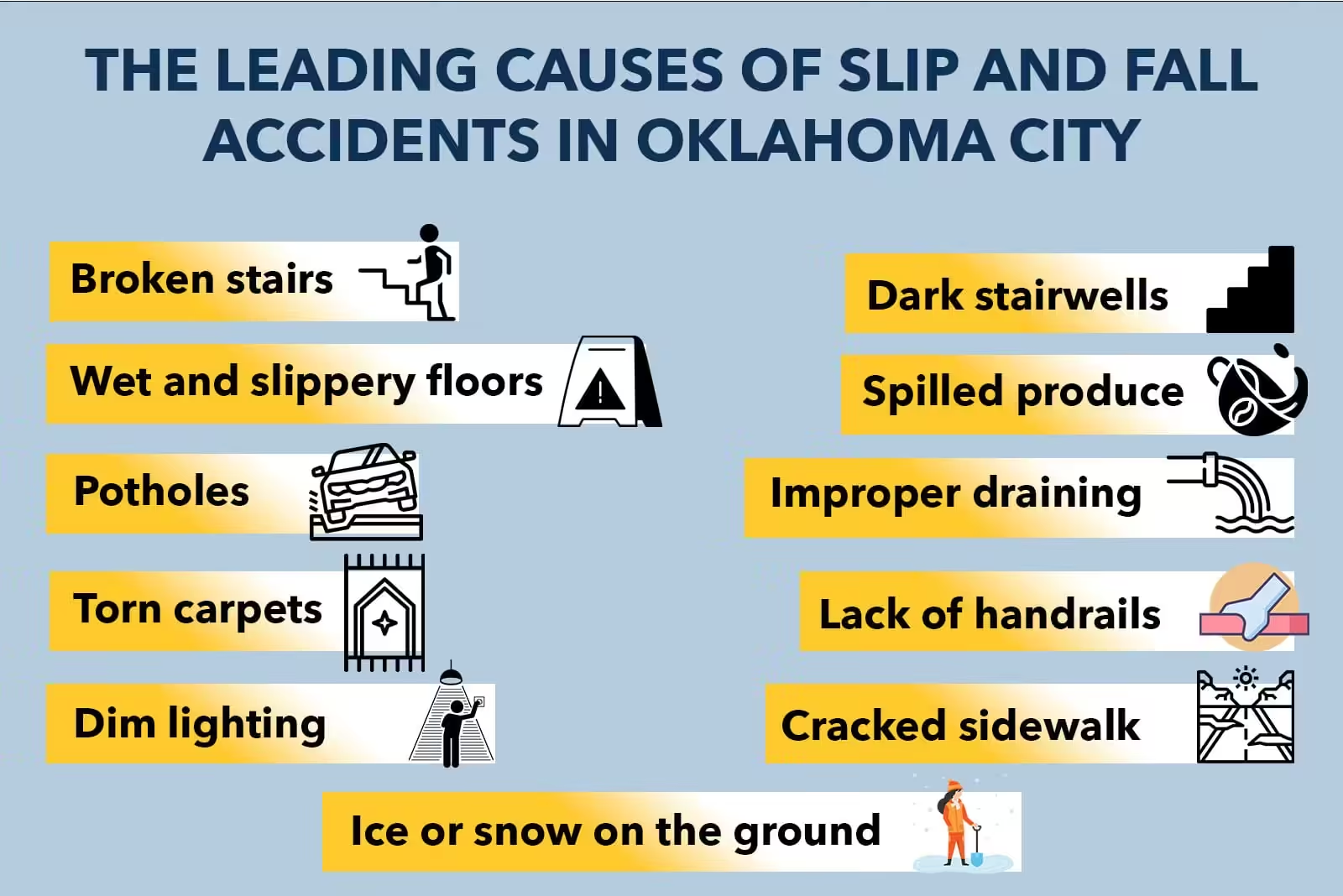
Here are the hazards we see most often in Oklahoma slip and fall cases:
- Wet floors in grocery stores and restaurants — Spills from produce misters, leaking freezer cases, mopping without warning signs, and drink spills left unattended. Stores must have regular inspection protocols and respond promptly to reported spills.
- Uneven sidewalks and parking lots — Cracked concrete, potholes, raised expansion joints, and deteriorated asphalt. Property owners are responsible for maintaining walking surfaces in safe condition.
- Poor lighting — Burned-out bulbs in stairwells, dimly lit parking garages, and inadequate exterior lighting that prevents visitors from seeing trip hazards. This is particularly common in apartment complexes and older commercial buildings.
- Loose or damaged floor coverings — Torn carpet, buckled vinyl flooring, loose floor mats, and missing transition strips between different flooring types.
- Stairway defects — Missing handrails, broken steps, inconsistent riser heights, and worn stair treads. Building codes require specific stairway dimensions and handrail standards, and violations are strong evidence of negligence.
- Cluttered walkways — Merchandise stacked in aisles, extension cords across walkways, and debris left in common areas.
- Weather-related conditions — Ice, snow, and standing water at building entrances. Property owners must take reasonable steps to address these conditions, including salting, sanding, or placing absorbent mats at doorways.
The cause of your fall directly affects how your case is built. A wet floor with no warning sign presents a different legal argument than a pothole in a parking lot that has been reported multiple times. Your attorney must identify the specific hazard, determine how long it existed, and prove the property owner failed in their duty to address it.
What Compensation Can You Recover After a Slip and Fall?
After a slip and fall in Oklahoma, you can recover compensation for medical expenses you have paid, lost wages, pain and suffering, diminished quality of life, and in some cases, punitive damages. Oklahoma is a “paid, not incurred” state, meaning you recover what you actually paid for medical treatment.
Understanding what damages are available — and how Oklahoma law limits or modifies them — is essential to evaluating your claim. Under 23 O.S. § 61.2, Oklahoma follows the “paid or incurred” rule, which means your recoverable medical damages are limited to what was actually paid for your treatment, not the full amount billed. This makes it critical to document every payment, including amounts paid by health insurance, out-of-pocket costs, and any medical liens.
| Type of Damage | What It Covers | Key Oklahoma Rules |
|---|---|---|
| Medical expenses (past) | Emergency room, surgery, hospitalization, physical therapy, imaging, prescriptions | Paid or incurred only (23 O.S. § 61.2); must prove amounts actually paid |
| Medical expenses (future) | Ongoing treatment, future surgeries, long-term physical therapy, medical devices | Must be supported by medical expert testimony establishing necessity |
| Lost wages (past) | Income lost during recovery, including sick days and vacation days used | Documented through employer verification and pay records |
| Lost earning capacity (future) | Reduced ability to earn income due to permanent injury or disability | Often requires vocational expert testimony |
| Pain and suffering | Physical pain, emotional distress, anxiety, depression, loss of sleep | No statutory cap in most personal injury cases |
| Loss of enjoyment of life | Inability to participate in hobbies, activities, and daily routines you enjoyed before the injury | Separate from pain and suffering in Oklahoma |
| Punitive damages | Punishment for grossly negligent or reckless conduct by the property owner | Capped at $100,000 or actual damages (whichever is greater) under 23 O.S. § 9.1, with exceptions |
Slip and fall injuries often appear minor at first but become serious over time. A “bruised” hip may turn out to be a fracture. A “sore” back can become a herniated disc requiring surgery. This is why it is critical to get a full medical evaluation immediately after a fall and to continue treatment as recommended — gaps in medical care give insurance companies an excuse to argue your injuries are not as serious as you claim.
Our firm has recovered significant settlements in slip and fall cases, including $385,000 for a client who fractured their hip on a grocery store wet floor and $275,000 for a client who suffered a broken wrist and torn rotator cuff in an apartment complex parking lot. Every case is different, but these results reflect the kind of compensation that is possible when the evidence is properly documented and the legal arguments are well-prepared.
If your fall resulted in a traumatic brain injury or broken bones, the long-term impact on your life can be substantial — and your compensation should reflect that.
What Does Oklahoma Law Say About Slip and Fall Cases?
Oklahoma law requires you to prove the property owner was negligent, applies a comparative fault system that can reduce your compensation, imposes a two-year statute of limitations, and classifies visitors into three tiers that determine the duty of care owed. Several statutes directly govern how these cases are handled.
Three Oklahoma statutes are particularly important in slip and fall cases:
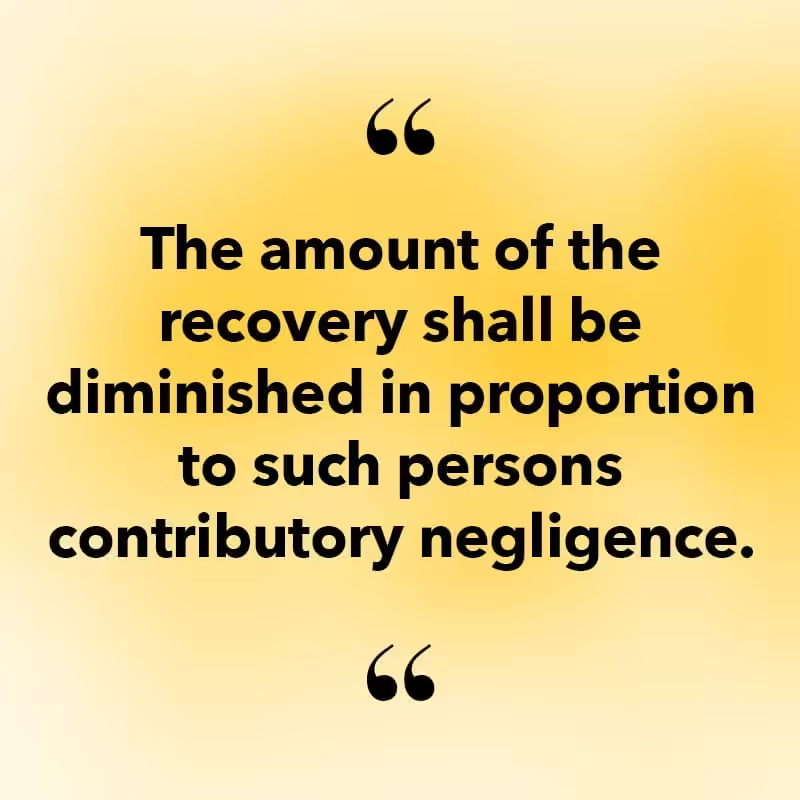
23 O.S. § 13 — Comparative Negligence: Oklahoma follows a modified comparative negligence system. This means your compensation is reduced by your percentage of fault, and if you are found 51 percent or more at fault, you recover nothing. Insurance companies use this aggressively in slip and fall cases — they will argue you were texting while walking, wearing inappropriate footwear, or ignoring a warning sign. Your attorney’s job is to minimize your assigned fault percentage and maximize the property owner’s share of responsibility.
12 O.S. § 95 — Statute of Limitations: You have two years from the date of your slip and fall accident to file a lawsuit in Oklahoma. If you miss this deadline, your claim is permanently barred. This deadline applies regardless of whether you are still receiving medical treatment or have not yet reached maximum medical improvement. Two years may sound like plenty of time, but evidence disappears quickly — surveillance footage is overwritten, witnesses move away, and maintenance records are discarded. Starting the legal process early protects your claim.
23 O.S. § 61.2 — Collateral Source / Paid or Incurred: As mentioned above, this statute limits your recoverable medical damages to amounts actually paid for treatment. This is a significant consideration in how your case is valued and negotiated.
Oklahoma premises liability law also incorporates the Restatement (Second) of Torts, which establishes that property owners must exercise reasonable care to protect invitees from dangerous conditions. Oklahoma courts have interpreted this to mean that a property owner must:
- Conduct reasonable inspections to discover dangerous conditions
- Correct known hazards within a reasonable time
- Warn visitors of hazards that cannot be immediately corrected
- Maintain the property in a reasonably safe condition
Under 76 O.S. § 1, every person is responsible for injuries caused by their lack of ordinary care. In the context of a slip and fall, this means a property owner who fails to maintain their premises to a reasonable standard is liable for injuries that result from that failure. The key question in every case is whether the owner acted as a reasonable property owner would have under similar circumstances.
The open and obvious doctrine is not a complete defense in Oklahoma. Oklahoma courts have held that even if a hazard is visible, a property owner may still be liable if they should have anticipated that visitors would encounter the hazard despite its obvious nature. For example, a wet entrance during a rainstorm may be “obvious,” but the store owner is still expected to put down mats and warning signs because customers must use the entrance to shop.


How Do Insurance Companies Handle Slip and Fall Claims?
Insurance companies handle slip and fall claims by looking for every possible reason to deny or reduce your payout. They assign experienced adjusters, request recorded statements to use against you, dispute medical causation, argue comparative fault, and make lowball settlement offers designed to close the claim cheaply.
The property owner’s liability insurer is not on your side, even if the adjuster seems friendly and sympathetic. Their job is to protect the insurance company’s money. Here are the most common tactics we see:
Requesting a recorded statement early. An adjuster will call you within days of the accident and ask you to give a recorded statement “just to get your side of the story.” Anything you say can and will be used to devalue your claim. If you say “I’m feeling okay” or “I didn’t see the hazard,” those words will follow your case to trial. You are not legally required to give a recorded statement to the property owner’s insurer, and we strongly recommend you speak with an attorney first.
Disputing medical causation. The insurance company will argue that your injuries were pre-existing, unrelated to the fall, or exaggerated. They may request access to your entire medical history going back years, looking for prior complaints of back pain, knee problems, or any condition that could be used to explain away your current injuries.
Blaming you for the fall. Under Oklahoma’s comparative negligence law (23 O.S. § 13), the insurer benefits from every percentage point of fault they can assign to you. They will investigate your footwear, your phone records (to check if you were texting), your familiarity with the property (to argue you should have known about the hazard), and any other factor they can use to shift blame.
Making a quick lowball offer. If your injuries are clearly documented, the insurer may offer a fast settlement — often before you understand the full extent of your injuries. These early offers are almost always far below the true value of your claim. Once you accept a settlement, you cannot go back and ask for more money, even if your condition worsens.
Delaying the process. Some insurers will simply stall — requesting additional documentation, “reviewing” your claim for months, or failing to return calls. The goal is to push you toward the statute of limitations deadline or to frustrate you into accepting less than your claim is worth.
Having an attorney levels the playing field. Insurance companies treat represented claimants differently than unrepresented ones because they know an attorney will file a lawsuit if the offer is unreasonable.
What Should You Expect During Your Slip and Fall Claim?
You should expect your slip and fall claim to take anywhere from several months to over a year, depending on the severity of your injuries, the strength of evidence, and whether the case settles or goes to trial. The process involves investigation, medical treatment, demand negotiation, and potentially litigation.
Here is how a typical slip and fall claim progresses in Oklahoma:
Phase 1: Investigation and evidence gathering (weeks 1-4). Your attorney sends a preservation letter to the property owner demanding that they retain surveillance footage, incident reports, maintenance logs, and inspection records. Independent investigation may include photographing the scene, interviewing witnesses, and obtaining any available security camera footage from nearby businesses. This phase is time-sensitive — evidence in slip and fall cases disappears faster than in almost any other type of personal injury claim.
Phase 2: Medical treatment (ongoing). You continue treating with your doctors as recommended. Your attorney tracks your medical records and bills throughout this period. You should not settle your case until you have either fully recovered or reached “maximum medical improvement” — the point at which your doctors say your condition is unlikely to improve further. Settling too early almost always results in undervaluing your claim.
Phase 3: Demand and negotiation (1-3 months after treatment concludes). Your attorney prepares a detailed demand package that includes your medical records, bills, lost wage documentation, expert opinions if needed, and a legal analysis of liability. This demand is sent to the insurance company, which then has a period to evaluate and respond. Negotiation may involve several rounds of offers and counteroffers.
Phase 4: Litigation if necessary. If the insurance company refuses to offer fair compensation, your attorney files a lawsuit. In Oklahoma, premises liability cases are filed in the district court where the accident occurred. Litigation adds the discovery phase (depositions, interrogatories, document production), potential mediation, and if no settlement is reached, a jury trial. Most cases settle before trial, but you need an attorney who is prepared to go to trial — insurance companies know which lawyers actually try cases and which ones always settle.
What Steps Should You Take After a Slip and Fall Accident?
After a slip and fall accident, you should seek medical attention immediately, document the scene with photographs, report the incident to the property owner or manager, collect witness information, preserve your clothing and footwear, and contact a slip and fall attorney before speaking with any insurance adjuster.
The steps you take in the first hours and days after a fall can make or break your case. Here is what we recommend:
1. Get medical attention right away. Even if you feel okay at the scene, go to an emergency room or urgent care that same day. Adrenaline can mask serious injuries like fractures, soft tissue tears, and concussions. A medical record from the day of the accident creates a direct link between the fall and your injuries — without it, the insurance company will argue your injuries happened somewhere else.

2. Document everything at the scene. Use your phone to take photographs and video of the exact spot where you fell, the hazard that caused your fall (wet floor, ice, torn carpet, uneven surface), the surrounding area including any warning signs (or the absence of them), your injuries, and your clothing and footwear. Take wide-angle shots to show context and close-ups to show detail. If there is a puddle, photograph it next to something for scale. If there is ice, capture its extent.
3. Report the incident. Tell the store manager, property owner, apartment office, or whoever is in charge. Ask them to create a written incident report and request a copy. If they will not give you a copy, note the name and title of the person you reported it to, the time you reported it, and what they said in response.
4. Get witness information. If anyone saw you fall or saw the hazard before you fell, get their name, phone number, and email address. Witness testimony can be crucial in establishing how long the hazard existed and whether property employees were aware of it.
5. Preserve physical evidence. Keep the shoes and clothing you were wearing at the time of the fall. Do not wash or discard them. The insurance company may argue your shoes were inappropriate for the conditions. Having the actual shoes available for inspection eliminates this argument.
6. Do not give a recorded statement to the property owner’s insurance company. You are not required to do this. Politely decline and tell them your attorney will be in contact. Anything you say in a recorded statement will be used to minimize your claim.
7. Contact a slip and fall attorney. The sooner you have legal representation, the sooner an evidence preservation demand can be sent. Surveillance footage in particular is often overwritten within days. Early legal involvement protects the evidence your case depends on.

Why Choose Hasbrook & Hasbrook for Your Slip and Fall Case?
You should choose Hasbrook & Hasbrook because we are third-generation Oklahoma personal injury attorneys with decades of premises liability experience, a 25 percent contingency fee that is among the lowest in the state, and a track record of holding negligent property owners accountable in Oklahoma courts.
Our firm was founded on the belief that injured Oklahomans deserve aggressive, competent legal representation without financial barriers. Here is what sets us apart in slip and fall cases:
Deep premises liability experience. We have handled slip and fall cases involving grocery stores, big-box retailers, restaurants, apartment complexes, hotels, office buildings, government properties, and private residences across Oklahoma. We understand the specific legal standards, defense strategies, and evidence requirements that apply to each type of property and each category of visitor.
We know Oklahoma law and Oklahoma courts. As a family that has practiced law in Oklahoma for three generations, we have relationships throughout the state’s legal community. We know the judges, we know the court procedures, and we know what Oklahoma juries expect in a premises liability case. This local knowledge translates into better case strategy and better outcomes.
We prepare every case for trial. Insurance companies track which attorneys actually take cases to trial. When they see Hasbrook & Hasbrook on the other side, they know we are prepared to go to a jury if the settlement offer is not fair. That willingness to try cases results in better settlements for our clients across the board.
We charge 25 percent — not 33 or 40 percent. Most personal injury firms in Oklahoma charge a 33.3 percent contingency fee, and some charge up to 40 percent. Our standard pre-litigation contingency fee is 25 percent. On a $300,000 settlement, that difference means you keep an additional $25,000 to $45,000 in your pocket.
We also handle related claims that may arise from the same incident, including premises liability, nursing home falls, and cases involving wrongful death resulting from fatal fall injuries.
How Do Our Fees Work?
Our fees work on a contingency basis, meaning you pay nothing upfront and owe us nothing unless we recover compensation for you. Our standard pre-litigation contingency fee is 25 percent, which is significantly lower than the industry standard of 33 to 40 percent charged by most Oklahoma personal injury firms.
Here is exactly how it works:
- No upfront costs. You pay zero dollars to hire us. We advance all costs associated with investigating and pursuing your claim, including filing fees, expert witness fees, medical record costs, and any other expenses.
- No hourly billing. We do not bill by the hour. You will never receive an invoice during your case.
- 25 percent pre-litigation contingency fee. If we resolve your case before filing a lawsuit, our fee is 25 percent of the total recovery. That means on a $100,000 settlement, our fee is $25,000 and you keep $75,000 (minus case expenses).
- No recovery, no fee. If we do not win your case, you owe us nothing — not for our time, not for the expenses we advanced, nothing.
We believe this fee structure removes every financial barrier to getting quality legal representation. You should never have to choose between paying your bills and hiring an attorney.
Frequently Asked Questions About Slip and Fall Cases in Oklahoma
Below are answers to the most common questions we receive from Oklahomans who have been injured in slip and fall accidents. If your specific question is not addressed here, call us for a free consultation and we will give you a direct answer.
How much is my slip and fall case worth in Oklahoma?
The value of your slip and fall case depends on several factors: the severity of your injuries, the total medical expenses you have paid, your lost income, the impact on your daily life, and the strength of the evidence against the property owner. Minor soft tissue injuries may result in settlements of a few thousand dollars, while serious injuries like fractures, traumatic brain injuries, or spinal damage can result in six-figure or higher recoveries. Our firm has recovered $385,000 for a fractured hip in a grocery store and $275,000 for a broken wrist and torn rotator cuff in an apartment parking lot. Every case is different, and the only way to get a reliable estimate is to have an attorney review your specific facts.
How long do I have to file a slip and fall lawsuit in Oklahoma?
Under 12 O.S. § 95, you have two years from the date of the accident to file a slip and fall lawsuit in Oklahoma. If you miss this deadline, you lose your right to file suit permanently. We recommend contacting an attorney well before the deadline because evidence preservation — especially surveillance footage — must happen in the first days and weeks after a fall. Do not wait until the statute of limitations is close to expiring.
Can I recover compensation if I was partially at fault for the fall?
Yes, as long as your fault is 50 percent or less. Under Oklahoma’s comparative negligence statute (23 O.S. § 13), your compensation is reduced by your percentage of fault. If you are found 20 percent at fault and your damages total $200,000, you recover $160,000. However, if you are found 51 percent or more at fault, you recover nothing. Insurance companies routinely try to inflate your fault percentage — a skilled attorney works to minimize it.
What does it cost to hire a slip and fall lawyer in Oklahoma City?
At Hasbrook & Hasbrook, it costs you nothing upfront. We handle slip and fall cases on a 25 percent pre-litigation contingency fee basis, meaning we only get paid if we recover money for you. Our 25 percent fee is lower than the 33 to 40 percent charged by most Oklahoma personal injury attorneys. If we do not win your case, you owe us nothing.
What should I do after a slip and fall accident?
Seek medical attention immediately, even if your injuries seem minor. Document the scene with photographs and video. Report the incident to the property owner or manager and request a written incident report. Collect contact information from any witnesses. Preserve the clothing and shoes you were wearing. Do not give a recorded statement to the property owner’s insurance company. Contact a slip and fall attorney as soon as possible so that a preservation demand can be sent for surveillance footage and other evidence.
What must I prove in a slip and fall case in Oklahoma?
You must prove four elements: (1) the property owner owed you a duty of care based on your status as an invitee, licensee, or trespasser; (2) a dangerous condition existed on the property; (3) the property owner knew about the condition or should have known about it through reasonable inspections (actual or constructive notice); and (4) the dangerous condition caused your fall and your injuries. The notice element is typically the most contested part of a slip and fall case. Your attorney must gather evidence showing how long the hazard existed and what the property owner did or failed to do about it.
Can I sue a business if I slipped on a wet floor with no warning sign?
Yes, but the absence of a warning sign alone does not guarantee you win. You must still prove that the business knew or should have known about the wet floor. If an employee mopped the floor and failed to place a sign, that is strong evidence of negligence. If another customer spilled a drink five seconds before you walked by, the business may not have had reasonable time to discover and address the hazard. The key question is always whether the business had notice of the condition and failed to act within a reasonable time. A wet floor with no warning sign is a common fact pattern in premises liability cases, and an experienced attorney can evaluate whether the evidence supports your claim.

Ready to Talk to an Oklahoma Slip and Fall Lawyer?
If you were injured in a slip and fall accident on someone else’s property, you have a limited time to protect your rights and preserve the evidence your case needs. Surveillance footage gets overwritten. Witnesses forget details. Maintenance records disappear. The sooner you act, the stronger your case will be.

Call (405) 605-2426 for a free consultation with Clayton Hasbrook. No fee unless we win. We will review your case, explain your legal options in plain language, and tell you exactly what we think your claim is worth — with no obligation and no pressure.
You can also learn more about Oklahoma premises liability law or explore how we handle cases involving broken bones, brain injuries, and wrongful death from fall accidents.