You’re driving home on I-35 when an 18-wheeler crosses the median and strikes head-on. Three days later you wake up in the ICU to a serious head injury and spinal damage that may confine you to a wheelchair.
A catastrophic injury rewrites your life. The Hasbrook & Hasbrook personal injury team helps Oklahoma City families pursue every dollar these claims support: future surgeries, lost earning capacity, and long-term care. Call (405) 605-2426 for a free consultation.
Key Takeaways
- Two-year filing deadline. Most Oklahoma catastrophic injury lawsuits must be filed within two years under 12 O.S. § 95; claims against government entities require written notice within one year under 51 O.S. § 156.
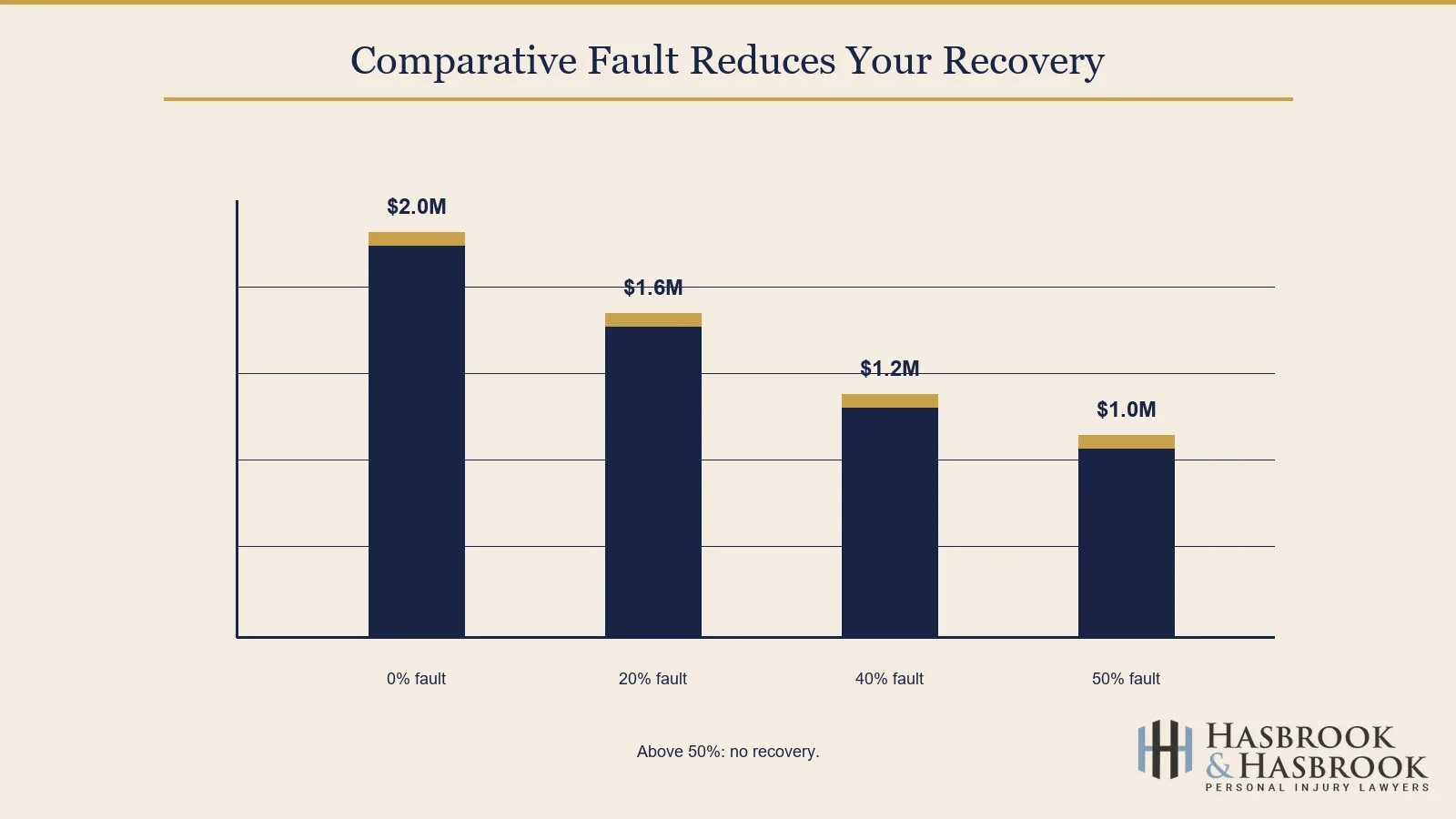
- Modified comparative fault. Under 23 O.S. § 13, you can still recover if you were not more than 50% at fault.
- Damages cap exemptions. The noneconomic-damages cap under 23 O.S. § 61.3 may not apply when the injury causes severe physical harm or the defendant acted recklessly.
- Lifetime cost reality. These claims often span decades of surgeries, rehabilitation, home modifications, and in-home care.
- No fee unless we recover. Catastrophic injury cases are handled on contingency.
What Counts as a Catastrophic Injury in Oklahoma?
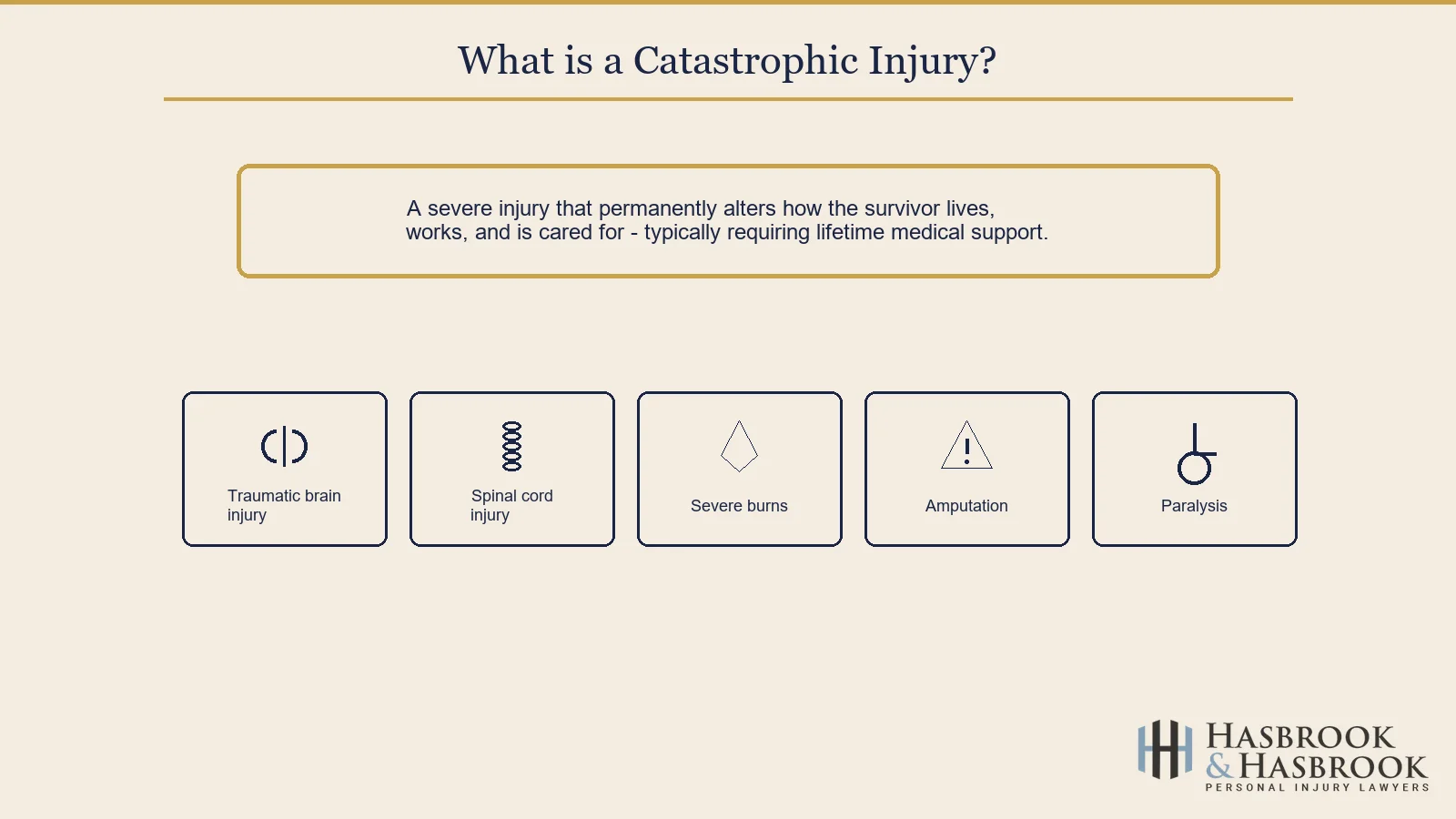
A catastrophic injury is any harm severe enough to permanently prevent a person from working or living independently. Oklahoma courts treat traumatic brain injuries, spinal cord damage, amputations, severe burns, and permanent organ failure as catastrophic when the injured person needs lifelong care. Common types include:
- Severe brain trauma claims: severe concussions to permanent cognitive impairment (see brain injury warning signs to watch for)
- Spine and paralysis injuries: partial or complete paralysis
- Amputations: crush impact or surgical loss of a limb
- Catastrophic burn injuries: skin grafts and reconstructive surgery
- Multiple bone fractures: pelvis, spine, or skull
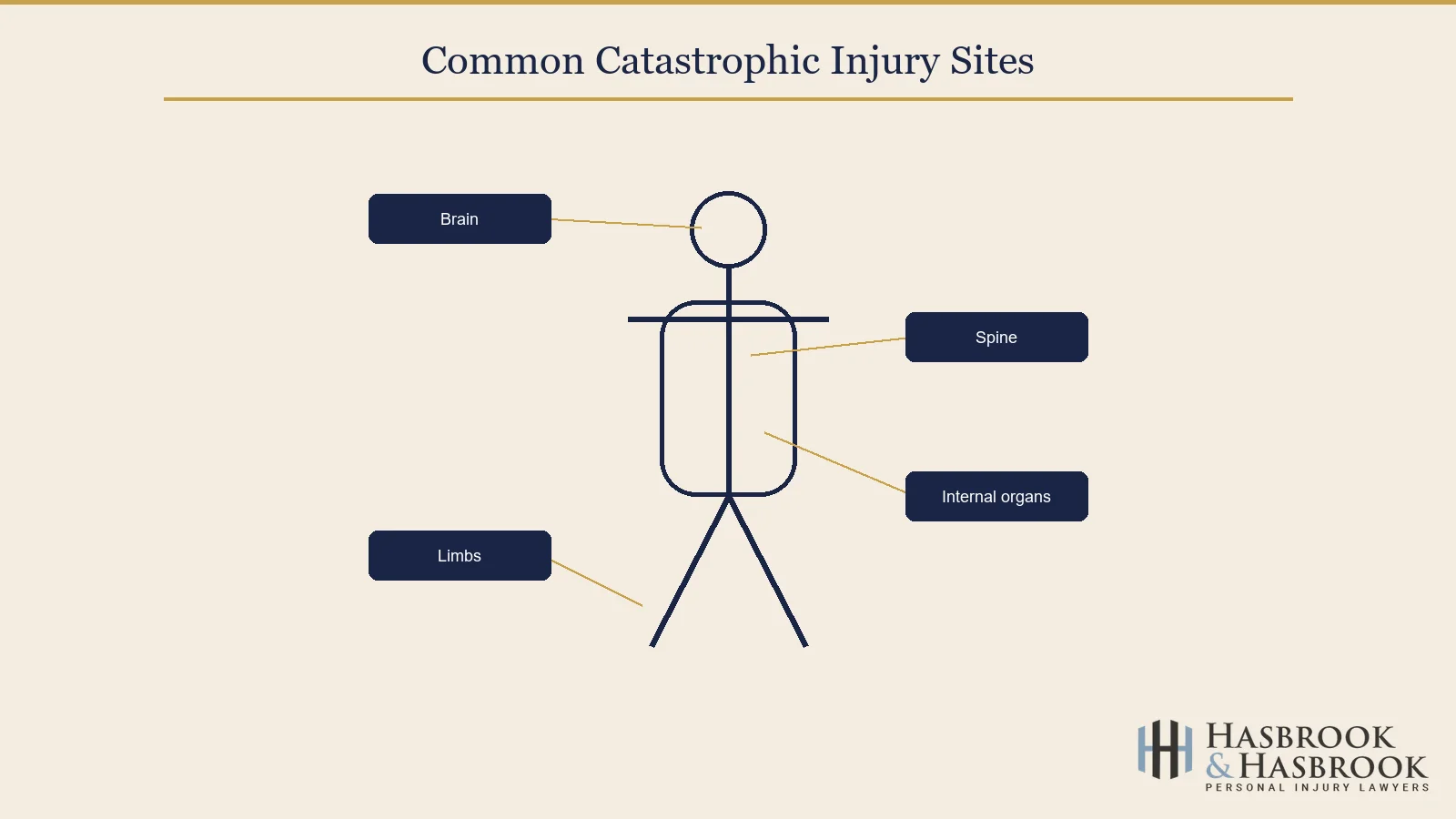
- Internal organ damage: permanent loss of function

| Injury Type | Common Causes | Long-Term Impact |
|---|---|---|
| Brain injury | Collisions, falls, workplace strikes | Cognitive impairment, lifelong supervision |
| Spinal cord | High-speed crashes, falls from height | Partial or complete paralysis |
| Amputation | Crush wounds, industrial equipment | Prosthetics, phantom pain |
| Severe burns | Explosions, chemical exposure, vehicle fires | Skin grafts, reconstructive surgery |
| Organ damage | Blunt-force or penetrating trauma | Permanent loss of function |
Accidents That Cause Catastrophic Injury Claims in Oklahoma City
Motor vehicle wrecks, truck crashes, motorcycle collisions, premises hazards, workplace incidents, and pedestrian strikes drive most catastrophic injury claims in the metro. CDC injury cost data puts the national price tag for unintentional injuries at $4.2 trillion a year.
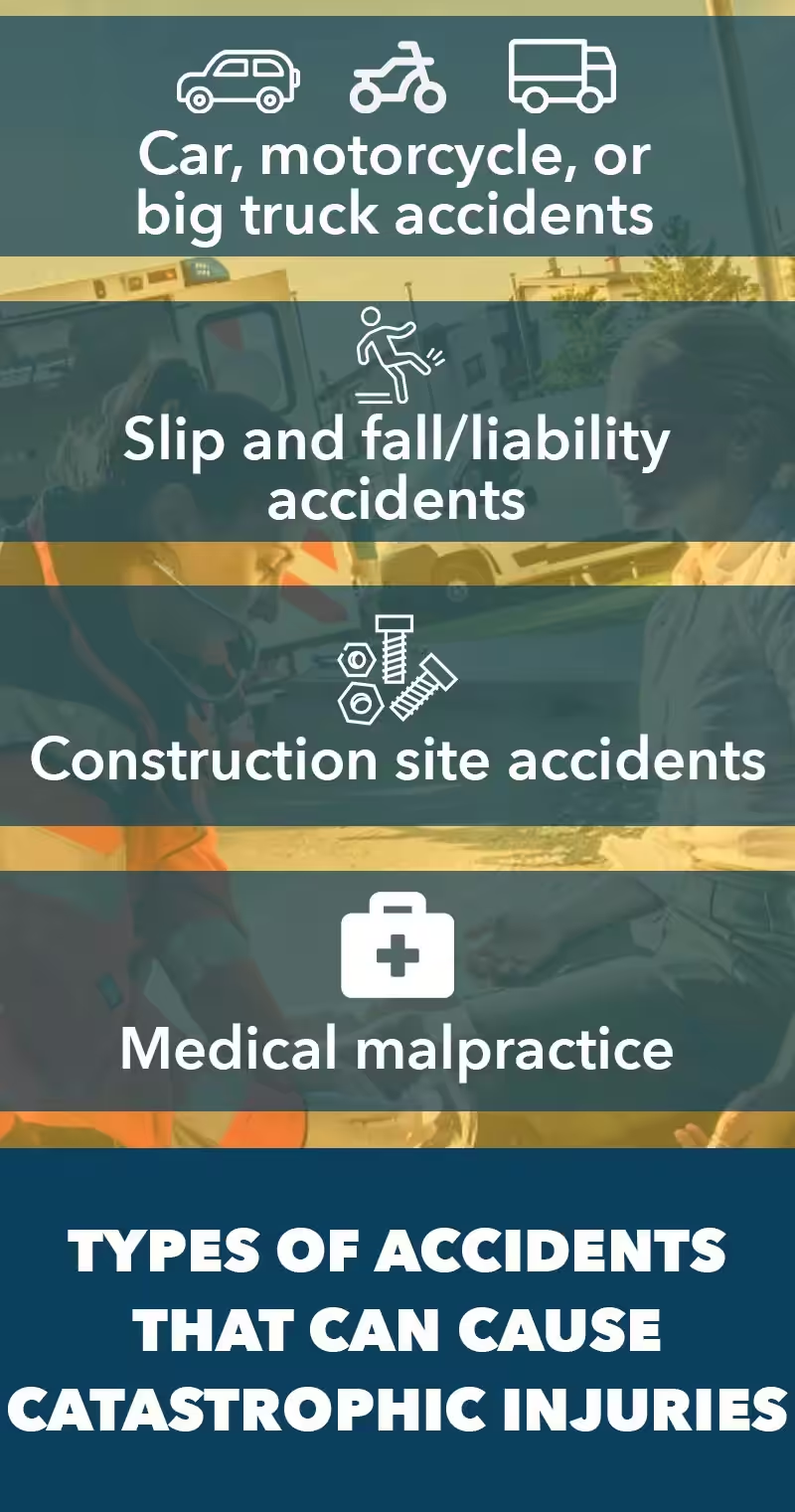
- High-energy car crashes: head-on, rollover, and high-speed collisions
- Catastrophic truck wreck injuries: commercial-vehicle mass multiplies impact force (see penalties for FMCSA violations)
- Catastrophic motorcycle crash claims: riders have no structural protection
- Pedestrian crash claims and bicycle collision injuries: a person on foot or two wheels absorbs the full strike
- Rideshare collision claims and public transit collisions: commercial passenger carriers in corridor traffic
- Property owner negligence cases and slips on commercial properties: falls from height, structural collapse, unsafe conditions
- Workplace and product liability: construction falls, equipment malfunctions, defective machinery, oil-field explosions
- Care-facility abuse cases: pressure injuries, falls, and medication errors
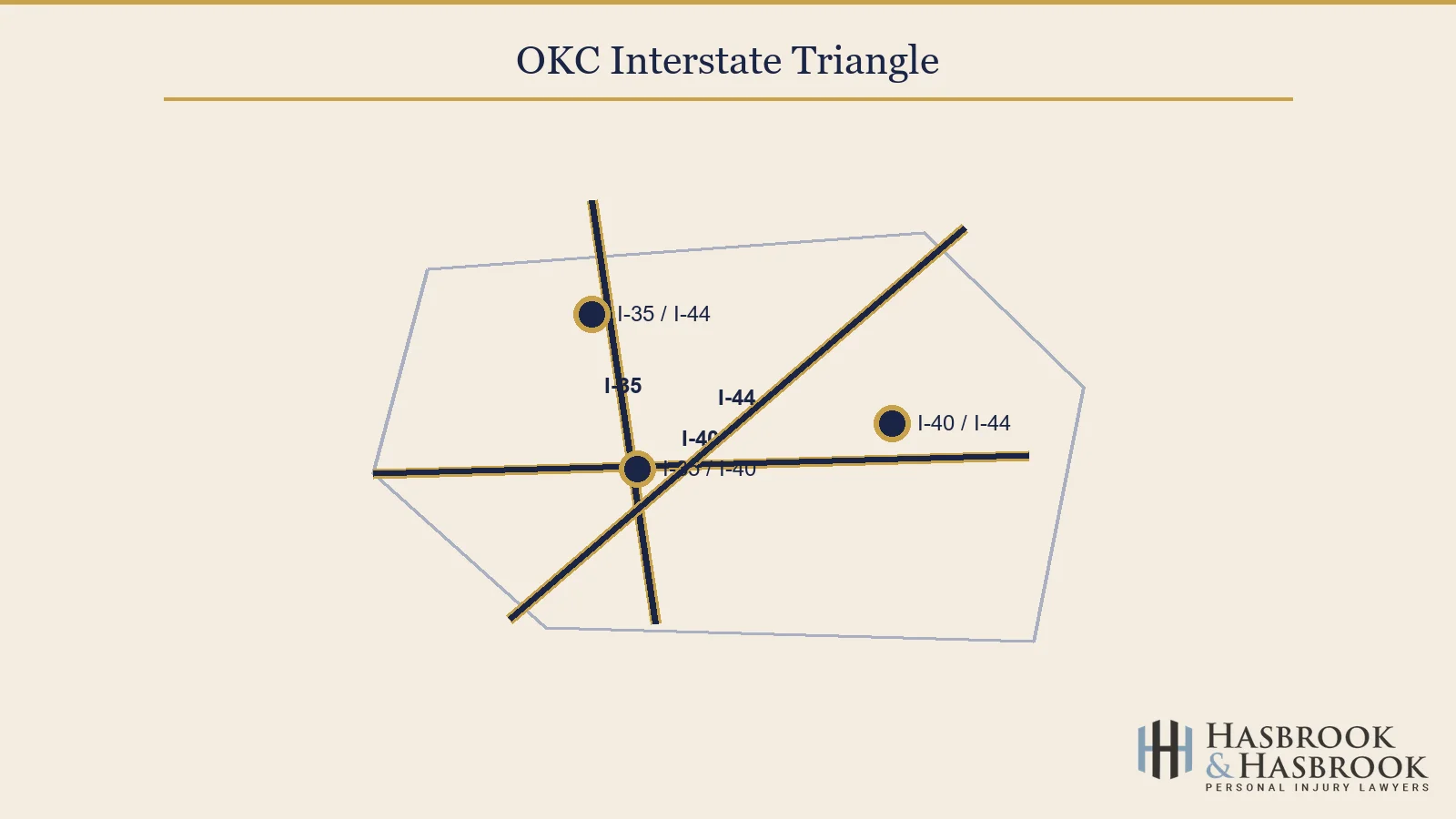
Many of these wrecks happen on the I-35, I-40, and I-44 corridors, where high speeds and heavy commercial traffic produce the most violent collisions.



Our Innovative Approach to Serious Injury Cases


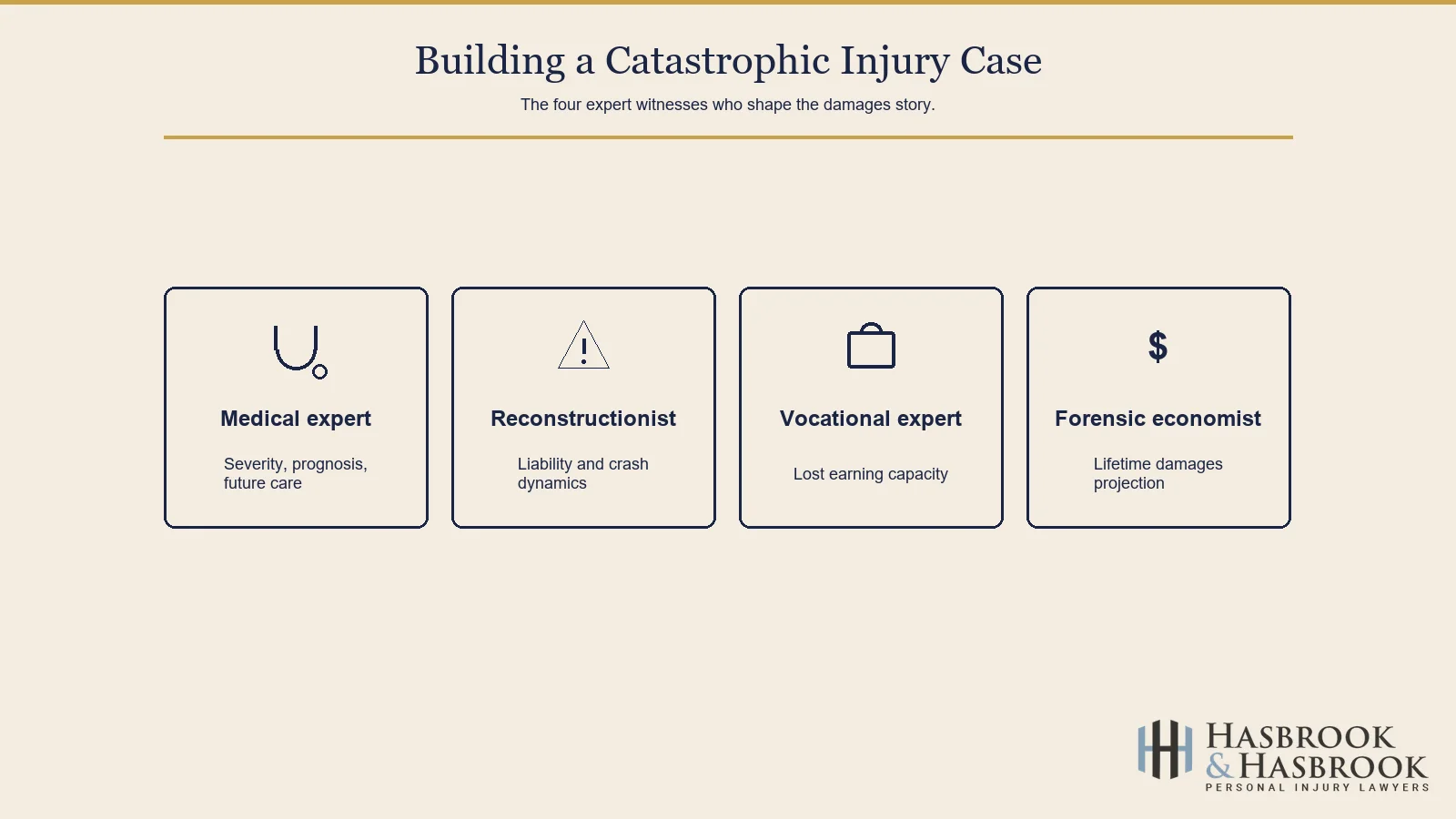
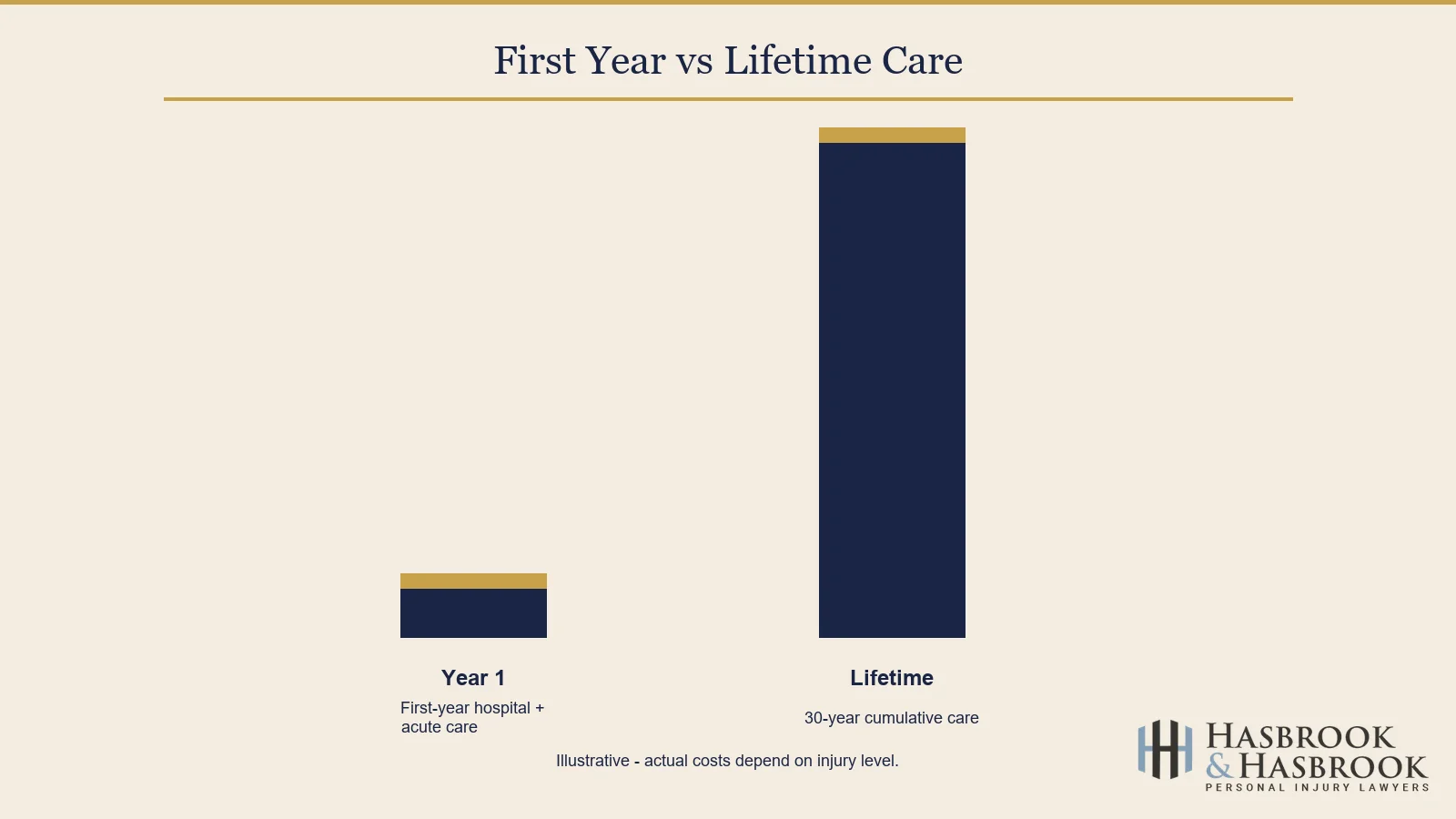
These cases require medical experts, life-care planners, vocational specialists, and forensic economists. We assemble that team early so damages reflect full lifetime cost, not just the first hospital bill.
The evidence window closes fast. Acting quickly lets us issue preservation letters for dashcam, black-box, and surveillance footage. See our work with forensic accident reconstructionists and vehicle event-data recorder evidence.

How Much Do Catastrophic Injuries Cost Over a Lifetime?
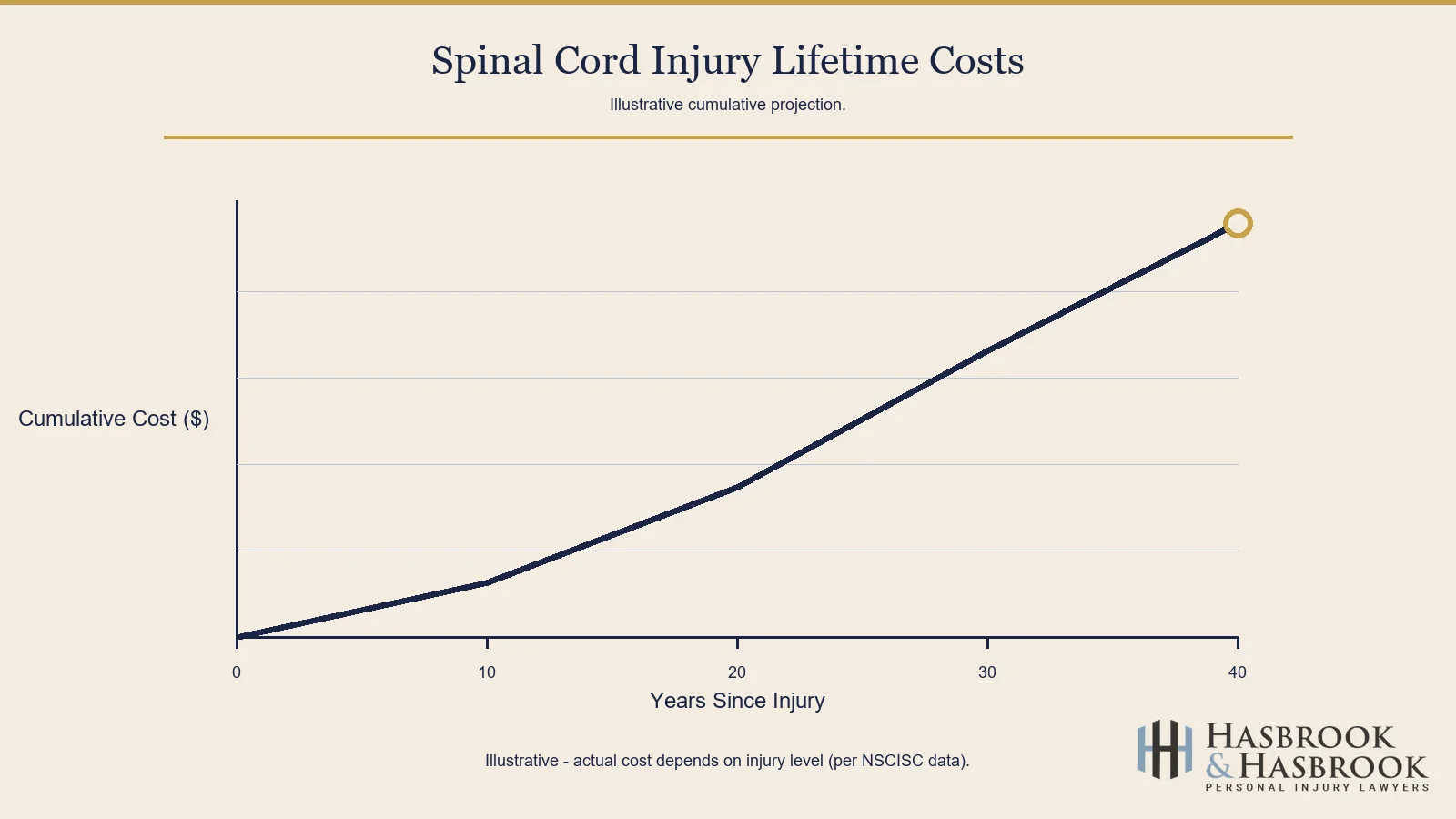
Lifetime costs typically range from $1 million to $5 million, depending on severity. NIH-published research on severe trauma shows spinal cord injury alone generates decades of medical bills, rehabilitation, and lost earning capacity. See how much a spinal cord injury is worth, how much a brain injury is worth, how much a burn injury is worth, and gauging your full case value.
Social Security disability rarely covers the gap between actual costs and government benefits. Closing that gap is what an injury claim is for.
What Compensation Can You Recover?
Catastrophic claimants can recover economic damages with no statutory cap, non-economic damages subject to the SB 453 cap (with severe-injury and reckless-conduct exceptions), and punitive damages for gross negligence.
| Damage Category | What It Covers | Oklahoma Cap |
|---|---|---|
| Economic | Medical bills, lost wages, future care, rehabilitation, adaptive equipment | No cap |
| Non-economic | Pain and suffering, emotional distress, loss of enjoyment of life | $500,000 cap (23 O.S. § 61.3); severe-injury and reckless-conduct exceptions |
| Punitive | Reckless disregard, gross negligence, or intentional wrongdoing | Greater of $100,000 or actual damages awarded (23 O.S. § 9.1) |
See pain and suffering valuation and how punitive damages work in Oklahoma for our injury law methodology. The other side will dispute severity and pressure you to settle before harm is documented; early settlement almost always leaves money on the table.
Protecting Your Rights After a Life-Altering Accident

The adjuster’s first call isn’t a courtesy: it’s strategy. Anything you say in a recorded statement can be twisted to deny compensation. Talk to an attorney first, and consider unreasonable claim denial litigation if the carrier crosses the line. Our guide to elements a plaintiff must prove explains what evidence wins, and our overview of admitted-liability damages-only cases covers next steps when fault isn’t disputed.
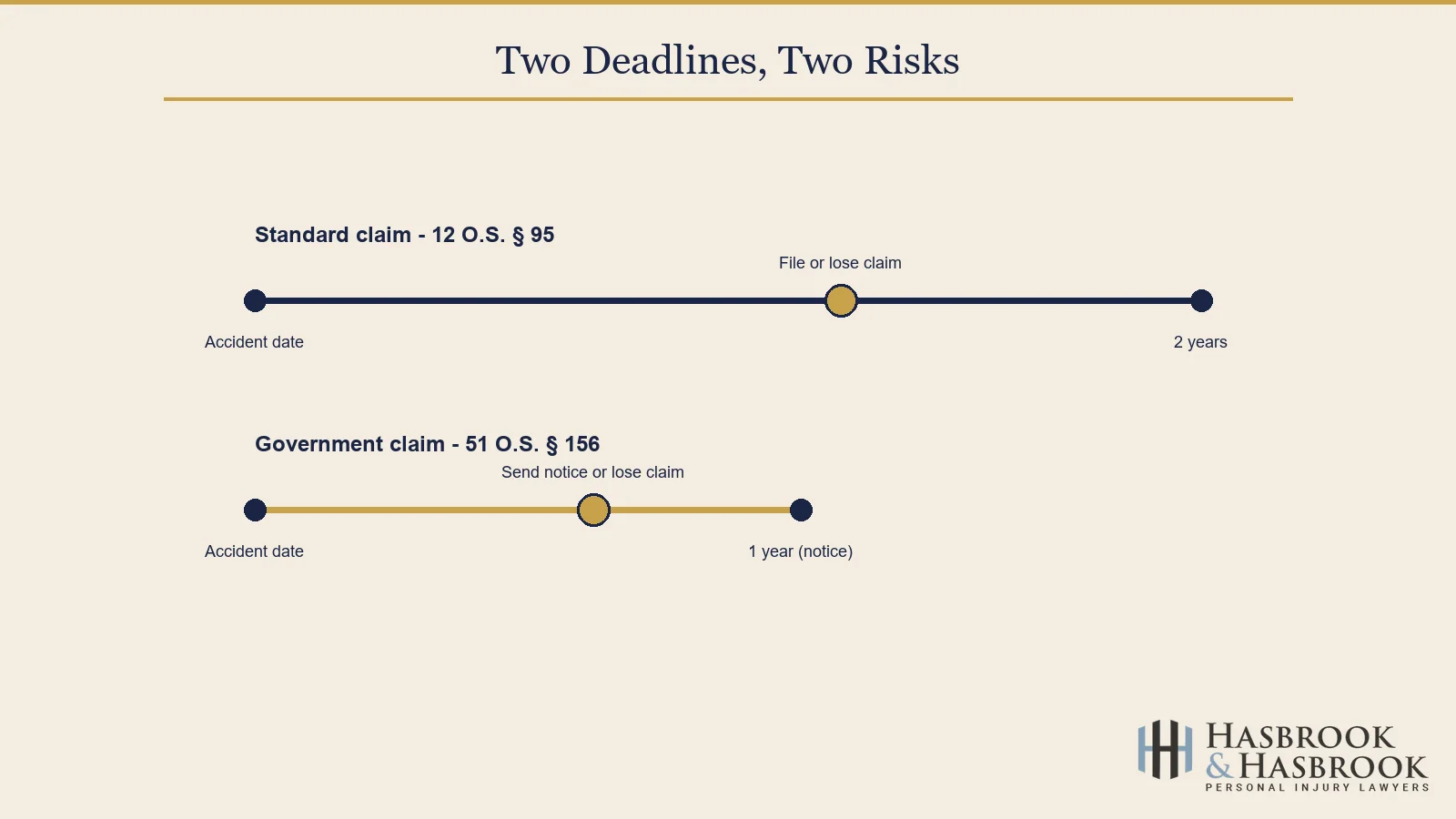
Under 12 O.S. § 95, you have two years from the accident date to file. Notice deadlines for government defendants under 51 O.S. § 156 run shorter still; missing either ends your right to compensation regardless of evidence strength.



Does Oklahoma’s 2025 Damages Cap Apply?
In most catastrophic injury cases, no. SB 453 has capped non-economic damages at $500,000 since September 2025, but the cap does not apply when the injured person suffered severe physical harm, which catastrophic claims involve by definition. Reckless conduct, gross negligence, fraud, and intentional wrongdoing are fully exempt; a separate $1 million threshold applies to permanent mental harm.
Can You Still Recover if You Were Partly at Fault?
Yes, if you were not more than 50% responsible. Oklahoma follows a modified comparative negligence rule: your award is reduced by your share of fault, not eliminated. If a jury finds you 20% at fault on a $2 million award, you still recover $1.6 million. See our guide on how Oklahoma handles shared fault. The other side routinely exaggerates the injured driver’s share, especially after a serious head injury.
Let Our Experienced Attorneys Fight For You
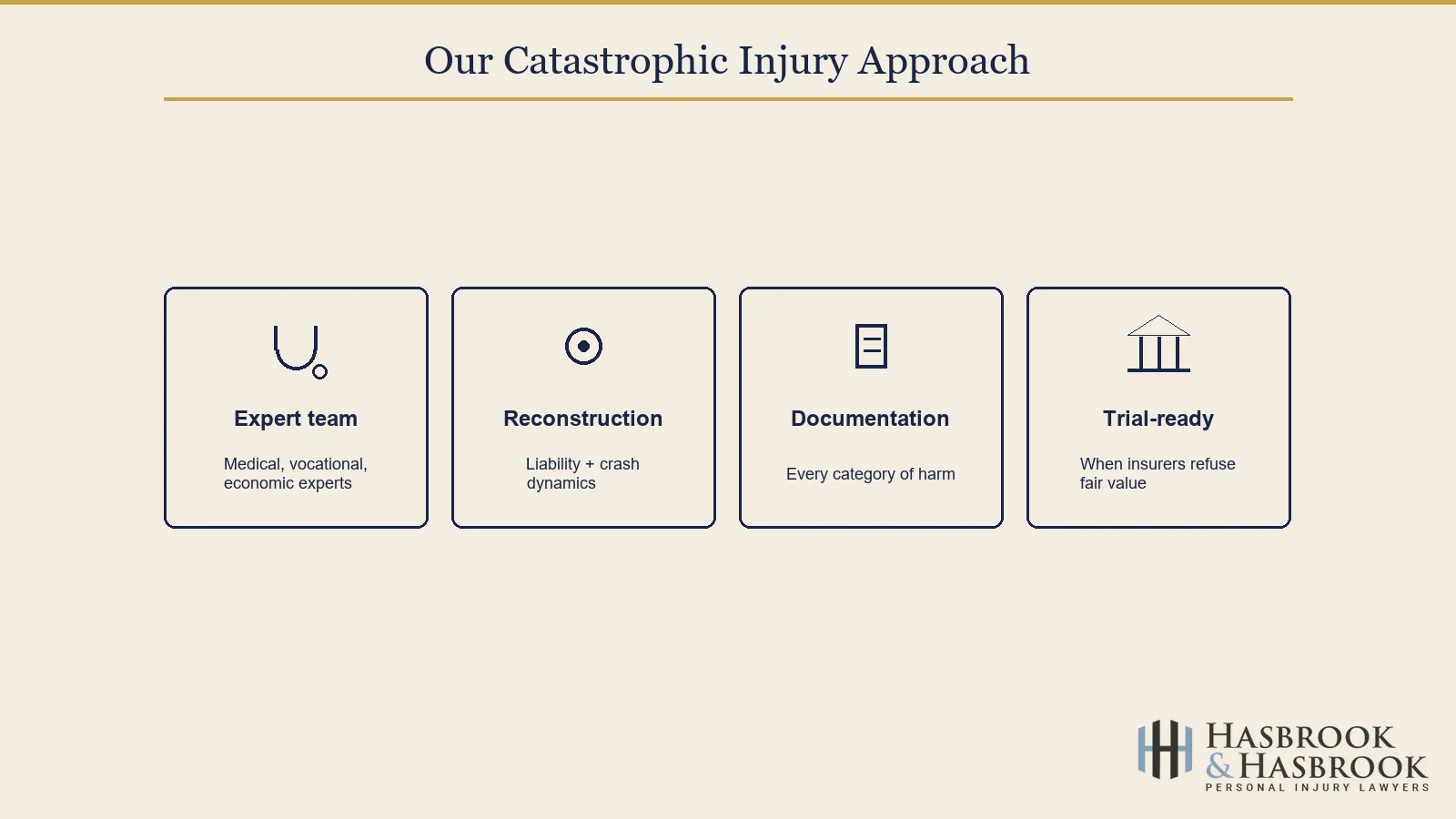
Our Oklahoma City injury law team has handled catastrophic claims involving permanent paralysis, organ damage, and fatal trauma. These cases demand:
- Medical experts and life-care planners to project lifetime costs
- Reconstruction specialists to establish liability and crash dynamics
- Documentation of every category of harm so nothing is left on the table
- Trial preparation when insurers refuse a fair offer
Cases are handled on contingency: no upfront cost, no fee unless we recover. Pre-litigation rate starts at 25%; if suit is filed the rate adjusts, but our fee never exceeds your net recovery. We advance every case expense.
Results We’ve Achieved for Serious Injury Clients
| Result | Case Type |
|---|---|
| $1,000,000 settlement | Deaths caused by negligence with catastrophic harm |
| $825,000 settlement | Truck wreck causing ruptured disc and neck surgery |
| $900,000 settlement | Nursing home neglect with severe injuries |
Case outcomes depend on facts and circumstances. Past settlements do not guarantee a similar result. View recent Hasbrook & Hasbrook results →
Frequently Asked Questions
What qualifies as a catastrophic injury under Oklahoma law?
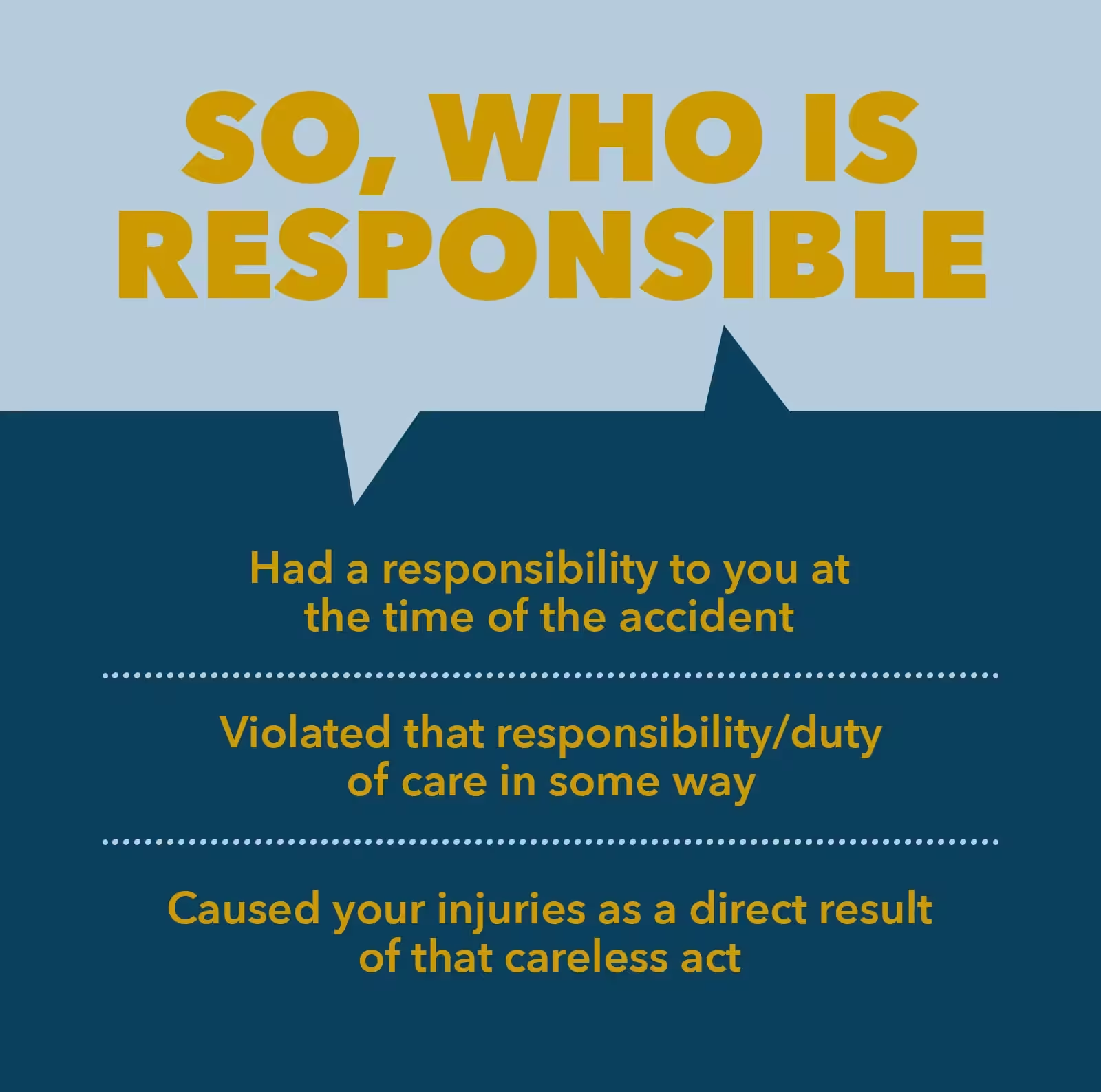
Oklahoma has no single statutory definition. Courts treat any harm that permanently prevents gainful employment or independent living as catastrophic, including paralysis, brain damage, loss of limb, severe burns, and permanent organ failure.
How much is a catastrophic injury case worth?
Value depends on severity, lifetime care costs, lost earning capacity, and degree of fault. Permanent-disability cases often result in seven-figure recoveries.
Can I still recover if I was partly at fault?
Yes. Under Oklahoma’s modified comparative negligence rule (23 O.S. § 13), you can recover as long as you were not more than 50% responsible. Your award is reduced by your share of fault, but not eliminated.
What if the at-fault party doesn’t have enough coverage?
We investigate every source: employer liability, umbrella policies, underinsured motorist (UIM) coverage, and third-party claims. UM/UIM coverage lets you stack your own policy on top of the at-fault driver’s limits.
Should I accept the first settlement offer?
Almost never. Early offers close your file before lifetime costs are documented. Once you sign, you waive the right to pursue more.
How long will it take to resolve my case?
Most cases settle within several months to two years, depending on complexity and disputed liability. Settling before maximum medical improvement risks an award that doesn’t reflect long-term needs. See our analysis on settlement vs trial decisions.
How do I choose the right catastrophic injury lawyer?
Pick a lawyer who handles catastrophic injury claims specifically. Ask whether the firm advances case expenses, how many such claims they’ve taken to trial, and whether you’ll have direct access to your attorney.
What steps should I take immediately after a catastrophic accident?
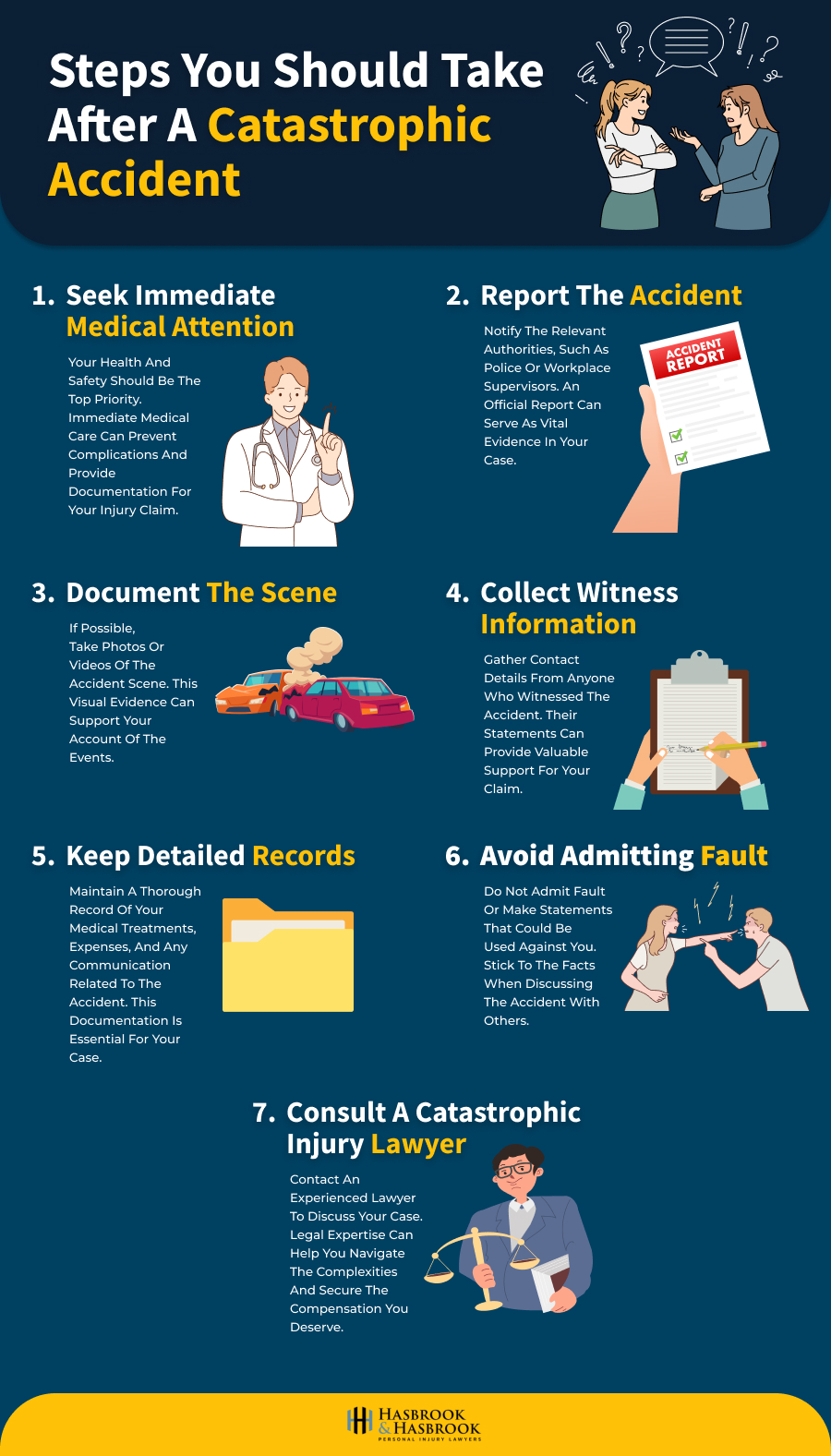
Get emergency medical care and let paramedics document injuries on scene. Don’t give a recorded statement before consulting an attorney. Preserve photos, witness contact info, and dashcam or surveillance footage. Contact counsel early so we can issue preservation letters for black-box and inspection records.
What if my child suffered a catastrophic injury?
Claims involving minors follow different procedural rules and often involve life-care plans spanning seventy or more years. Court approval of any settlement is typically required. See our child catastrophic injury claims page.

Pursue the Compensation You Deserve
Decisions in the first weeks after a catastrophic accident shape the entire claim. Every client has direct access to managing partner Clayton T. Hasbrook.

| Key Fact | Detail |
|---|---|
| Statute of limitations | 2 years from the date of injury (12 O.S. § 95) |
| Government claim notice | 1 year written notice (51 O.S. § 156) |
| Fault threshold | You recover nothing if more than 50% at fault (23 O.S. § 13) |
| Attorney fee structure | Contingency: you pay nothing unless we win |
| Initial consultation | Free, no obligation |
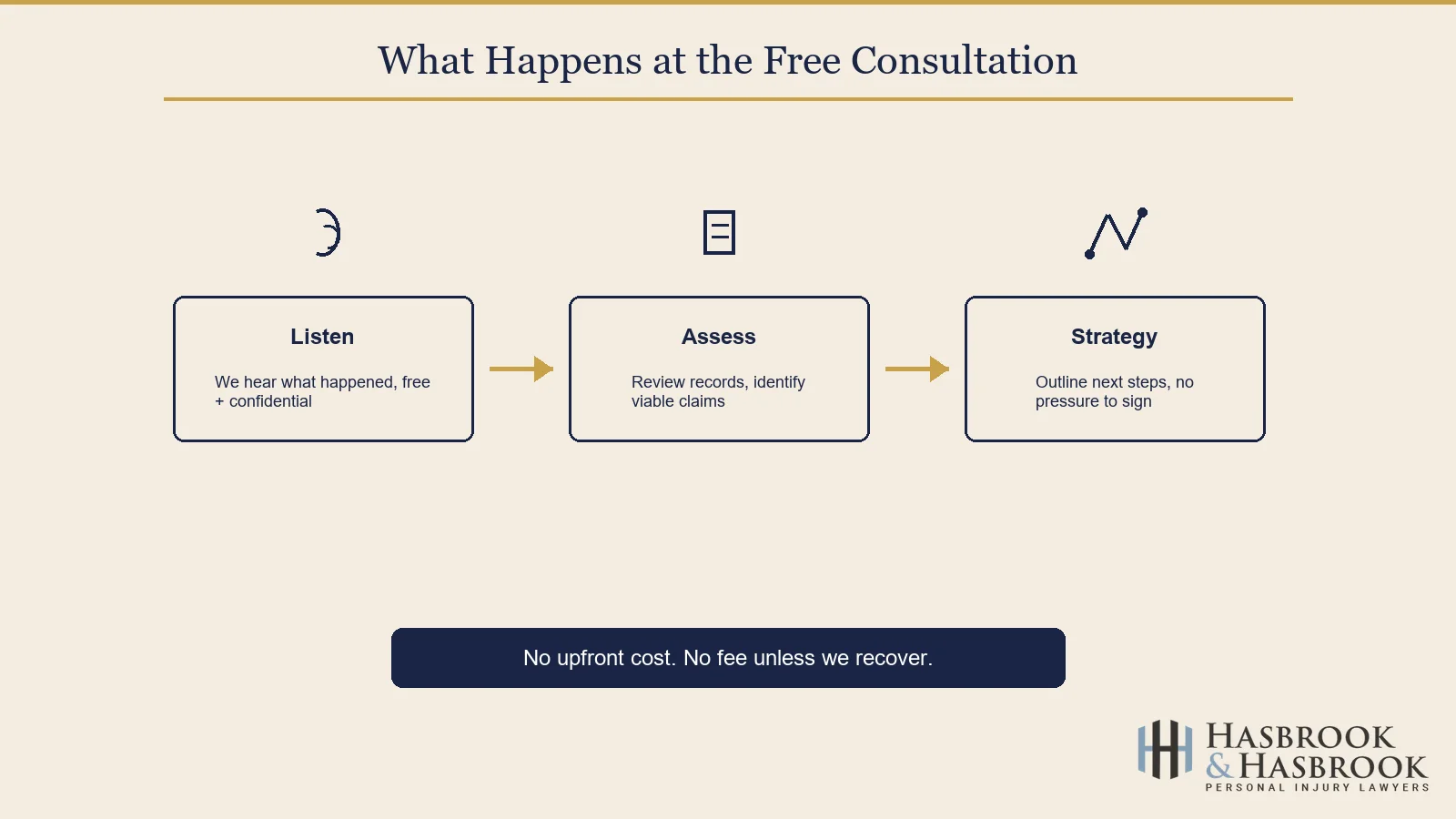
Call (405) 605-2426 for a free consultation with the team at Hasbrook & Hasbrook. We’ll review your situation, explain your options, and tell you what your case is worth. Call to schedule a free consultation.