A grease fire erupts in a restaurant kitchen and catches your arm before you can pull away. A poorly maintained space heater ignites in a rented apartment. A chemical spill at a worksite eats through protective gloves. Whatever the cause, burn injuries change your life in seconds, and the resulting medical expenses, missed income, and lasting physical harm can overwhelm even the most prepared families.
If someone else’s negligence caused your burn injury, Oklahoma law gives you the right to pursue full compensation. The personal injury lawyers at Hasbrook & Hasbrook have represented people injured in burn accidents across Oklahoma for decades. We understand the long-term medical treatment these cases demand and know how to build a claim that accounts for every dollar you will need, now and for the years ahead.



What a burn injury patient faces in Oklahoma
The immediate aftermath
The first hours after a serious burn injury are chaotic. Emergency responders assess the wound, stabilize fluid loss, and make rapid decisions about transfer to a burn center. Depending on the degree and the percentage of body surface affected, you may face immediate surgery, intravenous fluid resuscitation, and airway management. Even burns classified as “moderate” require wound care, infection monitoring, and follow-up procedures that stretch over weeks.
Pain from second- and third-degree burns is severe and persistent. Many burn patients describe the ongoing wound care process as more painful than the original injury. The medications used for pain management carry their own risks, and the psychological trauma of disfigurement begins immediately.
Medical decisions under pressure
Burn treatment is not linear. Initial wound stabilization gives way to skin graft procedures, compression therapy, scar management, and occupational rehabilitation, often over 12 to 24 months. Scar tissue does not fully mature for up to two years after injury, which means the long-term extent of disfigurement may not be fully known for a long time. Settling a burn injury claim before scar maturation risks leaving significant future costs uncompensated.
Burn injuries are classified by degree and by Total Body Surface Area (TBSA): the percentage of the body’s surface affected. The “rule of nines” divides the body into segments of roughly 9% each. A 20% TBSA burn requires far more intensive hospitalization, more grafting procedures, and higher long-term costs than a same-degree burn covering only 5% TBSA. In your legal claim, TBSA is a key metric for projecting future medical expenses.

| Degree | Depth | Symptoms | Typical treatment | Recovery |
|---|---|---|---|---|
| First-degree | Epidermis only | Redness, minor pain | Topical ointment, OTC pain relief | 3 to 7 days |
| Second-degree | Epidermis and dermis | Blistering, severe pain, swelling | Wound care; skin grafts for large areas | 2 to 6 weeks |
| Third-degree | Full thickness (all skin layers) | White or charred skin, numbness | Surgery, grafting, prolonged rehab | Months to years |
| Fourth-degree | Skin, muscle, tendon, and/or bone | Blackened tissue, no sensation | Multiple surgeries, possible amputation | Years; often permanent impairment |
Financial impact on families
Hospitalization for a serious burn injury costs tens of thousands of dollars per day in a burn unit. Multiple grafting procedures, compression garments, long-term wound care supplies, psychological treatment, and occupational therapy can push total medical costs well above $500,000 for severe cases. If your injuries prevent you from returning to your job, the lost income compounds over months or years. Many families exhaust savings and take on debt before a legal claim resolves.
Your legal rights after a burn injury in Oklahoma
Oklahoma’s negligence standard
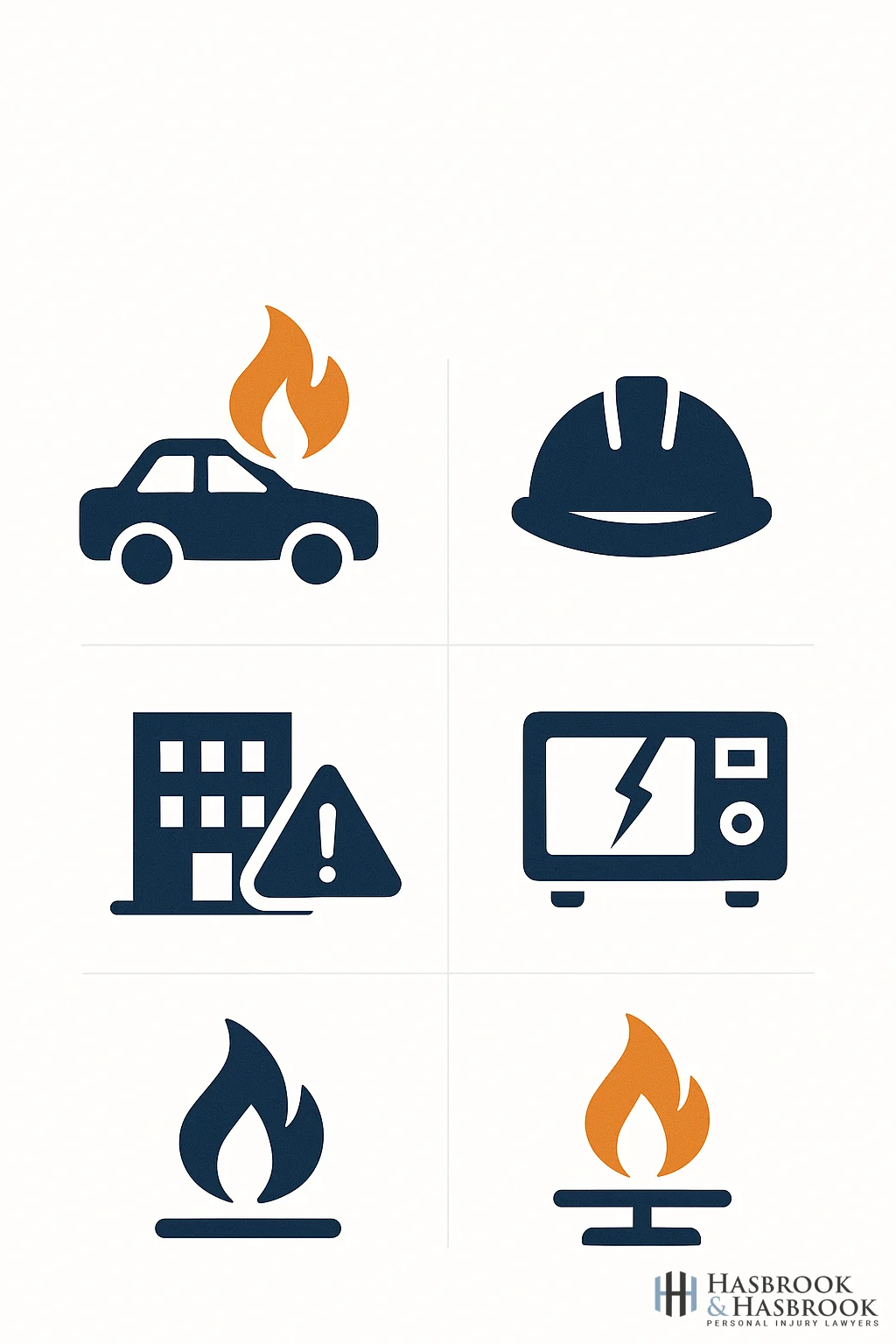
Oklahoma is a fault-based state. When another person or entity’s negligence caused your burn injury, you have the right to pursue compensation for your losses. Negligence in burn injury cases takes many forms:
- Vehicle accidents: Car, truck accident attorney Oklahoma City, and motorcycle collisions can rupture fuel lines, causing fires and explosion hazards that result in serious burn injuries
- Workplace accident exposures: Construction sites, oil fields, and manufacturing plants expose workers to heat, electricity, and hazardous chemicals. According to the American Burn Association, workplace incidents account for a significant share of serious burn injuries nationwide
- Premises liability failures: A property owner who ignores fire codes, fails to install smoke detectors, or blocks exits bears responsibility when tenants or visitors are harmed
- Negligent maintenance: Landlords and contractors who fail to maintain heating systems, electrical wiring, or gas connections create preventable fire hazards; when their failure causes harm, they can be held liable
- Gas leaks and explosions: Natural gas leaks in homes and commercial buildings can cause massive blasts and severe burn injuries
Burn injury cases often involve more than one defendant. A vehicle fire may implicate both the at-fault driver and the manufacturer of a defective fuel system. A workplace explosion may involve the employer, a contractor, and an equipment manufacturer. Identifying every responsible party is essential to recovering full compensation.
Proving liability after a burn injury
To recover compensation, you must show that the defendant owed you a duty of care, breached that duty through negligence, and that the breach caused your burn injuries and resulting damages. Evidence matters from day one: scene photographs, incident reports, witness statements, surveillance footage, and equipment inspection records all help establish who was at fault and why.
Comparative fault and your recovery (23 O.S. § 13)
Oklahoma uses modified comparative negligence under 23 O.S. § 13. If you share some responsibility for the incident, your compensation is reduced by your percentage of fault. If your share of fault is greater than 50%, you cannot recover. Insurers routinely try to inflate your fault percentage to reduce their payout. A burn injury attorney who knows these tactics can challenge those arguments with evidence.
You don’t have to face this alone. Call (405) 605-2426 to speak with a burn injury attorney at Hasbrook & Hasbrook. The consultation is free.

Building a strong burn injury case
Evidence that matters most
The strongest burn injury claims are built on multiple layers of evidence secured quickly after the incident. Surveillance footage from commercial properties and dashcam recordings from vehicle accidents disappear within days if not preserved. From the moment we take your case, we work to secure:
- Incident reports, workplace safety records, and inspection logs
- Dashcam footage, surveillance camera recordings, and witness statements
- Fire marshal investigation reports and cause-and-origin analyses
- Product recall information and defect documentation for equipment-related burns
- Your complete medical records, including emergency department notes, operative reports, and follow-up care documentation
If you face a deposition as part of your burn injury case, our guide on how to prepare for a burn injury deposition covers what to expect and how to present your testimony effectively.
Medical documentation requirements
Insurers pay serious claims only when supported by comprehensive medical records. Your treating physicians’ notes, operative reports from skin graft surgeries, physical and occupational therapy progress records, and mental health treatment documentation all form the foundation of your damages claim. We request and organize all medical records and work with your providers to ensure their documentation accurately reflects the severity and duration of your injuries.
For injuries involving permanent scarring or disfigurement, we may retain a plastic surgery expert to provide a professional opinion on the long-term prognosis, future surgery requirements, and the psychological impact of visible scarring. These expert opinions carry significant weight in settlement negotiations and at trial.
Timeline for taking action
Oklahoma’s statute of limitations under 12 O.S. § 95 gives you two years from the date of injury to file a personal injury lawsuit. Missing that deadline ends your right to recover regardless of how serious your injuries are. Evidence also degrades: surveillance footage is overwritten, witnesses move on, and physical evidence is discarded. Acting quickly protects both your legal rights and the evidence your case depends on.
What your burn injury case may be worth
Factors that increase compensation
- Higher degree and TBSA coverage: Third- and fourth-degree burns covering a larger body surface area result in higher medical costs, longer recovery, and greater non-economic damages
- Permanent scarring and disfigurement: Visible scars, especially on the face, neck, or hands, increase non-economic damages and may justify exceeding standard settlement ranges
- Loss of function: Burns affecting joints, tendons, or nerves that reduce mobility or manual dexterity significantly increase future care and earning capacity damages
- Reckless or intentional conduct: When the defendant’s behavior was grossly negligent or intentional, punitive damages under 23 O.S. § 9.1 may apply
- Clear defendant liability: Strong evidence of fault produces better settlement outcomes and reduces the risk of comparative fault arguments reducing your award
Factors that reduce compensation
- Shared fault: If you contributed to the incident, your recovery is reduced proportionally under Oklahoma’s comparative negligence rule
- Gaps in medical treatment: Periods without treatment give insurers ammunition to argue your injuries are not as severe as claimed
- Delayed reporting: Not reporting the incident immediately makes the circumstances harder to prove
- Social media activity: Photos or posts that contradict your claimed limitations can be used against you
- Pre-existing conditions: Prior skin conditions, circulatory problems, or immune deficiencies that complicate healing may allow the insurer to argue some damages are unrelated
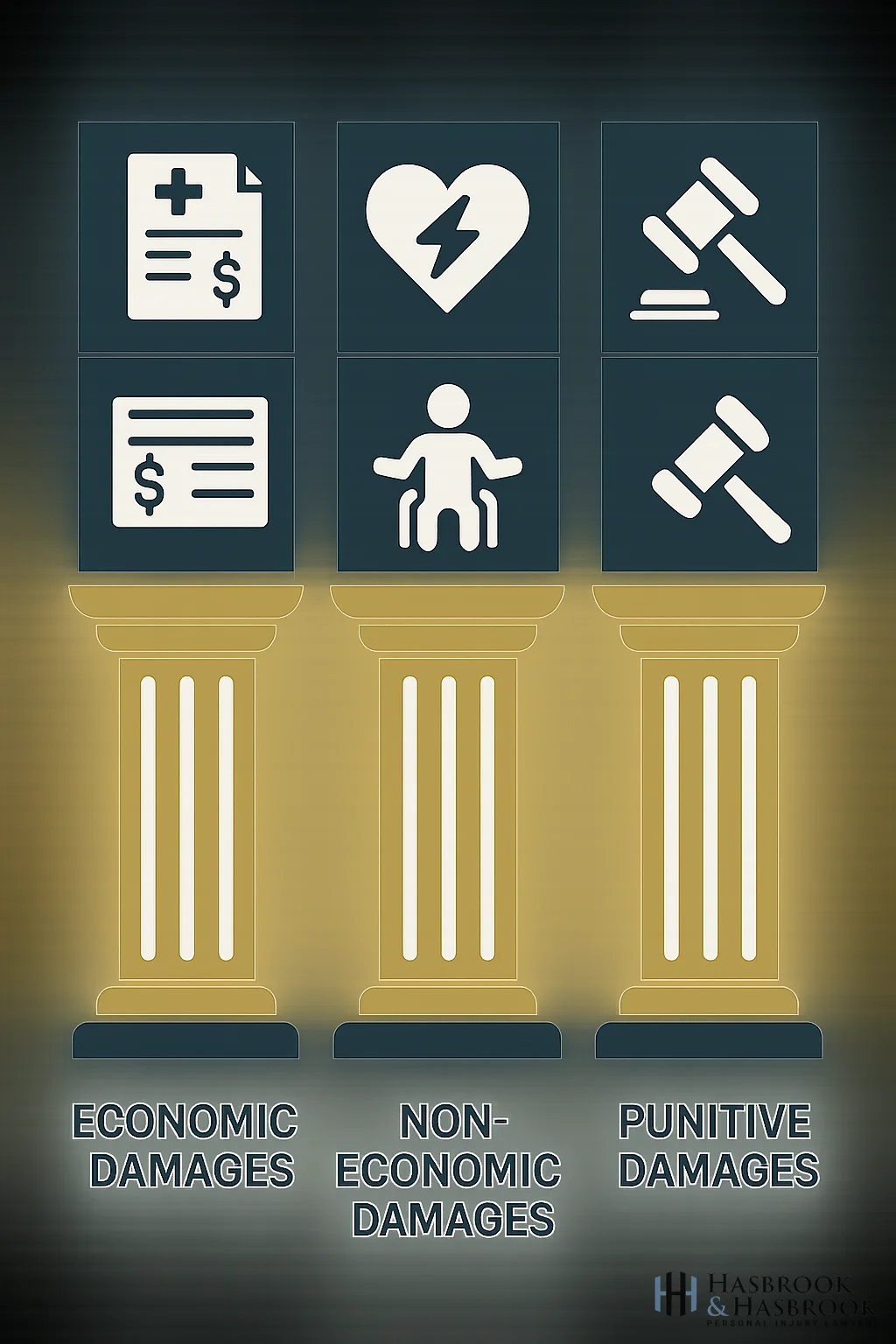
| Damage category | What it covers | Oklahoma cap |
|---|---|---|
| Economic | Medical bills, lost wages, future care, diminished earning capacity | No cap |
| Noneconomic | Pain and suffering, disfigurement, emotional distress, loss of enjoyment | $500,000 under 23 O.S. § 61.3; exceptions for severe physical injury, recklessness, gross negligence, fraud, or intentional conduct |
| Punitive | Punishment for reckless or grossly negligent conduct | Greater of $100,000 or actual damages awarded |
When a burn injury leads to death, surviving family members can pursue a compensation after fatal burn injuries action. Electrical burns can also cause traumatic brain injuries that require separate valuation. Serious burn injuries that result in permanent impairment often qualify as Oklahoma City catastrophic injury attorneys under Oklahoma law, which affects the exceptions available to the damages cap. For a detailed estimate of your case value, see how much a burn injury is worth in Oklahoma City.


Mistakes that can hurt your burn injury claim

- Giving a recorded statement to the insurer: The adjuster’s call after a burn accident is not a courtesy check. Anything you say in a recorded statement can be used to reduce or deny your claim. Do not speak with any insurance representative before consulting an attorney.
- Settling before maximum medical improvement: Burn injuries involve extended treatment timelines. Accepting a settlement before your treatment is complete and your scar maturation period ends may leave significant future medical costs uncompensated. Once you sign a release, you cannot reopen the claim.
- Skipping follow-up wound care: Gaps in treatment give the insurer grounds to argue your injuries are less severe than claimed, or that they resulted from your own failure to mitigate damages. Attend every appointment and follow your physicians’ instructions.
- Posting photos on social media: Even posts that seem unrelated to your injury can be used by the defense to argue you are not as limited as you claim. Avoid posting any content about your activities, physical condition, or daily life during your case.
- Waiting too long to hire an attorney: Evidence disappears quickly. Surveillance footage is overwritten, witnesses relocate, and fire scene evidence is cleared away. Retaining a burn injury attorney early preserves the evidence your claim depends on.
- Accepting the first offer: Initial settlement offers from insurers rarely reflect the full value of a serious burn injury claim. They are designed to close your file before the full extent of your damages is known. Get legal advice before signing anything.
Frequently asked questions about burn injuries in Oklahoma
How much is a burn injury case worth in Oklahoma?
Every burn injury claim is different. Value depends on burn degree and TBSA coverage, total medical costs, whether you have permanent scarring or disfigurement, lost wages, and the defendant’s fault. For a detailed breakdown of valuation factors, see the dedicated page on how much a burn injury is worth in Oklahoma City.
How long do I have to file a burn injury lawsuit in Oklahoma?
You have two years from the date of injury under 12 O.S. § 95. Missing that deadline eliminates your right to compensation regardless of the strength of your evidence. Contact an attorney as soon as possible, as evidence degrades quickly.
Can I still recover if I was partly at fault for the burn injury?
Yes, if your share of fault is 50% or less. Oklahoma’s comparative negligence rule under 23 O.S. § 13 reduces your recovery by your fault percentage. At 50% fault on a $100,000 award, you receive $50,000. Your fault must not exceed 50% for any recovery. Insurers routinely try to inflate fault percentages to reduce payouts.
What does it cost to hire a burn injury lawyer?
Nothing upfront. Hasbrook & Hasbrook handles burn injury cases on a contingency fee basis. We advance all case expenses and collect our fee only if we win compensation for you. You pay nothing if we do not recover. Learn how contingency fees work at our page on injury lawyer contingency fees.
What should I do immediately after a serious burn injury?
Seek emergency medical care first. Then document the scene and your injuries with photographs. Report the incident to the appropriate authority (your employer, property owner, or police). Preserve any physical evidence of the cause. Do not give a recorded statement to any insurer. Contact a burn injury attorney to protect your rights and preserve evidence before it disappears.
What types of burn accidents lead to personal injury claims?
Any burn caused by another party’s negligence can support a claim. Common categories include thermal burns from vehicle accidents and fires, chemical burns from industrial spills or hazardous material exposure, electrical burns from faulty wiring or equipment, scalding injuries from dangerously hot liquids or steam, and burns from gas leaks or explosions. Workplace burn accidents and burns caused by negligent property maintenance are among the most frequent cases our injury lawyers handle.
What makes burn injury cases different from other personal injury claims?
Burn cases involve uniquely complex medical evidence, extended treatment timelines, and damages that extend years into the future. Permanent scarring and disfigurement carry significant psychological impact. Treatment often includes multiple surgeries, skin grafts, and months of scar management before maximum medical improvement is reached. An experienced burn injury attorney is essential to calculating and proving those long-term costs before any settlement is signed.
What is the statute of limitations for burn injury claims in Oklahoma?
Oklahoma’s personal injury statute of limitations under 12 O.S. § 95 is two years from the date of injury. Exceptions apply for minors (the clock is tolled until the child turns 18) and certain cases where the injury was not immediately discoverable. Missing the deadline bars your case entirely, regardless of how strong the facts are.

How Hasbrook and Hasbrook can help with your burn injury case

Burn injury cases require attorneys who understand the medicine, the economics of long-term care, and the legal strategies insurers use to minimize serious claims. Our personal injury attorneys handle every aspect of your case so you can focus on recovery:
- Investigating the scene and securing evidence before it disappears
- Consulting medical specialists to document the full extent and long-term prognosis of your injuries
- Retaining life care planners and vocational experts to calculate future costs and lost earning capacity
- Negotiating with insurance companies that want to pay as little as possible
- Taking your case to trial when the insurer will not make a fair offer
We take burn injury cases on contingency: you pay no attorney fees unless we recover compensation for you. Hasbrook & Hasbrook has represented injured Oklahomans for decades. We know Oklahoma courts, Oklahoma adjusters, and what it takes to get burn injury cases to a fair resolution.
Call (405) 605-2426 or speak with an Oklahoma City accident attorney for a free case review. There is no obligation, and we will tell you honestly what we think your case is worth.