You request a ride on your phone and settle into the back seat, trusting the app to get you home safely. Then the driver blows through a stop sign and a pickup slams into your door. You’re pinned, in pain, and suddenly facing something no passenger expects — a collision involving a rideshare that leaves you injured and unsure who is responsible. If you were injured in an uber crash and need to understand your rights, an Oklahoma City rideshare accident attorney at Hasbrook & Hasbrook can help you pursue the compensation you deserve.
These claims differ from a typical automobile accident because the insurance picture is far more complicated. Multiple policies may apply — the driver’s personal coverage, the rideshare company’s liability policy, and your own auto insurance may all come into play depending on what the driver was doing at the time of the accident. Our injury lawyers have handled these layered claims for years, and we know how to navigate them.
How Does Uber and Lyft Insurance Coverage Work?
Uber and Lyft provide tiered liability insurance that shifts based on the driver’s status at the time of the crash. When the app is off, only personal coverage applies. Once the driver is waiting for a request, limited liability of $50,000/$100,000 kicks in. During an active trip, a $1 million commercial policy covers passengers and other motorists.
| Driver Status | Liability Coverage | UM/UIM Coverage | Who Is Covered |
|---|---|---|---|
| App off | Personal policy only | Personal policy only | Depends on personal policy terms |
| App on, waiting for request | $50,000/person, $100,000/accident | None from rideshare company | Third parties injured by driver |
| En route to pickup or carrying passenger | $1,000,000 | $1,000,000 | Passengers, other motorists, pedestrians |
App off: When the rideshare driver is not logged into the app, only their personal coverage applies. Many personal policies exclude commercial activity entirely, creating a gap that leaves you without a clear source of recovery.
App on, waiting for a request: Once the driver activates the app but has not yet accepted a ride, limited coverage kicks in — typically $50,000 per person and $100,000 per accident in liability, plus $25,000 in property damage. This may fall far short of what is needed for serious harm.
En route or carrying a passenger: Full commercial coverage applies: $1 million in liability, plus uninsured/underinsured motorist protection. This is the highest tier, and it protects passengers, other motorists, and pedestrians harmed by the uber or lyft vehicle during an active trip.
Determining which tier applies at the moment of impact is often the central dispute in a rideshare accident claim. The company will argue the driver was in a lower-coverage phase to reduce what they owe. An attorney who knows how to pull app data, GPS logs, and trip records can establish exactly which policy covers your losses.



Who Is Liable After a Rideshare Collision?
Liability in a rideshare collision may fall on the Uber or Lyft driver, a third-party motorist, the rideshare company through its insurance obligations, a government entity responsible for hazardous road conditions, or a vehicle manufacturer. Multiple parties often share fault, and identifying every liable party expands the pool of insurance coverage available to you.
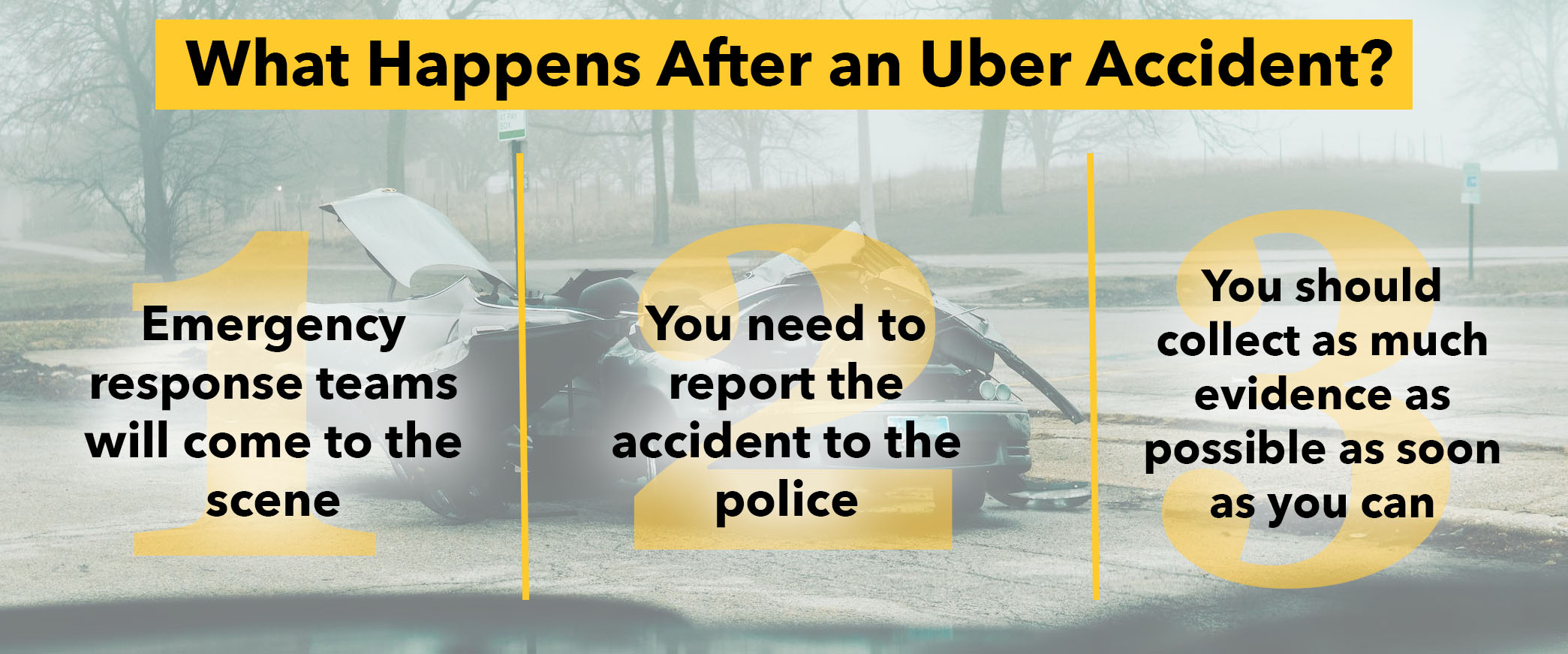
Liability in an uber and lyft accident depends on the facts. Multiple parties may share responsibility:
- The uber driver — if they were speeding, distracted, or otherwise negligent
- Another motorist — if a third-party driver caused the vehicle accident through their own carelessness
- The rideshare company — though these platforms classify their operators as independent contractors to limit exposure, Oklahoma law still holds them accountable through their insurance obligations
- A government entity — if hazardous road design or missing traffic signals played a role
- A vehicle manufacturer — if a defective component caused or worsened the crash
In a rideshare collision, identifying every liable party is critical because it expands the pool of compensation available to you. Our attorneys investigate each layer — from the driver’s status in the app to whether the rideshare vehicle had open recall notices — to build the strongest possible case.
What Causes Rideshare Collisions in Oklahoma City?
Distracted driving is the leading cause of rideshare collisions in Oklahoma City, because Uber and Lyft drivers rely constantly on in-app navigation. Driver fatigue, unfamiliarity with local roads, speeding to complete trips faster, and impaired driving also contribute to rideshare crashes at higher rates than standard car accidents.
- Distracted driving — uber or lyft driver reliance on navigation apps creates constant distraction behind the wheel
- Driver fatigue — many rideshare operators work long shifts or juggle multiple platforms, including lyft or uber simultaneously, leading to drowsiness
- Unfamiliarity with local roads — drivers who do not know the area make sudden lane changes, wrong turns, and unsafe stops
- Speeding to complete trips faster — pressure to maintain ratings pushes some operators to exceed safe speeds
- Impaired driving — while less common, intoxicated-driver collisions do occur involving uber and lyft operators
- Improper vehicle maintenance — rideshare companies set minimum vehicle standards but do not inspect cars regularly
Rideshare companies bear responsibility for the drivers they allow on their platforms. Although uber and lyft drivers are classified as independent contractors, these companies control the technology, set ride pricing, and determine who can drive. When an accident occurs because a rideshare company failed to screen out a driver with a history of reckless behavior, that failure becomes part of the liability analysis.
Any uber or lyft accident caused by negligence — whether from the rideshare operator, a third party, or both — may support a claim for compensation. Our team evaluates who is at fault and which policies apply in every rideshare case we handle. With the growth of rideshare services in OKC, accidents involving uber operators have increased steadily, and our firm stays current on the evolving regulations and coverage disputes that affect these claims.
What Injuries Occur in Rideshare Crashes?
Rideshare passengers commonly suffer traumatic brain injuries, spinal cord damage, broken bones, and severe soft-tissue injuries like whiplash and torn ligaments. Back-seat occupants face elevated risk because they have less crash protection than front-seat riders, and side-impact collisions — common in rideshare accidents — concentrate force directly on passenger compartments.

Passengers in a rideshare collision often suffer devastating harm. Back-seat occupants have limited crash protection compared to front-seat riders, and impacts tend to cause especially severe injuries:
- Traumatic brain injuries and concussions
- Spinal cord injuries and herniated discs
- Broken bones in the arms, legs, ribs, and pelvis
- Soft-tissue injuries including whiplash, sprains, and torn ligaments
- Cuts, bruises, and internal bleeding
If you were injured in a rideshare accident, seek medical attention immediately — even if you feel fine at the scene. Delayed symptoms are common, and a documented medical record strengthens your claim. The severity of your injuries directly affects the compensation you can pursue, and our lawyers ensure every diagnosis is properly documented from day one.
When the harm rises to the level of a catastrophic injury — permanent disability, paralysis, or traumatic brain impairment — the long-term costs of care, lost earning capacity, and quality-of-life losses can reach millions. These cases require expert medical testimony and life-care planning that our team coordinates on your behalf.

What Compensation Can Rideshare Accident Victims Recover?
Rideshare accident victims in Oklahoma can recover economic damages (medical bills, lost wages, rehabilitation) with no statutory cap under 23 O.S. § 61.3, noneconomic damages (pain, suffering, diminished quality of life) capped at $500,000 under 23 O.S. Section 61.3 for most claims, and punitive damages when the driver acted with gross negligence or reckless disregard for safety.
| Damage Category | What It Covers | Oklahoma Cap |
|---|---|---|
| Economic damages | Medical bills, lost wages, rehabilitation, property damage | No cap |
| Noneconomic damages | Pain and suffering, emotional distress, diminished quality of life | $500,000 (23 O.S. § 61.3); lifts for severe physical impairment or reckless conduct |
| Punitive damages | Punishment for egregious conduct (DUI, texting while driving) | Greater of $100,000 or actual damages awarded |
Economic damages — medical bills, lost wages, diminished earning capacity, rehabilitation costs, and property damage. These are documented dollar-for-dollar expenses that form the foundation of your personal injury case. In a rideshare collision involving serious injuries, emergency surgery alone can exceed $100,000, and ongoing physical therapy adds thousands more each month.
Non-economic damages — the physical pain you endure, the emotional toll of recovery, diminished quality of life, and visible scarring or disfigurement. These damages are harder to quantify but often exceed the economic totals in serious cases. Oklahoma courts consider the severity and permanence of your injuries, your age, and how your daily life has changed.
Punitive damages — reserved for conduct that goes beyond ordinary negligence. If the rideshare operator was intoxicated or actively texting at the moment of impact, Oklahoma courts may impose punitive awards to punish that behavior. Courts impose these awards to punish egregious conduct and deter similar behavior. Oklahoma does not cap punitive awards in cases involving reckless disregard for safety.
Property damage — if you were driving your own vehicle when the rideshare operator struck you, you can recover the cost of repair or fair market value if the car is totaled, plus rental expenses while your vehicle is out of service.
To recover compensation fully, you need to identify every policy in play. The rideshare company’s $1 million coverage is the primary source in most active-trip claims, but your personal injury claim may also draw from the at-fault driver’s personal policy and your own UM/UIM coverage. Those who fail to pursue all sources leave money on the table.
Never accept a quick settlement from the rideshare company’s insurer. Their first offer is designed to close your case before you understand its full value. Our attorneys calculate total lifetime damages — including future medical care, ongoing therapy, and lost career earnings — before advising you on any offer. The difference between an early lowball offer and a properly valued claim can be hundreds of thousands of dollars.
What Oklahoma Laws Affect Rideshare Claims?
Oklahoma gives rideshare accident victims two years to file a lawsuit (12 O.S. § 95), applies a modified comparative fault rule that bars recovery if you are 51% or more at fault (23 O.S. § 13), and caps most noneconomic damages at $500,000 (23 O.S. § 61.3). Rideshare companies must also maintain minimum insurance tiers set by state regulation.
Statute of limitations: Under 12 O.S. Section 95(A)(3), you must file a personal injury lawsuit within two years from the date of the accident. Wait too long and the court will bar your claim regardless of merit.
Noneconomic cap: Under 23 O.S. Section 61.3 (SB 453, effective September 2025), noneconomic recovery is capped at $500,000 for most claims. However, this ceiling lifts for severe physical injuries producing lasting impairment, and cases rooted in reckless conduct fall outside the cap entirely. A separate $1 million limit applies to permanent mental injuries.
Comparative fault: Oklahoma’s modified comparative negligence system under 23 O.S. Section 13 reduces your recovery by your share of fault — and eliminates it if you are 51% or more responsible. Insurers in an Oklahoma City collision or rideshare case will aggressively try to assign you partial blame. Do not give a recorded statement without legal counsel.
Rideshare regulation: Oklahoma requires transportation network companies to maintain specific insurance minimums, but the patchwork of coverage tiers and driver classifications creates gaps that benefit the companies — not you. The rideshare company’s legal team will exploit every ambiguity in these regulations. An attorney who understands how these rules interact with Oklahoma insurance law is essential to protecting your right to full compensation.
Steps to Take After a Rideshare Collision
After a rideshare accident, call 911, report the crash through the Uber or Lyft app to create a timestamped record, screenshot your trip details, photograph the scene and your injuries, collect witness information, and contact a rideshare accident lawyer before speaking with any insurance adjuster or signing a release.
- Call 911 and get medical attention — do not leave the scene without being evaluated.
- Report the accident through the app — this creates a timestamped record tying the driver to an active trip.
- Screenshot your trip details — pickup, destination, driver name, and ride status.
- Document everything — photograph all vehicles, road conditions, traffic signals, your injuries, and any visible wreckage.
- Collect contact information from witnesses.
- Do not admit fault, apologize, or discuss details with the company’s adjuster.
- Contact a rideshare accident lawyer before signing any release or accepting any settlement.
Whether you were injured in a car accident with a rideshare or were a passenger in the vehicle itself, preserving evidence early is critical. App data and GPS logs can disappear if you wait.


What Makes Rideshare Claims Different?
Rideshare accident claims are more complex than standard car accident cases because they involve multiple overlapping insurance policies. Instead of dealing with one insurer, you may face the driver’s personal carrier, the rideshare company’s commercial insurer, and your own UM/UIM provider — each denying responsibility and pointing fingers at the others.
Our firm has handled rideshare accident cases across Oklahoma City and throughout the state. Every accident involving a rideshare presents unique challenges that do not arise in a standard car wreck.
The rideshare company will send its own investigators to the scene, often within hours. Their goal is to build a narrative that minimizes their exposure. They may argue the driver was offline, that the injured person contributed to the collision, or that your injuries are less severe than claimed. Meanwhile, the driver’s personal insurer may deny coverage entirely because the policy excludes rideshare activity.
This three-way coverage fight is why rideshare claims require an attorney who has handled these disputes before. We know the tactics these companies use because we see them repeatedly in rideshare claims throughout Oklahoma. These disputes follow a pattern — and we know how to counter it with app data, GPS records, and the company’s own internal policies. A lyft accident lawyer on our team handles the same coverage battles from the Lyft side.
How Our Oklahoma City Rideshare Lawyers Help
A rideshare case requires a lawyer can help you untangle overlapping insurance policies, corporate liability shields, and coverage disputes that do not exist in a standard collision claim. Our Oklahoma City car accident lawyers and rideshare attorneys bring specific experience to these cases:
- Subpoenaing app data to prove which coverage tier applies
- Filing claims against multiple policies simultaneously
- Identifying all liable parties — operator, company, third-party motorists, manufacturers
- Consulting medical and economic experts to calculate full lifetime losses
- Negotiating against the rideshare company’s legal teams
- Taking your case to trial when the offer does not reflect fair value
We handle rideshare cases on contingency — you pay nothing unless we win. Our collision lawyer and rideshare lawyer team has the resources to take on large corporations. As a personal injury lawyer firm with experience in complex insurance disputes, we also coordinate with medical and vocational specialists when injuries are life-altering. If a wrongful death occurred, we represent families pursuing accountability.
Rideshare Collision Questions
Who pays if I was a passenger during an active trip?
The rideshare company’s $1 million liability policy covers your losses when the operator was at fault during an active trip. If a third-party motorist caused the crash, that driver’s insurance is primary. Our attorneys determine which policies apply and files claims accordingly.
Can I sue Uber or Lyft directly?
These platforms classify operators as independent contractors, making direct lawsuits harder. However, their insurance still covers collisions during active trips, and in some situations the company’s own negligence in screening or supervising operators may create direct liability. A lyft accident attorney or uber accident lawyer can evaluate your facts.
What if the operator’s personal insurance denies my claim?
Personal auto policies often exclude commercial rideshare activity. When this happens, the company’s policy should apply — but they may dispute coverage. We handle these coverage disputes regularly and know how to force the right insurer to pay.
How is a rideshare case different from a regular collision?
The main difference is insurance complexity. A typical crash involves two drivers and two policies. A rideshare claim may involve the operator’s personal policy, the company’s tiered commercial policy, your own UM/UIM coverage, and potentially a third-party claim. The operator’s status in the app at the moment of impact determines which coverage tier applies.
What can I recover after an accident in oklahoma city involving a rideshare?
You can pursue economic losses (medical expenses, lost income, property repair), non-economic losses (pain, suffering, emotional distress), and potentially punitive recovery if the operator acted with gross negligence.
How long do I have to file?
Oklahoma law gives you two years from the collision date to file a lawsuit. Do not wait — evidence from the app and driver records may become harder to obtain over time. Any collision with a rideshare operator should be evaluated by an attorney as soon as possible.
| Key Fact | Detail | Authority |
|---|---|---|
| Statute of limitations | 2 years from date of accident | 12 O.S. § 95 |
| Comparative fault bar | No recovery if 51% or more at fault | 23 O.S. § 13 |
| Noneconomic damages cap | $500,000 (exceptions for severe impairment) | 23 O.S. § 61.3 |
| Uber/Lyft coverage — app on, no ride | $50,000/person, $100,000/accident | Company policy |
| Uber/Lyft coverage — active trip | $1,000,000 liability + UM/UIM | Company policy |
| Attorney fee model | Contingency — no fee unless you win | Hasbrook & Hasbrook |
| Consultation cost | Free, no obligation | Hasbrook & Hasbrook |

Talk to a Rideshare Accident Lawyer Today
If you were injured in an accident — whether as a passenger, pedestrian, or another motorist — and the crash involved an uber or lyft, Hasbrook & Hasbrook is ready to fight for you. Schedule a free consultation by calling (405) 605-2426. Our rideshare accident attorney team will review your situation, explain your options, and tell you what we believe your case is worth — no cost, no obligation.