Your doctor’s office filed a lien to guarantee it gets paid once your Oklahoma personal injury case settles, rather than billing your health insurance or asking for money upfront. Many providers treat accident patients on a lien basis or under a letter of protection, then collect directly from the settlement, usually through your attorney’s trust account, once the case resolves.
Getting a notice that your doctor’s office, or the hospital that treated you, has filed a lien against your case can feel alarming so soon after a wreck or a fall. In most cases it simply means the provider wants to be paid out of your eventual settlement instead of billing you or your health insurance directly. Here is how a doctor’s lien and the related letter of protection work under Oklahoma law, who gets paid first, and what happens if the settlement does not cover everything owed.
How a Doctor’s Lien Works in an Oklahoma Personal Injury Case
Oklahoma law gives physicians, and other licensed healing-arts providers, a statutory right to file a lien against a patient’s personal injury recovery. Under 42 O.S. § 46, a doctor who treats someone hurt by another person’s negligence can claim a lien for the amount owed, attaching to whatever part of a judgment, settlement, or compromise belongs to the injured patient.
That lien is only effective once the provider files written notice on the mechanic’s and materialman’s lien docket in the office of the county clerk where the doctor’s principal office is located, and sends a copy by registered or certified mail to the person the claim is made against and to the injured patient, with a copy to the patient’s attorney if the physician knows who that is. From there, the provider generally has one year after learning the underlying claim was resolved, whether by judgment, settlement, or compromise, to file suit and enforce the lien.
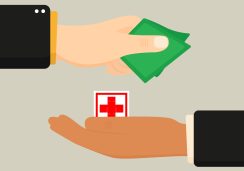
Hospitals have a similar, separate lien right under 42 O.S. § 43, covering the reasonable and necessary charges for emergency treatment of an accident injury that is not covered by workers’ compensation. Both liens share one important limit: each is, by statute, inferior to the attorney’s own lien on the case under 5 O.S. § 6, so legal fees and costs are accounted for before either medical lien is paid.
Who actually gets paid first can get more complicated once a health insurer’s own subrogation claim, workers’ compensation, or several medical liens are all competing for the same settlement. A health insurer that already paid some of your bills has its own separate right to recover those payments, distinct from a provider’s lien, and the fuller ranking rules for when several liens compete for the same settlement cover that order in more detail.
None of this means you did something wrong, and it does not cost you anything up front. Filing a lien is simply how a provider protects its right to be paid once your case resolves, instead of billing you directly or sending your account to collections while the claim is still pending.



How a Letter of Protection Works
A letter of protection is a related but different tool. It is not a statutory lien; it is a contract between the patient, the medical provider, and the patient’s attorney. The typical terms:
- The provider agrees to treat the patient while the claim is pending.
- The provider holds off on demanding payment, and will not send the account to collections or a credit bureau while the letter stays in effect.
- The patient authorizes the attorney to pay the provider directly out of any settlement or judgment.
- Once the funds arrive, the attorney pays the provider from the law firm’s trust account, a bank account regulated by the state bar.

Not every provider offers treatment on a lien basis or under a letter of protection. Surgeons, imaging centers, and clinics that regularly see accident patients are generally more open to one of these arrangements than a typical family or primary care doctor, and a personal injury attorney who handles a lot of these cases usually knows which local providers are willing to work this way.
When a settlement finally arrives, the trust account pays everyone in a set order: attorney’s fees and case costs first, then a health insurer’s own subrogation claim if it paid for any of the treatment, then the medical providers who treated the patient under a lien or letter of protection, and the patient receives whatever remains. A provider left unpaid at the end of that chain can sue the attorney for breach of contract for failing to honor the letter of protection, and Medicare, Medicaid, and other lienholders who gave proper notice can also pursue the liability insurer directly if it cuts a check without accounting for them.
Negotiating Down Medical Bills After a Settlement
Medical bills covered by a lien or letter of protection rarely get paid in full at face value. Because providers would generally rather collect a reduced amount now than wait out a lawsuit that could take months or years, attorneys routinely negotiate these balances down before disbursing settlement funds, often securing reductions in the 10 to 15 percent range.
Common tactics include asking the provider to accept a lower lump sum in place of the full billed balance, and holding the disputed portion of the settlement in trust until the provider agrees to a number. Leverage also comes from 12 O.S. § 3009.1, which limits the medical expenses admissible at an Oklahoma trial to what a provider actually accepted as payment, not the amount originally billed, with one exception for liens: once a provider has filed one, the billed amount, up to the lien amount, becomes admissible even though it was never paid.A closer look at how Oklahoma treats the gap between what a bill says and what actually gets paid covers this rule in more detail.
Negotiations do not always go smoothly. Some billing departments will not discuss a reduction until after the case settles, and it can take repeated calls to reach the one staff member with authority to approve a lower payoff. Even a successful negotiation does not necessarily erase the balance entirely, so a patient can still owe some amount once the settlement funds are distributed.

When There Isn’t Enough to Go Around: Interpleader Actions

Sometimes a settlement or verdict simply is not large enough to pay every lien in full once the attorney’s fee comes out. When that happens, an attorney can file what is called an interpleader, asking a judge to decide how the remaining money should be divided. Cornell Law School’s Legal Information Institute describes interpleader as a way for whoever holds disputed funds to let a court sort out competing claims, rather than risk paying the wrong party and having to pay again.
A simplified example shows how it works. Say a case settles for a $100,000 policy limit, but total medical bills across every lienholder add up to $150,000. After the attorney’s $30,000 fee comes out, $70,000 remains, roughly half of what the providers are owed altogether. The attorney can file an interpleader, notify every lienholder, and let the court hold a hearing where each provider argues for its share. A provider owed $50,000 of that $150,000 total, for example, might be awarded around a third of the remaining $70,000, or roughly $23,100, with the rest divided proportionally among the others.
An interpleader keeps the attorney and client from being caught in the middle of that decision, but it adds a court hearing and legal expense to a case that would otherwise be ready to close.
What a Letter of Protection Does Not Do
A letter of protection buys time, not forgiveness. If the lawsuit is ultimately unsuccessful, or settles for less than expected, the patient still owes the provider for the treatment received, regardless of how the case turns out. The arrangement is not a promise that the attorney will personally cover the bill if the recovery falls short, and it is not insurance. The one situation where an attorney can end up on the hook is if they collect the settlement funds but pay them to the client instead of honoring the letter of protection, though the patient generally remains responsible for the underlying bill either way.


Frequently Asked Questions About Medical Liens After an Oklahoma Accident
What is the difference between a medical lien and a letter of protection?
A lien is the statutory claim a hospital or physician files directly against a settlement or verdict under Oklahoma law. A letter of protection is a separate, contract-based agreement that lets a patient get treatment now with payment deferred until the case resolves. The two often show up together, but a provider can use either one on its own.
How do I know if my medical provider will treat me on a lien basis?
Ask the provider’s billing department directly, or ask your personal injury attorney, who typically knows which local hospitals, clinics, and specialists in the area regularly accept lien-based treatment or a letter of protection for accident patients.
Do I still owe my medical bills if I lose my case?
Yes. Whether you were treated under a formal lien or a letter of protection, you remain responsible for the bill if the lawsuit does not result in a recovery large enough to cover it, or does not succeed at all.
Can a medical lien or letter of protection hurt my credit score?
While the letter of protection is in effect, the provider is not supposed to send the account to collections or report it to a credit bureau. If the case resolves and the bill still is not paid according to its terms, the provider can pursue normal collection efforts afterward, which can affect your credit.
Will my doctor’s office order an independent medical exam because of the lien?
Not usually. An independent medical exam is far more often requested by the insurance company or a defense attorney testing the extent of your injuries, not by the provider that filed the lien. How these defense-requested exams typically play out covers what to expect if one is scheduled.
How long does a doctor’s office have to enforce its lien?
Under 42 O.S. § 46, a physician generally has one year after learning that the underlying claim was resolved, by judgment, settlement, or compromise, to file a lawsuit enforcing the lien.
Can I negotiate my own medical bills after a settlement?
Yes, though most people let their attorney handle it, since the attorney is already negotiating with multiple providers out of the same settlement and typically has an ongoing relationship with local billing departments.
What is PIP coverage, and does it replace a medical lien?
Personal injury protection, or PIP, is an optional coverage on an Oklahoma auto policy, tracked by Oklahoma’s insurance regulator, that can pay medical bills and sometimes lost wages regardless of who caused the accident. When PIP or health insurance pays for treatment upfront, there is less need for a provider to file a lien in the first place, though a lien can still follow for whatever PIP or insurance does not cover.
How long does it take to resolve a case involving medical liens?
It varies widely depending on how complex the case is and how much negotiating the liens themselves require. The general timeline for how long an Oklahoma injury claim can take covers the factors that tend to speed a case up or slow it down, and unresolved liens are one of them.


A lien notice from your doctor’s office is rarely something to panic over, but sorting out which liens have priority, negotiating down what is owed, and making sure everyone gets paid correctly from one settlement check is exactly the kind of work a personal injury attorney handles routinely. Hasbrook & Hasbrook represents injured clients across the Oklahoma City area in car accident, premises liability, and other personal injury claims where medical liens and letters of protection come into play, and Clayton Hasbrook has been negotiating hospital and physician liens down for injured Oklahomans since 2008. If a lien or letter of protection has you wondering where your settlement will actually go, send our office the details of the lien on your case or call 405-605-2426 to talk it through.