Generally not right away. Insurers profit by settling before your treatment and full damages are documented, and a signed release gives up the right to more money if problems appear later. Oklahoma sets no deadline for responding to an offer, only a two-year deadline to sue under 12 O.S. § 95, so take time to evaluate before signing.
An adjuster calls a few weeks after your wreck and offers a settlement. The number sounds reasonable and the bills are piling up, but accepting before your treatment and total damages are documented is one of the costliest mistakes Oklahoma drivers make. Hasbrook & Hasbrook reviews offers at no charge: call (405) 605-2426 before you sign anything.

Should You Accept a Quick Settlement in Oklahoma?
The short answer is almost never, at least not the first one. A quick offer is the insurer’s most profitable outcome: the adjuster is paid to close files cheaply, before your full damages are known. Severity is rarely clear in the first 30 to 60 days, per national crash-cost data, so an offer that arrives before treatment ends is based on incomplete information. Before responding, see how to tell if your settlement offer is fair.
Quick test: should I take this offer?
A “no” to any of these usually means the offer is too low:
- Has my doctor confirmed I reached maximum medical improvement?
- Does the offer include projected future medical costs?
- Does it account for lost income and any reduced future earning capacity?
- Has the insurer responded to a documented demand package itemizing your specials?



The Insurance Company’s Playbook
The first offer is rarely the carrier’s best one. It is an opening position designed to test whether you will accept less than the claim is worth, often paired with an artificial deadline and pressure for a recorded statement; the Oklahoma Insurance Department advises documenting everything in writing before you sign. Recognizing common insurance company tactics changes how you respond. Oklahoma’s unfair-claim-settlement-practices law, 36 O.S. § 1250.5, bars insurers from misrepresenting policy terms or refusing a good-faith offer once liability is reasonably clear. None of that changes your actual deadline: two years from the accident date under 12 O.S. § 95, not the 10 or 14 days an adjuster’s letter suggests.
Determining the True Value of Your Injury Claim
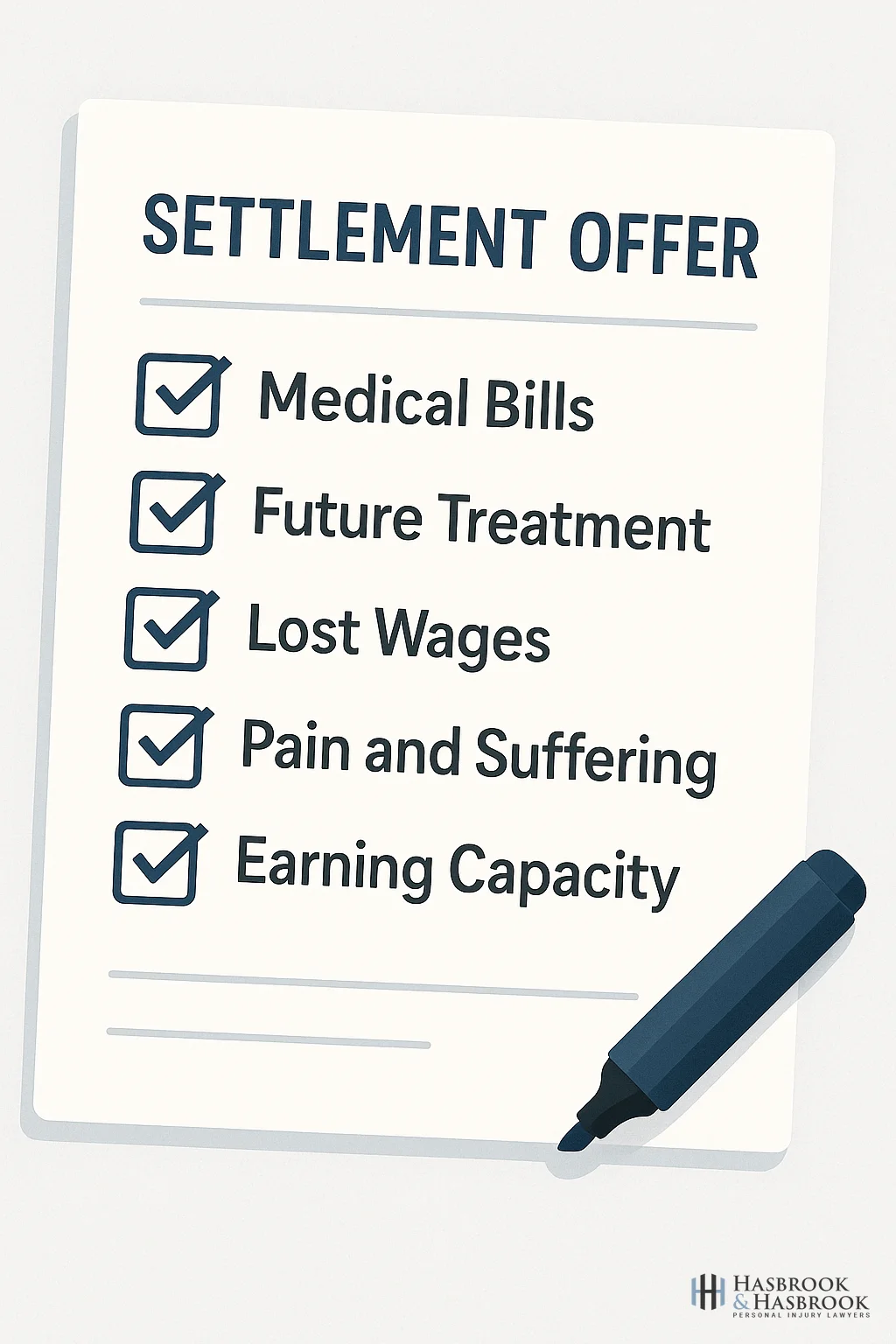
A defensible number is the sum of economic and noneconomic damages, documented and projected forward. Economic damages follow Oklahoma’s paid-not-incurred rule: under 12 O.S. § 3009.1, you recover medical expenses based on amounts actually paid, not the higher amounts originally billed, plus lost wages, reduced earning capacity, and property damage. Noneconomic damages cover pain and suffering, emotional distress, and permanent impairment; insurers routinely undervalue these, so it helps to understand how Oklahoma adjusters actually calculate pain and suffering. For the full picture, see the full range of damages available after a car accident.
Early offers commonly miss future medical care not yet reflected in a life-care plan, diminished earning capacity, health-insurance and hospital-lien reimbursement (including liens under 42 O.S. § 43), and diminished vehicle value. For more on what adjusters do not volunteer, see costs adjusters routinely leave out of an early offer.
Comparative Fault Can Reduce or Bar Your Claim
Oklahoma is a modified comparative fault state under Oklahoma’s comparative negligence rules. Under 23 O.S. § 13, your recovery is reduced by your percentage of fault, and you are barred from recovering only if your fault exceeds 50 percent of the total. At exactly 50 percent you still recover, just reduced proportionally. Adjusters use comparative fault aggressively, so pushing back on an inflated fault assignment from the police report or witness statements is high-leverage. See recovering compensation when you are partly at fault.


If the Insurer Won’t Budge
Three options remain when an adjuster will not move after a documented counter: send a structured demand letter with itemized specials and lost-wage documentation (see how to respond to a lowball settlement offer), ask in writing for the file to be escalated to a supervisor, or file suit. Filing does not commit you to trial. Most cases that enter litigation still settle, often for more, because litigation triggers discovery and exposes the carrier to defense costs. See how the decision between settling and going to trial actually plays out.
Why Rushing Is Risky
A signed release gives up the right to more money if your injury turns out worse than expected or a new complication appears later. Soft-tissue and spinal injuries often worsen weeks or months after the crash. Once you sign, the adjuster has no reason to keep negotiating, and reopening a signed settlement afterward is almost never successful absent fraud.
How an Attorney Can Help
Most personal injury attorneys, including our attorneys, review an offer for free with no obligation to retain; see how represented and unrepresented recoveries tend to compare. Representation changes what an adjuster is willing to authorize, and an attorney negotiates health-insurance and hospital-lien claims down so more of the settlement reaches you.

Settlement Offer FAQ
How long do I have to respond to a settlement offer?
Oklahoma sets no deadline for responding. The only deadline that matters is the two-year statute of limitations to file suit under 12 O.S. § 95.
Can I still file a lawsuit if I reject a settlement offer?
Yes, as long as the statute of limitations has not run. Rejecting an offer keeps every option open; signing a release closes them permanently.
Will accepting a settlement affect my health insurance or Medicare?
Likely yes. Health insurers, ERISA plans, and Medicare often have subrogation rights against a personal injury settlement, and failing to address them before signing can leave you owing money after the check clears.
Should I give the insurance company a recorded statement?
Generally no, not before talking to an attorney. You are not legally required to give a recorded statement to the at-fault driver’s insurer, and anything you say can be used to minimize your claim.
The right time to evaluate an offer is once treatment is documented and the wage picture is complete; until then, the number on the table is based on incomplete information. Call our firm at (405) 605-2426 for a free settlement review before you sign.