A collision with a commercial semi-truck differs from a standard car accident in ways that directly shape your legal claim. Trucking companies maintain rapid-response teams trained to reach crash scenes within hours. Electronic logs overwrite automatically. Dashcam footage recycles on a rolling schedule. The first 48 hours after impact either build the foundation for your case or erase it. If you have been hurt in a truck crash in Oklahoma, here is what you need to know and do before key evidence disappears.
Why the 48-hour window matters in truck accident claims
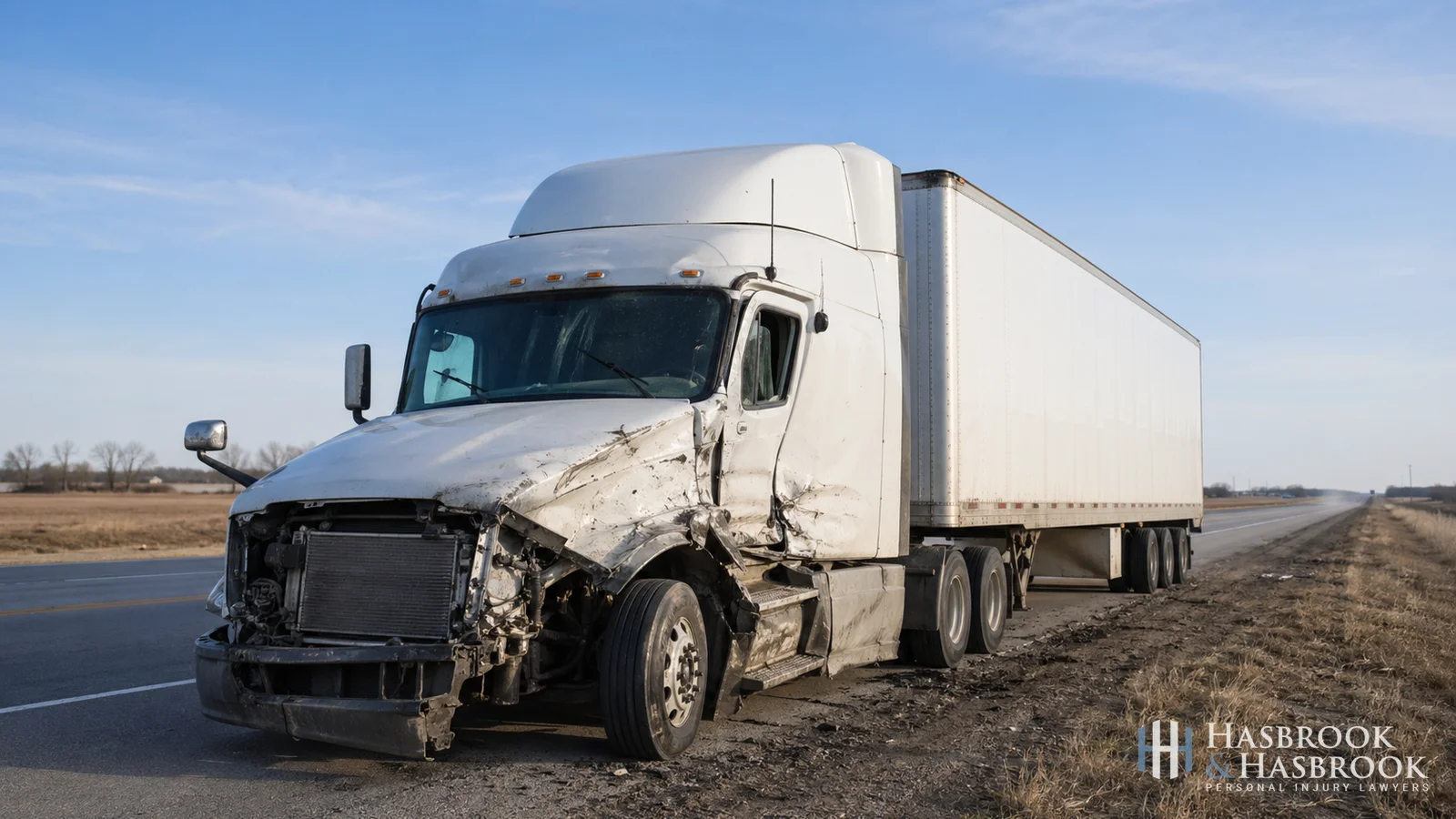
Truck accidents in Oklahoma are on the rise, and commercial carriers are practiced at protecting themselves quickly. The insurer often dispatches a crash-response team within hours. The truck itself can be moved to a private yard, repaired, or returned to service before anyone on your side has examined it.
Two clocks start the moment of impact: the electronic clock on the truck’s data recorder, which may overwrite records on a rolling cycle, and Oklahoma’s legal clock for preserving your right to file a claim. Both run against you from the first hour.



Understanding your legal rights after a semi-truck collision in Oklahoma
Oklahoma law gives injured people two years from the crash date to file a personal injury lawsuit under 12 O.S. § 95. While two years sounds like ample time, the electronic evidence your case depends on, including ELD data, GPS records, and driver logs, is often gone long before that deadline. See our overview of Oklahoma’s personal injury statute of limitations for how the window is calculated.
Oklahoma follows a modified comparative fault rule under 23 O.S. § 13: you can recover as long as your fault does not exceed 50%. The carrier’s insurer will work to push fault onto you, which is why a complete evidentiary record matters from the start. See how comparative fault works, who is legally responsible for a truck crash, and whether to sue the driver or the company.
Your step-by-step action plan for the first 48 hours
Hours 0 to 4 (at the scene):
- Call 911. Oklahoma law requires immediate reporting under 47 O.S. § 10-107.
- Photograph everything before vehicles move: tire marks, the truck’s DOT number, license plate, trailer number, and all damage to both vehicles.
- Get names and contact information for every witness.
- Do not give a recorded statement to the carrier’s adjuster at the scene or at the hospital.
- Seek medical evaluation the same day, even without obvious symptoms. Internal injuries often show no outward sign for hours.
Hours 4 to 48:
- Contact an Oklahoma City truck accident attorney. Evidence requests must go out within hours, not days.
- Preserve your own materials: dashcam footage from your vehicle and photographs of your injuries.
- Follow your physician’s treatment plan and log every symptom, appointment, and medication.
- Avoid posting about the accident on social media.
Evidence that disappears after a truck crash
Carrier-controlled evidence at risk of loss:
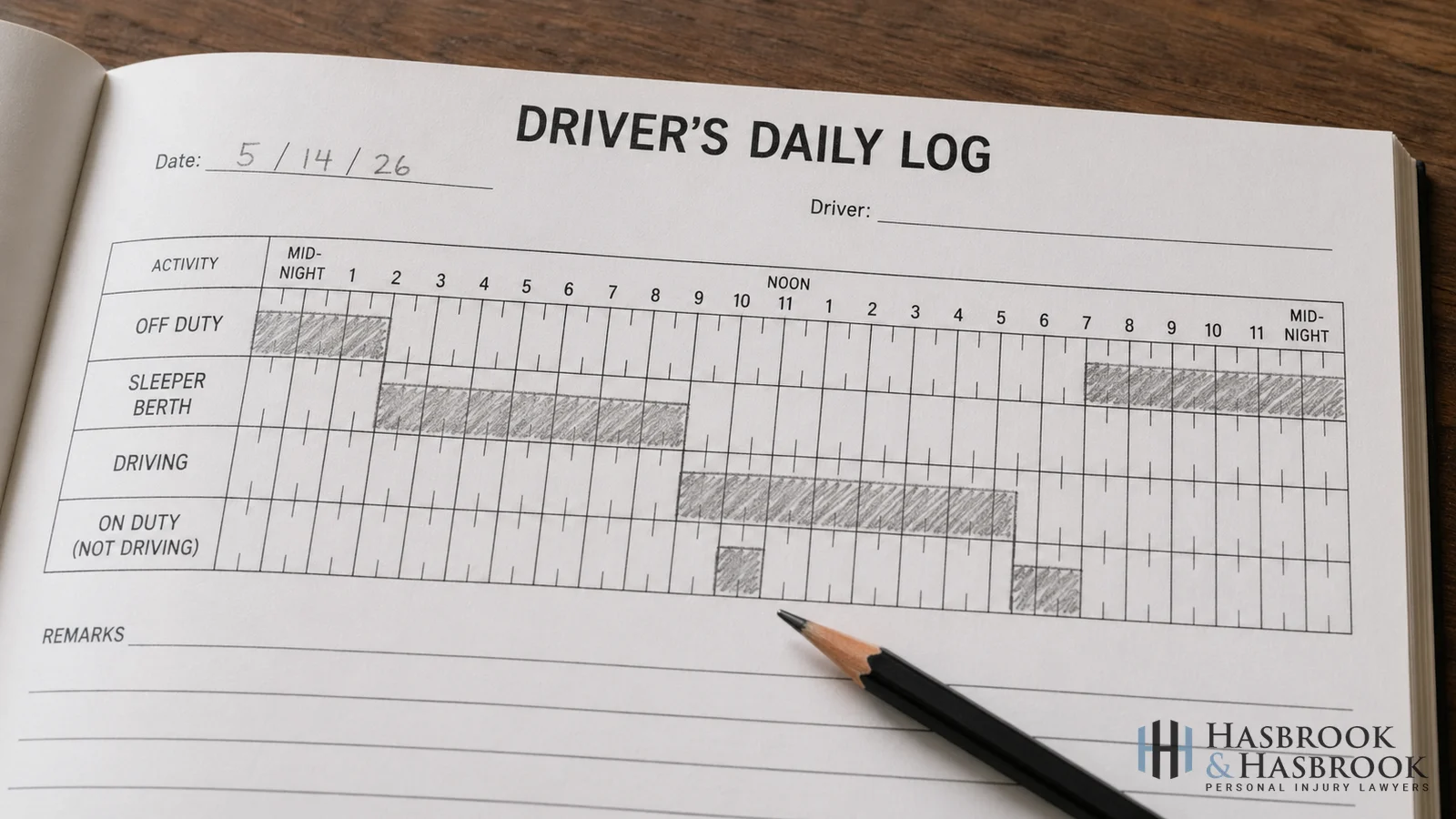
- ELD (electronic logging device) data recording hours of service
- ECM data (the “black box”) capturing speed, braking, and throttle in the seconds before impact
- GPS telematics from the fleet management system
- In-cab dashcam footage
- Pre-trip inspection reports and maintenance logs
Scene evidence that deteriorates fast:
- Skid marks, which weather and traffic erase within 24 to 48 hours
- Witness recollections, which degrade within days
- Business and intersection camera footage, often overwritten within two to five days
For a detailed breakdown of what black-box data can prove in a crash case, and how forensic accident investigators use ECM data to model the seconds before impact, those pages cover both in depth.

ELD data and black-box records: what carriers must preserve
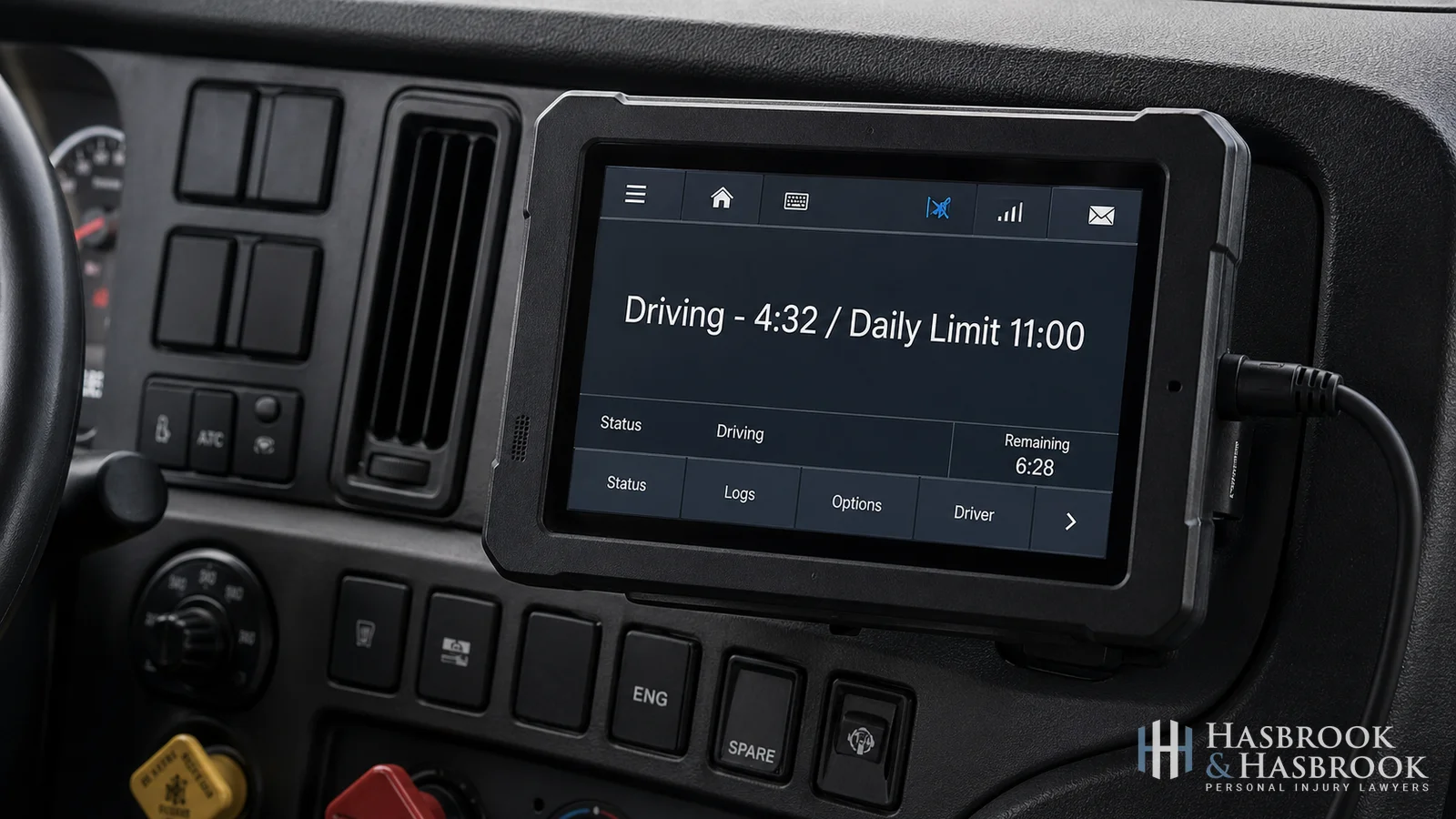
The FMCSA requires commercial carriers to maintain ELD records under regulations including 49 C.F.R. § 395.11. Carriers must retain ELD back-up records on a separate device for 6 months under 49 C.F.R. § 395.22(i). FMCSA’s commercial crash statistics database documents the link between hours-of-service violations and serious truck crashes.
What ELD and ECM data can reveal:
- Hours of service in the preceding 24 hours and seven-day window
- Speed at impact (ECM)
- Hard-braking and hard-acceleration events
- Engine fault codes logged before the crash
- Any HOS violation placing a fatigued driver on the road
Carriers must preserve this data once litigation is reasonably anticipated. A preservation letter triggers that duty. See how FMCSA violations factor into a truck accident case for the enforcement side of these requirements.
How federal HOS regulations supply the standard of care in Oklahoma negligence claims
Federal hours-of-service rules in 49 C.F.R. Part 395 set mandatory limits on how long a commercial driver may operate without rest. These regulations do not preempt Oklahoma negligence law. Oklahoma state law still governs your claim. What the federal rules do is supply the standard of care: a proven HOS violation is direct evidence of negligence under Oklahoma law, giving you two parallel lines of proof: the log data showing the violation and the negligence doctrine establishing recovery.
Medical documentation and why it drives settlement value
Every day you delay seeking care weakens your claim in two ways. It gives the insurer a basis to argue the injuries did not result from the crash, and it leaves traumatic brain injuries and back and neck injuries undiagnosed; both often appear only on MRI or CT scan.
After a truck accident in Oklahoma:
- Seek emergency evaluation the same day.
- Follow every specialist referral.
- Keep a daily symptom and pain log. This record anchors the damages section of your settlement demand.
For guidance on documenting your injuries and why medical records drive case value, those pages explain what attorneys use from your treatment file. If you did not see a doctor immediately, see whether delayed treatment affects your case.


Types of reports required after a truck accident in Oklahoma
Oklahoma law requires immediate reporting of accidents involving injury or significant property damage. 47 O.S. § 10-107 is the reporting trigger. The resulting police report becomes foundational for both insurance purposes and litigation.
Federal regulations require post-accident drug and alcohol testing of the commercial driver after a serious crash. A driver who refuses testing is treated as a positive result under FMCSA rules. Your attorney obtains the police report, the FMCSA accident register entry, and the carrier’s internal incident report through the formal discovery process.
Sending the preservation letter: your attorney’s first move
A litigation hold letter formally notifies the carrier, its insurer, and any third-party maintenance contractor that litigation is anticipated and demands retention of all related records. A properly drafted letter covers:
- The truck’s full maintenance and inspection history
- All ELD and ECM data from the hours before the crash
- The driver’s employment records, training file, and prior violations
- All communications between dispatchers and the driver on the day of the crash
- Any in-cab or exterior dashcam footage
This preserved evidence forms the backbone of the eventual settlement demand. See the Oklahoma demand letter structure guide and what a personal injury settlement demand contains.
Work with a trusted Oklahoma City truck accident attorney
Trying to document everything yourself while managing emergency medical care after a serious truck crash spreads your attention across two tasks that both demand full focus. An attorney takes evidence preservation off your plate so you can concentrate on recovery.
we handle these claims help Oklahoma truck accident survivors pursue full compensation for medical costs, lost wages, and pain and suffering. Call (405) 605-2426 or request a no-obligation consultation for a free consultation.
For a realistic timeline on what follows after the 48-hour window closes, see how long personal injury lawsuits take, how much truck accident settlements typically reach, what attorneys do in commercial-vehicle cases, and how an attorney helps your claim.

Frequently asked questions about the first 48 hours after a truck accident
What should I do in the first 48 hours after a truck accident in Oklahoma?
Call 911, seek medical care the same day, and contact a truck accident attorney before 48 hours pass. The most time-sensitive action is ensuring your attorney sends a preservation letter to the carrier before electronic data overwrites. Photograph the scene, collect witness contacts, and avoid giving a recorded statement to the carrier’s insurer.
How long do I have to file a truck accident lawsuit in Oklahoma?
Two years from the crash date under 12 O.S. § 95. That filing deadline is separate from, and far less urgent than, the evidence preservation window. ELD records and GPS logs can disappear within days, long before any lawsuit is filed.
What is ELD data and why does it matter to my case?
ELD stands for electronic logging device. Federal law requires commercial carriers to use ELDs to record driver hours of service. In a truck accident case, ELD data can show whether the driver exceeded federal limits before your crash, which is direct evidence of fatigue-related negligence. This data can overwrite quickly if not preserved.
Can the trucking company destroy evidence after an accident?
Not lawfully once litigation is anticipated. A preservation letter sent by your attorney formally triggers the carrier’s duty to retain records. Carriers that destroy or fail to preserve records after notice can face spoliation sanctions, including adverse jury instructions telling jurors the destroyed evidence would have hurt the carrier’s case.