After a car accident, you might receive a call from the other driver’s insurance company within hours. The adjuster sounds friendly and concerned about your well-being. However, you should not talk to them without legal advice. Their goal is to protect their company’s bottom line, not to ensure you receive fair compensation for your injuries and losses.
Insurance companies are multi-billion-dollar corporations — regulated in Oklahoma by the Oklahoma Insurance Department — that use precise tactics to reduce payouts. According to a study by the Insurance Research Council (IRC), auto accident victims who hire an attorney receive settlements that are, on average, 3.5 times higher than those who negotiate on their own. At Hasbrook & Hasbrook Personal Injury Lawyers, we stand between injury victims and predatory insurance tactics. We protect your rights and fight for the full recovery you deserve after a crash.



When Might the Insurance Company Contact You?
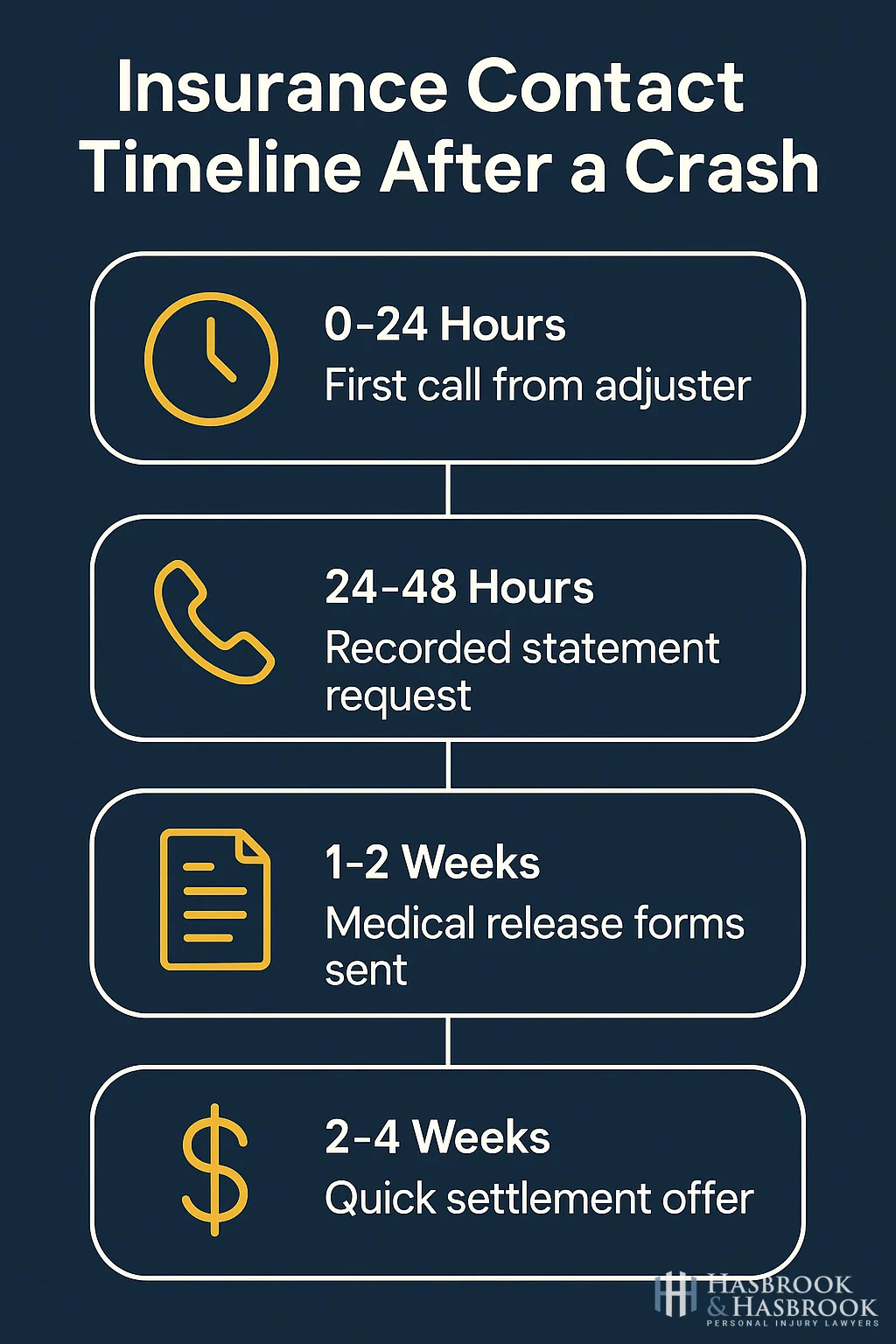
Most insurance companies move fast after an accident. You can expect a call from the other driver’s insurance adjuster within 24 to 48 hours of the crash — sometimes even the same day. Their urgency is strategic, not compassionate.
The person calling is typically a claims adjuster assigned to evaluate and minimize your claim. In some cases, an insurance company investigator may reach out instead, especially if the accident involved serious injuries or significant property damage. These representatives are trained to gather information while your memory is fresh and before you understand the full extent of your injuries.
This early contact is deliberate. The insurance company wants to lock you into a statement before you’ve seen a doctor, consulted an attorney, or had time to assess the real impact of the car accident on your life. If you receive a call, you are under no obligation to speak with them. You can simply say, “I need to speak with my attorney first,” and end the conversation.
The Hidden Motivation of the Insurance Adjuster
The insurance adjuster may seem helpful and sympathetic when they call. However, their primary job is to save their company money by paying you as little as possible. They search for any admission of fault or inconsistency in your story about the accident scene.
Adjusters are trained professionals who handle hundreds of claims every year. They know exactly which questions to ask to get you to say something that hurts your case. They may express concern about your injuries, ask how you’re feeling, or casually ask you to describe what happened. Every one of these questions is calculated to elicit information the insurance company can use against you later.
Every word you say becomes evidence they can use to devalue or deny your injury claim. The adjuster works for the insurance carrier, not for you. Their friendly demeanor masks their true purpose: to minimize what you receive from your accident claim. Understanding how insurance companies determine fault can help you recognize these tactics before they cost you money.
Why Recorded Statements Are a Risk to Your Claim
In Oklahoma, you have no legal obligation to provide a recorded statement to the other driver’s insurance company. They may pressure you or suggest that they cannot process your claim without it. This is false. You can file a claim and pursue compensation without ever speaking to them directly.
A recorded statement is different from a police report or an accident report filed with your own insurer. The other driver’s insurance company wants your recorded words specifically so they can search for inconsistencies, admissions of fault, or statements that minimize your injuries. Once recorded, these statements become permanent evidence that can be used against you in negotiations or at trial. There is no benefit to you in providing one.
The Danger of Leading Questions
Adjusters use questions designed to trap you into admitting partial fault for the car accident. They might ask, “You were in a hurry that day, weren’t you?” or “The sun was in your eyes, correct?” These questions push you toward statements that suggest you were responsible for the crash.
Even innocent responses can be twisted to reduce your settlement offer. The adjuster might ask about your speed, your level of attention, or whether you saw the other vehicle. Each question aims to build a case against you. A recorded statement gives them a recording to analyze your words repeatedly, looking for any advantage. Avoid common mistakes after a car accident by declining to give a recorded statement without your attorney present.
Contradicting Your Own Medical Records
Many auto accident injuries don’t appear immediately after a crash. You might say you “feel fine” today, but whiplash and soft tissue injuries or a traumatic brain injury may not show symptoms for 48 hours. The insurance company will use your recorded statement to argue you weren’t really hurt. Internal injuries, soft tissue damage, and concussions often have delayed symptoms. Never discuss injuries before a full medical evaluation.
What you say today can contradict your medical records and medical reports tomorrow. This contradiction gives the claims adjuster ammunition to deny your medical expenses and medical treatment costs. If you’ve already been in an accident, review what you should do immediately after a car accident to protect your claim from the start.

Understanding Oklahoma’s Modified Comparative Negligence Rule
Oklahoma follows a modified comparative negligence rule under 23 O.S. § 13 with a 50% threshold. If you are found 50% or more at fault for the car accident, you cannot recover any compensation. If you are found to be less than 50% at fault, your compensation is reduced by your percentage of fault.
For example, if you are 20% at fault and your damages total $100,000, you receive only $80,000. Insurance companies exploit this rule by tricking victims into admitting even minor responsibility during recorded statements. One careless admission can cost you thousands of dollars or eliminate your entire injury claim.
This is why every conversation with the other driver’s insurance company is dangerous to your financial recovery. The adjuster’s goal is to push your fault percentage as high as possible — ideally to 50% or above, which would bar you from recovering anything. Even seemingly innocent statements like “I didn’t see them coming” can be reframed as evidence of inattention. An attorney who understands how comparative fault works in Oklahoma can protect you from inadvertently increasing your share of liability and ensure fault is determined fairly.
Common Tactics Used to Devalue Your Recovery
Insurance companies use several strategies to reduce the costs of accident claims. The National Association of Insurance Commissioners (NAIC) has documented how industry-wide claims handling practices often prioritize cost containment over fair settlements. The “quick settlement offer” arrives before you understand the full extent of your injuries. It rarely covers future medical bills, ongoing medical treatment, or the long-term effects of catastrophic injury. These offers typically come within days of the crash when you’re vulnerable and stressed.
Another common tactic involves the “medical authorization release” form. This document allows the claims adjuster to access your entire medical history and search for pre-existing conditions to blame for your current injuries. They dig through years of medical appointments and medical records, looking for any excuse to deny your claim. These tactics work because most people don’t understand the insurance claims process or their rights under their insurance policy.
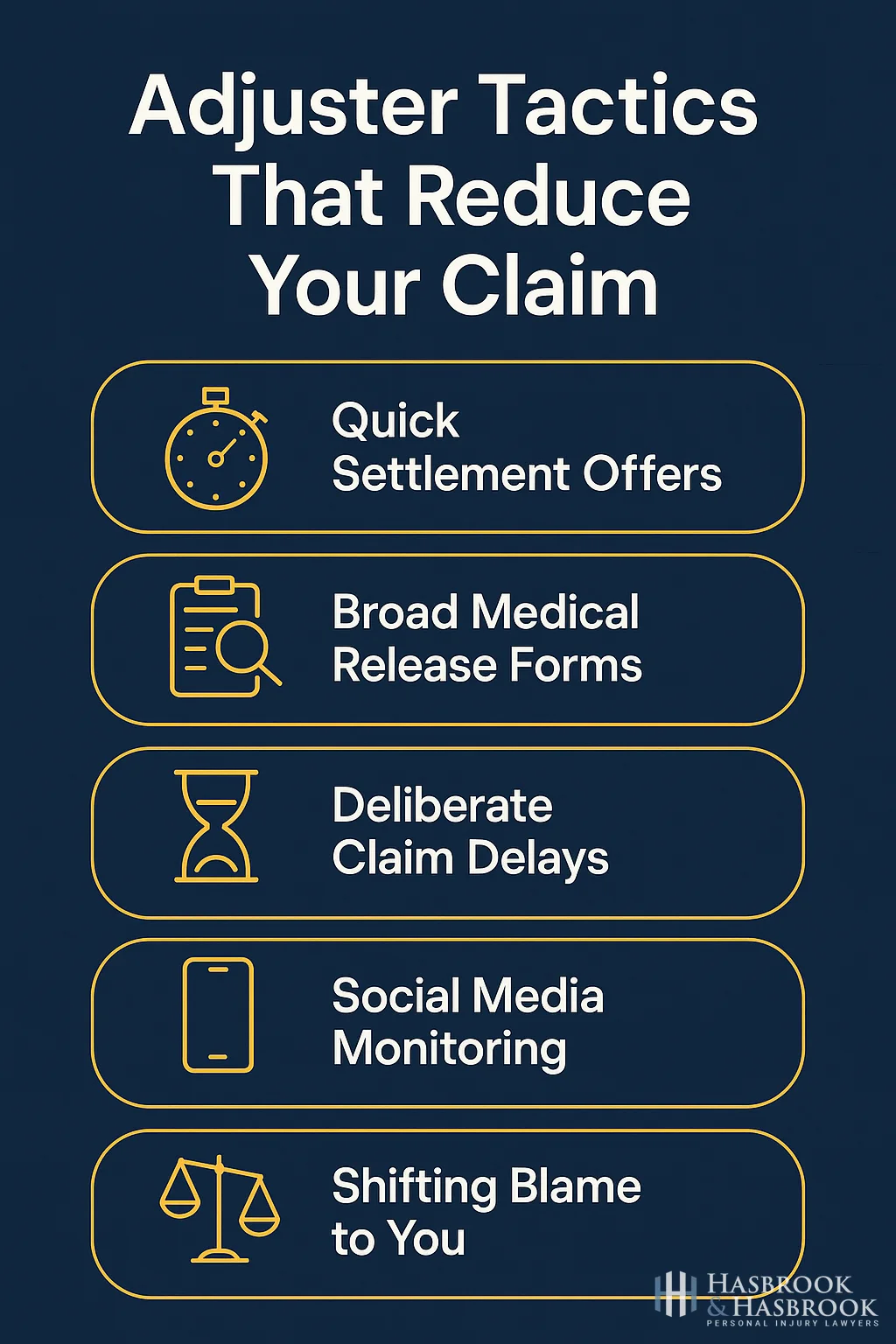
Other common adjuster tactics include:
- Delaying your claim — hoping you’ll accept less out of financial pressure
- Disputing medical treatment — arguing your treatment was excessive or unrelated to the crash
- Monitoring your social media — looking for posts they can use to undermine your injury claim
- Shifting blame — using Oklahoma’s comparative negligence rule to argue you were partially at fault
What About Early Settlement Offers?
If the insurance company presents you with a settlement offer in the days or weeks following your accident, be cautious. These early offers are almost always far below the true value of your claim. The adjuster hopes you’ll accept before you know the full extent of your medical treatment, lost wages, and pain and suffering damages.
Never sign a release or accept a settlement without consulting a personal injury attorney first. Once you sign, you give up your right to pursue additional compensation — even if your injuries turn out to be far worse than you initially thought. If you’ve already received an offer, learn whether you can reopen a car accident claim after settling.
What Information Are You Actually Required to Provide?
You must cooperate with your own insurance company under your insurance contract. This means providing them with accurate information about the crash, including the police report and accident documentation. However, you have no legal obligation to speak with the other driver’s insurance carrier.
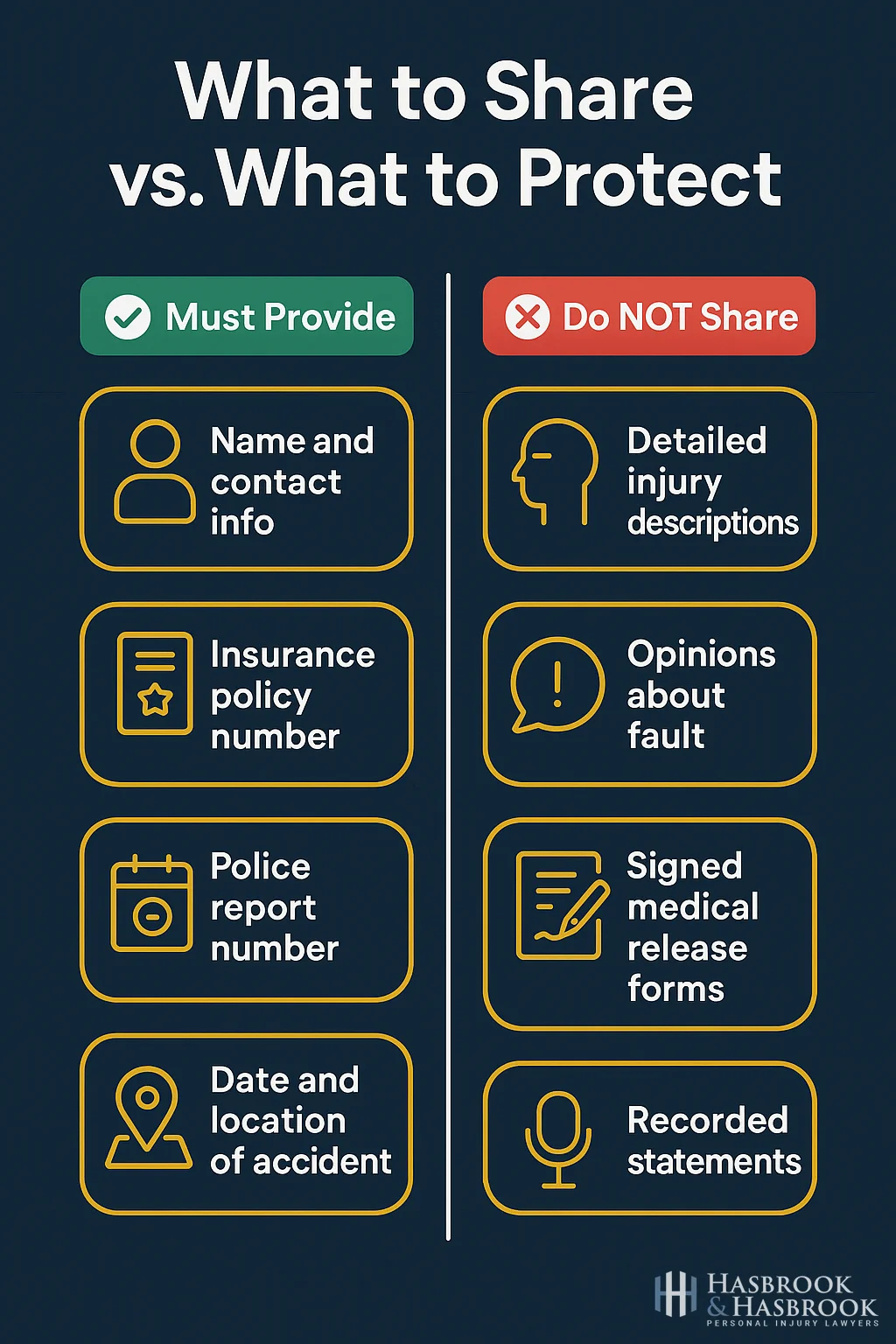
When dealing with your own insurer, provide basic facts: your name, contact information, date and location of the accident scene, and the other driver’s information. Share the police report number if law enforcement responded. Provide your driver’s license, vehicle registration, policy number, and proof of insurance as required.
Avoid detailed descriptions of your injuries, speculation about fault, or opinions about what caused the crash. Never sign broad medical releases or discuss settlement amounts without consulting a personal injury lawyer first.
Tips for Responding If You Must Communicate
If the other driver’s insurance company contacts you before you’ve hired an attorney, keep the conversation as brief as possible. Here are guidelines to protect your claim:
- Provide only basic identification — your name, address, and insurance information
- Confirm the date and location of the accident, but nothing more about the details
- Do not discuss fault — even saying “I’m sorry” can be used against you
- Do not describe your injuries — you may not yet know the full extent
- Do not agree to a recorded statement — politely decline
- Say: “I need to speak with my attorney first” — this is your right
If you’ve already spoken to the adjuster and are worried about what you said, contact us immediately. We can work to minimize any damage and build the strongest possible case going forward.

The Benefits of Letting Hasbrook & Hasbrook Handle the Adjusters
Hiring an attorney creates a protective buffer between you and aggressive insurance tactics. Once you retain legal representation, the insurance company cannot contact you directly anymore. All communication goes through our office, ending the harassment and pressure you face.
We handle all negotiations, recorded statements, and document requests on your behalf. This protection allows you to focus on your medical treatment and recovery instead of fighting with adjusters. Our team knows the legal issues and traffic laws that apply to your case, ensuring the insurance company cannot take advantage of you.
Many accident victims don’t realize how much an attorney changes the dynamic. When an insurance adjuster knows you have legal representation, they can no longer use pressure tactics or try to get a quick, lowball settlement. They know that an experienced lawyer will calculate the true value of your claim — including damages most victims don’t think to include. If you’re unsure whether you need an attorney, see what happens when you handle a car accident claim on your own and how much a car accident lawyer costs.
How Professional Legal Representation Maximizes Your Settlement
We calculate the full value of your claim, including elements many people overlook. Our assessment covers current and future medical expenses, lost wages, reduced earning capacity, property damage, and pain and suffering.
We document every aspect of your losses to build a comprehensive demand. Insurance companies offer more when they know an experienced personal injury lawyer backs the claim. We prepare every case for trial, showing the insurance carrier we’re ready to fight in court if they refuse a fair settlement agreement.
This readiness often motivates insurance companies to significantly increase their offers. We understand policy limits, liability coverage, uninsured/underinsured motorist coverage, and how to maximize recovery from all available sources. Use our personal injury case value calculator to get a preliminary estimate of what your claim may be worth.
Frequently Asked Questions
Do I have to give a recorded statement under Oklahoma law?
No. Oklahoma law does not require you to provide a recorded statement to the other driver’s insurance company. You have the right to decline and refer them to your attorney.
What if the adjuster says they can’t process my claim without a statement?
This is a pressure tactic. They can investigate and process your accident claim without ever speaking to you directly. Do not let an adjuster convince you otherwise.
Should I sign the medical release form they sent me?
No. These broad releases allow adjusters to search your entire medical history for information to use against your injury claim. Only provide medical records that are directly related to your accident injuries, and have your attorney review any documents before signing.
What if I already spoke to them and admitted I was “sorry”?
Contact us immediately. We can work to minimize the damage and build a strong case despite this statement. A single remark does not automatically destroy your claim.
Can the other driver’s insurance company record me without my knowledge?
Oklahoma is a one-party consent state for recording phone calls under 13 O.S. § 176.4. This means the adjuster can legally record your conversation without telling you. You should assume every conversation is being recorded and never speak to them without legal representation.
Does my own insurance company need a statement from me?
Your own insurer may require cooperation under your insurance policy, but we can guide you through this process safely to ensure you meet your contractual obligations without damaging your claim.
How long do I have to file a car accident claim in Oklahoma?
Under Oklahoma’s statute of limitations, you generally have two years from the date of the accident to file a personal injury lawsuit. However, you should consult an attorney as soon as possible because evidence can disappear and witnesses’ memories fade over time.
What if the other driver’s insurance company denies my claim?
A denial is not the final word. Insurance companies deny claims for many reasons, and many denials can be successfully challenged. An experienced attorney can review the denial, identify the insurer’s reasoning, and determine whether to negotiate, appeal, or file a lawsuit to pursue the compensation you deserve.


Contact Our Oklahoma City Car Accident Lawyer for a Free Case Strategy Session
Going it alone against a multi-billion-dollar insurance company puts your financial recovery at risk. The adjusters have training, experience, and tactics designed to reduce your settlement or deny your claim entirely. You need an advocate who understands the claims process, knows your rights under Oklahoma law, and fights for maximum compensation. Every day that passes without legal representation is another day the insurance company builds its case against you.
At Hasbrook & Hasbrook Personal Injury Lawyers, we offer a 100% free, no-obligation initial consultation to discuss your case. Contact us before you say another word to the insurance company. Call (405) 605-2426 or reach out online today. Let us protect your rights and pursue the full recovery you deserve after your auto accident injuries.