Car accidents in Oklahoma City commonly cause soft tissue injuries such as sprains and whiplash, cuts and abrasions from broken glass, and head or brain trauma from sudden impact. Severity ranges from bruising that heals in weeks to traumatic brain injuries with lasting effects, so a prompt medical evaluation matters for your health and your claim.
The full extent of your injuries is not always obvious right away. A prompt medical exam protects your health and creates the record your claim will need, and avoiding common mistakes after a car accident protects it further. Here is what our car accident legal team sees most often.
Soft Tissue Car Accident Injuries
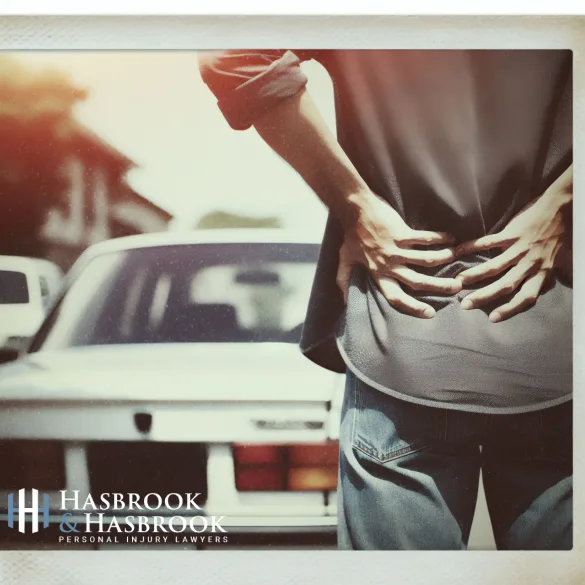
Sprains, strains, and contusions are common injuries from car accidents, affecting the ligaments, tendons, and muscles that absorb the force of a collision. A sprain is a torn or overstretched ligament, often in the ankle or wrist. A strain injures a muscle or tendon and can cause spasms and cramping. A contusion is a bruise from a direct blow. According to Johns Hopkins Medicine, soft tissue damage can take weeks to heal, so lingering pain deserves medical attention.



Lacerations and Abrasions
Broken glass, loose objects, and deployed airbags can cut and scrape the skin in a crash. A laceration is a cut or tear in the skin; an abrasion is a scrape from friction, such as pavement or the vehicle’s interior. Left untreated, these wounds can become infected. Airbag-related injuries can also cause bruising, burns, or facial trauma.
Whiplash Injuries
Whiplash happens when a sudden jolt snaps the head and neck forward and back, most often in a rear-end collision. It can cause sharp neck pain, stiffness, headaches, and even ringing in the ears or blurred vision. Mayo Clinic notes symptoms can take a day or more to appear, so new neck pain after a crash still needs prompt attention.


Head and Brain Injuries
A blow to the head can range from a mild concussion to a severe traumatic brain injury. A concussion is a temporary injury causing headaches, confusion, and ringing in the ears. Severe TBIs involve bleeding or bruising on the brain and can cause long-term cognitive problems, as the National Institute of Neurological Disorders and Stroke explains. Symptoms are not always immediate, so see a doctor after any collision.
Back Injuries and Broken Bones
The force of a crash can fracture bones or injure the spine, from a simple break to a herniated disc or compression fracture. Back injuries from car accidents often need imaging to diagnose accurately, since pain alone does not show how serious the damage is. Some spinal fractures are car accident injuries that may require back surgery to prevent nerve damage.

Get Help Protecting Your Claim
Whatever your injury, you may be entitled to compensation for the everyday costs that follow a car crash, like medical bills and lost income, plus pain and suffering. Oklahoma law generally gives you two years from the accident date to file suit (12 O.S. § 95), so early medical care and legal advice matter. Hasbrook & Hasbrook has served injured Oklahomans since 2000; Clayton Hasbrook has practiced Oklahoma injury law since 2008. Contact us for a free consultation.