The four car accident injuries most likely to require back surgery are spinal cord injury, vertebral fracture, herniated disc, and bulging disc. Surgery becomes necessary when conservative treatment fails, neurological symptoms appear, or imaging shows damage, such as a burst fracture or severe nerve compression, that will not heal on its own.
A car accident, or auto wreck, can be over in seconds, but a serious back injury from one can take months or years to resolve. The spine houses the nerves that control movement, sensation, and organ function. When a crash damages the bones, discs, or cord, surgery is sometimes the only way back to a functional life. This page covers the car accident injuries that require surgery most often, what each procedure typically costs, how long recovery takes, and how Oklahoma law shapes what a back-injury claim is worth.
If a back injury from an Oklahoma crash has put you in front of a spine surgeon, our car accident injury team can help you understand your options. Call (405) 605-2426 for a free consultation. For a broader look at how crash forces move through the body, see our subtopic page on how crash forces travel through the spine.
The Four Car Accident Back Injuries Most Likely to Require Surgery
1. Spinal Cord Injury (SCI)
The spinal cord is the bundle of nerves running through the vertebral column that carries every signal between brain and body. A direct impact, sudden compression, or violent twisting motion in a crash can bruise, compress, or sever those fibers. According to the Mayo Clinic, spinal cord injuries are classified as complete, meaning total loss of function below the injury site, or incomplete, meaning some function is preserved. The level of the spine that is damaged determines what is lost. A spinal cord injury is the most catastrophic back injury a car accident can cause, and the one most likely to require lifelong medical care.

National data is sobering. The National Spinal Cord Injury Statistical Center reports that motor vehicle crashes are the leading cause of new SCIs, accounting for roughly 38 percent of cases. Surgery focuses on stabilizing the spine and decompressing the cord through procedures such as spinal fusion, laminectomy, or internal fixation. It cannot reverse nerve damage already done, but it can stop further deterioration.
Long-term needs almost always include therapy, assistive equipment, and lifetime medical follow-up. How Oklahoma law treats spinal cord injury claims often turns on life-care planning, because future care can dwarf the initial hospital bill. How the level of an SCI maps to the type of paralysis that follows explains why two people with similar-looking injuries can have very different outcomes.
2. Vertebral Fracture
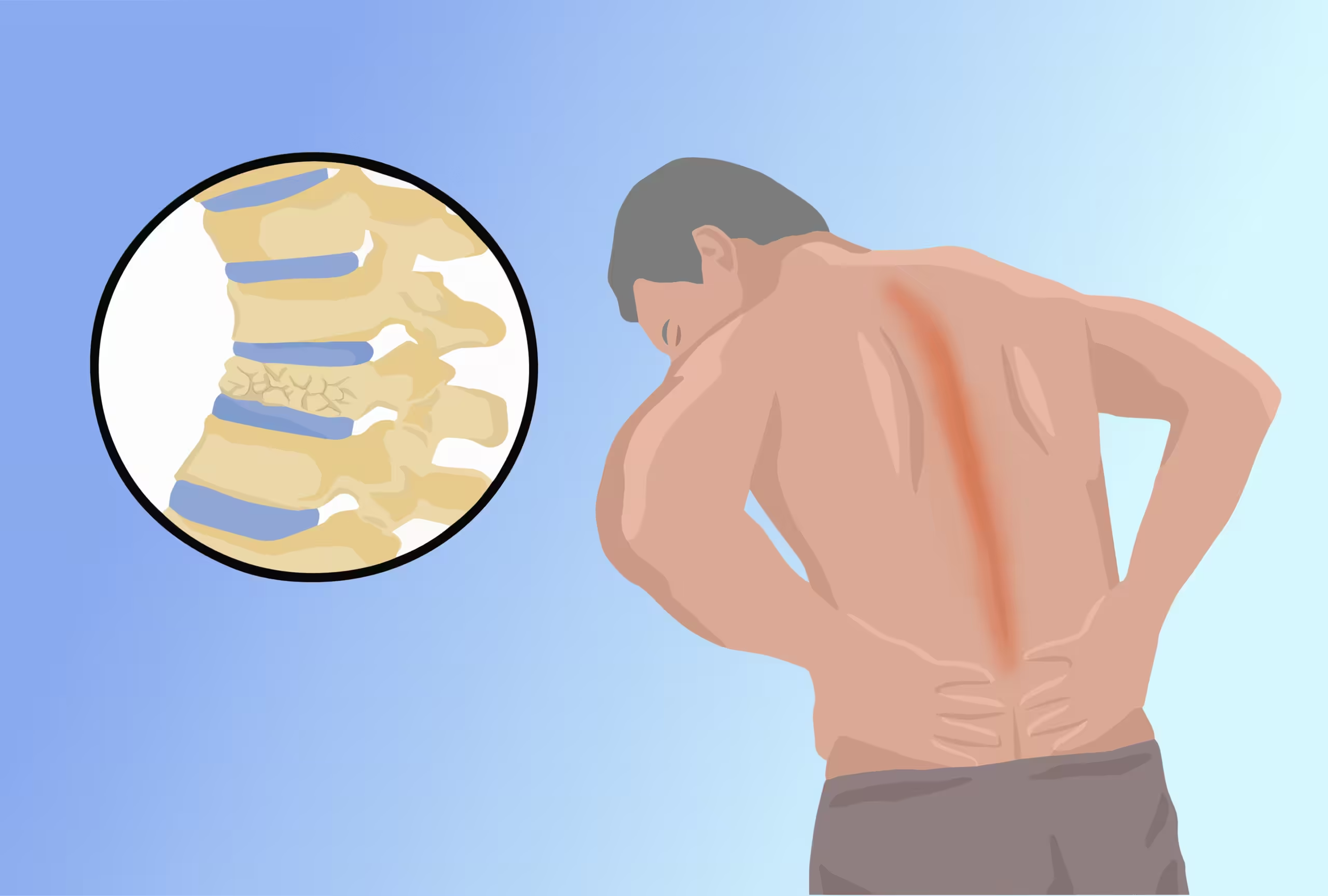
The spine is built from 33 stacked vertebrae separated by shock-absorbing discs. In a high-energy crash, the force of impact can crack or crush one or more of those bones. Compression fractures, where a vertebra collapses under load, and burst fractures, where the bone shatters and fragments may enter the spinal canal, are the two patterns seen most often after rear-end and head-on collisions. Vehicle design matters here: IIHS fatality data show that the same crash forces that produce the worst outcomes in lighter vehicles also drive the most severe spinal trauma.
Treatment depends on the pattern. Stable compression fractures may heal with bracing and rest. Unstable burst fractures usually require surgical stabilization through vertebroplasty (bone cement injected into the fractured vertebra), kyphoplasty (a balloon cavity inflated first, then filled with cement), or open spinal fusion. For more on this specific injury pattern, see a closer look at vertebral fractures from car accidents.
3. Herniated Disc
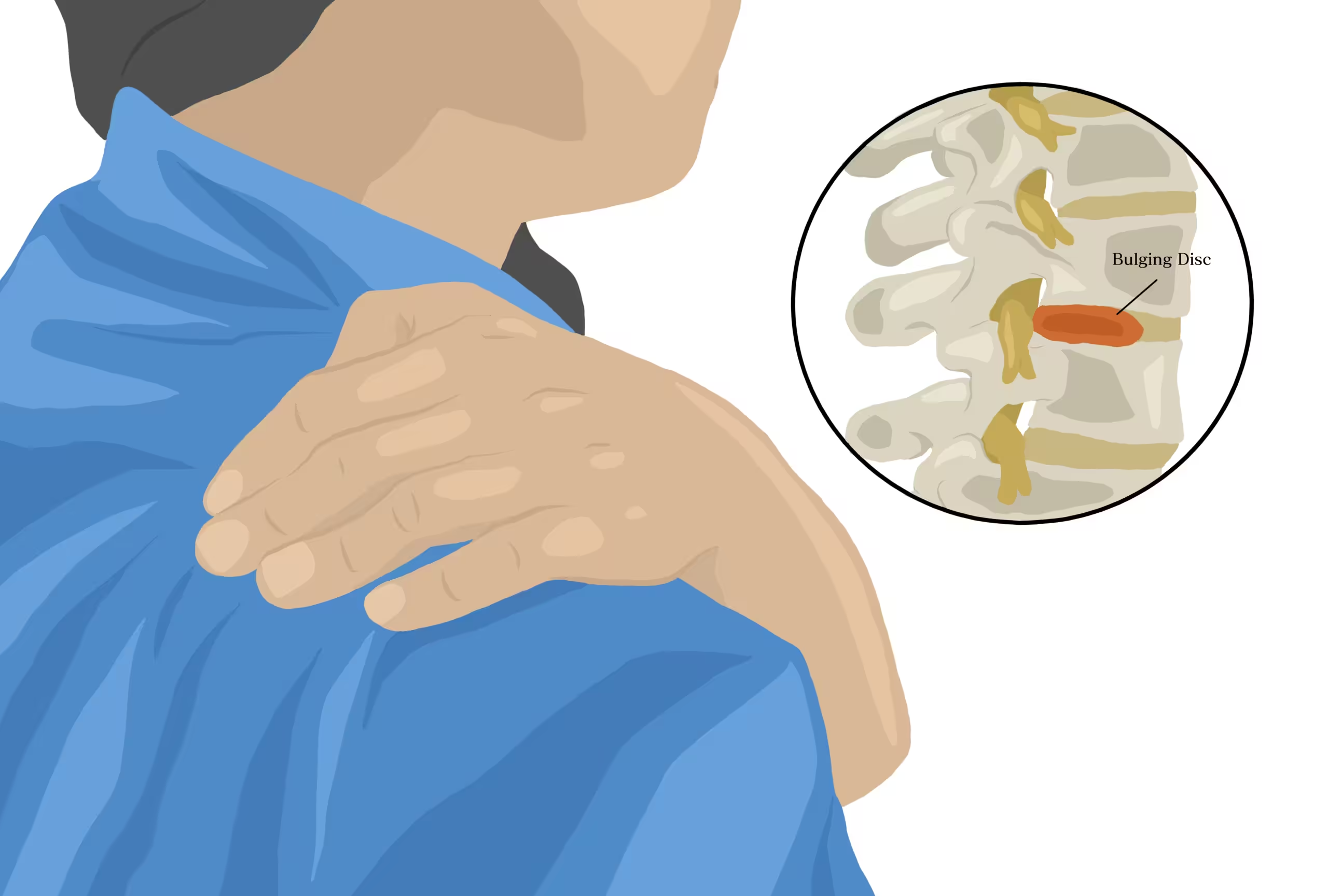
Each disc has a tough outer ring (the annulus fibrosus) wrapped around a soft, gel-like core (the nucleus pulposus). When the outer ring tears, the inner material pushes out and can press on a nearby nerve root. That produces pain, numbness, tingling, or weakness that radiates down an arm or leg, depending on the level involved. Lumbar (low-back) and cervical (neck) herniations, sometimes called a disc prolapse, are the most common patterns after a crash.
Many herniated discs respond to conservative care: physical therapy, anti-inflammatory medication, and epidural steroid injections. Surgery is considered after six to twelve weeks of failed conservative treatment, or sooner if neurological symptoms worsen or imaging shows severe nerve compression. Common procedures are microdiscectomy (removing the protruding disc material) and laminectomy. In severe cases, the disc is removed entirely and the adjoining vertebrae are fused.
4. Bulging Disc
A bulging disc differs from a herniation in that the outer ring stays intact while the disc extends past its normal boundary. Many people carry an asymptomatic bulge for years without knowing it, until a sudden deceleration in a crash worsens it or makes a previously silent one painful. Surgery for a bulging disc is a last resort, used only when persistent nerve compression has not responded to anything else. For broader context, see our overview of the broader list of common car accident injuries and our companion piece on muscle and ligament strains that often accompany disc damage. Many of these patients also benefit from chiropractic treatment for soft-tissue injuries while waiting on a surgical decision.



Back Surgeries and Approximate Costs
Back surgery is expensive even with insurance, and the billed amount shapes both medical decisions and the medical-damages side of a claim. The figures below are typical national ranges. Actual costs vary by hospital, surgeon, and complications.
| Procedure | What it does | Typical billed cost | Common indication |
|---|---|---|---|
| Microdiscectomy | Removes protruding disc material pressing on a nerve | $15,000 to $50,000 | Symptomatic herniated disc |
| Laminectomy | Removes part of a vertebra to relieve nerve pressure | $50,000 to $90,000 | Spinal stenosis, severe herniation |
| Vertebroplasty | Injects bone cement into a fractured vertebra | About $14,500 | Compression fracture |
| Kyphoplasty | Balloon cavity, then bone cement, to restore vertebra height | About $16,000 | Compression fracture with height loss |
| Spinal fusion | Permanently joins two or more vertebrae | $100,000 to $170,000 | Burst fracture, unstable spine, severe degeneration |
When Is Back Surgery Actually Necessary?
Not every back injury needs surgery, and a careful surgeon will not push it. Spine surgery carries real risks: infection, hardware failure, nerve injury, and the chance of a poor outcome that leaves the patient worse off. Most spine specialists exhaust conservative options first. The clinical decision generally tracks four factors:
- Conservative care has failed. Six to twelve weeks of physical therapy, injections, and medication have not produced adequate relief.
- Neurological symptoms are present or worsening. Weakness, loss of bladder or bowel control, or rapidly progressing numbness change the calculus quickly.
- Imaging shows damage that will not self-heal. Burst fractures and severe disc herniations causing nerve compression rarely resolve on their own.
- The risk-benefit analysis favors surgery. Severe, persistent loss of function tips the scale toward operating.
A second opinion from a board-certified spine surgeon before agreeing to any procedure is always reasonable. Careful records of every conservative-care visit and imaging study alongside the eventual surgical recommendation also strengthens the injury claim itself.
Recovery Timeline After Back Surgery
Recovery from back surgery after a car accident is rarely a straight line. The timeline depends on the procedure, the severity of the original injury, the patient’s overall health, and discipline with rehabilitation.
- Microdiscectomy: light activity at four to six weeks; return to physically demanding work in two to three months.
- Spinal fusion: initial healing in three to six months; complete bone fusion and full activity can take twelve to eighteen months, and fused levels lose movement permanently.
- Laminectomy: about four weeks for less invasive approaches; three to six months for extensive procedures.
- Kyphoplasty and vertebroplasty: hospital discharge often within a day, with significant pain relief inside 48 hours for many patients.
Long-term complications can include chronic pain, hardware failure, adjacent-segment disease (degeneration that spreads to the vertebrae next to a fused segment), and the toll of living with a permanent injury. Oklahoma law recognizes maximum medical improvement, or MMI, as the point when further improvement is unlikely, and settlements reached before MMI often undervalue future treatment. Why reaching MMI matters before valuing a spinal fusion claim. For severe cases, future care may need to be projected through a formal life-care plan.


How Oklahoma Law Affects a Back Injury Claim
Several legal rules directly shape what an Oklahoma back-injury case is worth.
Comparative negligence. Under 23 O.S. § 13, recovery is reduced by the percentage of fault assigned to the injured person. If that share exceeds 50 percent, recovery is barred entirely. A 20 percent fault finding on $500,000 in damages yields a $400,000 award. How a shared-fault finding can reduce a spine-injury settlement.
Statute of limitations. Under 12 O.S. § 95, a personal injury suit must generally be filed within two years of the accident, and a few narrow exceptions can extend that filing deadline.
Paid-not-incurred rule. Under 12 O.S. § 3009.1, recoverable medical damages are limited to amounts actually paid by or on behalf of the injured person, not the full amount billed by the provider. A $120,000 fusion that an insurer negotiated down to $40,000 in paid claims yields $40,000 in recoverable medical damages. Why the amount actually paid, not billed, sets that figure.
Compensable damages in a back-surgery case can include past and future medical care, lost wages, lost earning capacity, pain and suffering, and any permanent impairment. The full range of damages a back-injury claim can include, and representative back and neck injury settlement ranges, are covered in more detail on our companion pages.
What to Do After a Car Accident Back Injury
The decisions made in the first few weeks after a crash drive both the medical outcome and the value of the claim.
- Get medical attention immediately. Spinal injuries often worsen over hours or days, and waiting to see a doctor hands an insurer an obvious argument to make.
- Follow the treatment plan. Attend every appointment, complete prescribed therapy, and document the course of care.
- Preserve evidence. Photograph the scene, the vehicle, and any visible injury, and keep every bill and record. If a distracted driver was texting at the moment of impact, phone records and dash-cam footage become high-value evidence.
- Avoid giving the at-fault driver’s insurer a recorded statement. There is no obligation to give one, and adjusters use those statements to minimize what the company eventually pays.
- Tell your attorney everything. Pre-existing conditions, prior back injuries, and treatment history all matter. Make sure your lawyer hears these details early, since they are the ones most often left out.
- Wait before settling. Settlements offered before MMI almost always undervalue future medical care. A few questions worth asking before accepting any offer can make the difference on a surgical claim.
Our firm represents people injured in car accidents throughout Oklahoma City and the surrounding communities. Call (405) 605-2426 for a free consultation about a back-injury case.
Frequently Asked Questions
Which back injuries most often require surgery?
Spinal cord injuries, vertebral fractures (especially burst fractures), and severe herniated discs are the patterns most likely to need surgery. Bulging discs sometimes require surgery too, but only when persistent nerve compression has not responded to conservative care.
Is back surgery always necessary after a crash?
No. Many back injuries respond to physical therapy, anti-inflammatory medication, and epidural steroid injections. Surgery becomes the recommended option when conservative care fails after six to twelve weeks, when neurological symptoms appear, or when imaging shows damage that will not heal on its own.
How long does back-surgery recovery take?
It depends on the procedure. A microdiscectomy patient may return to light activity in four to six weeks, while spinal fusion can require twelve to eighteen months for full recovery. Kyphoplasty and vertebroplasty are usually outpatient procedures with much shorter pain-relief timelines.
Can I still have a claim if I had spinal fusion before the accident?
Yes. Oklahoma follows the eggshell-plaintiff rule, so a driver who already had a cervical or lumbar fusion before the crash can still recover for a new injury the accident caused. That can include hardware failure or a new injury at the level next to an old fusion. Disclose any prior spinal surgery to your attorney early so the medical timeline separates the old surgery from the new harm.
What damages can I recover for a back injury in Oklahoma?
Economic damages cover medical bills, future treatment, lost wages, and lost earning capacity. Noneconomic damages cover pain and suffering, emotional distress, and permanent impairment. Recoverable medical bills are limited to amounts actually paid under 12 O.S. § 3009.1, and Oklahoma’s two-year limitation period under 12 O.S. § 95 controls when suit must be filed.
Can pre-existing back problems affect my claim?
Pre-existing conditions complicate a claim but do not bar it. Oklahoma follows the eggshell-plaintiff rule: the at-fault driver takes the injured person as found, including prior degeneration the crash made symptomatic. Disclose pre-existing conditions to your attorney early so the medical timeline is presented accurately.
How can a personal injury lawyer help with a back-surgery claim?
A lawyer can preserve scene evidence, secure medical records and imaging, retain spine and life-care experts, manage insurer communications, and guard against a premature settlement before MMI. Back-surgery cases almost always justify representation because the damages are large and the insurer will work hard to minimize what it pays. Hasbrook & Hasbrook handles back-injury claims across Oklahoma County and the surrounding communities. See how outcomes differ with and without legal representation for context on why it matters in a surgical-claim file.

Talk to Hasbrook & Hasbrook About a Back-Injury Claim
A spinal cord injury, a vertebral fracture, a herniated disc, or a bulging disc can turn a routine car accident into a surgical case with real long-term costs. An Oklahoma City attorney who has built spine and back-injury claims since 2008 can help you weigh a surgeon’s recommendation against what the claim needs to cover, before you accept any offer.
Call (405) 605-2426, or tell us about your back injury, and we will walk through what your case may involve.