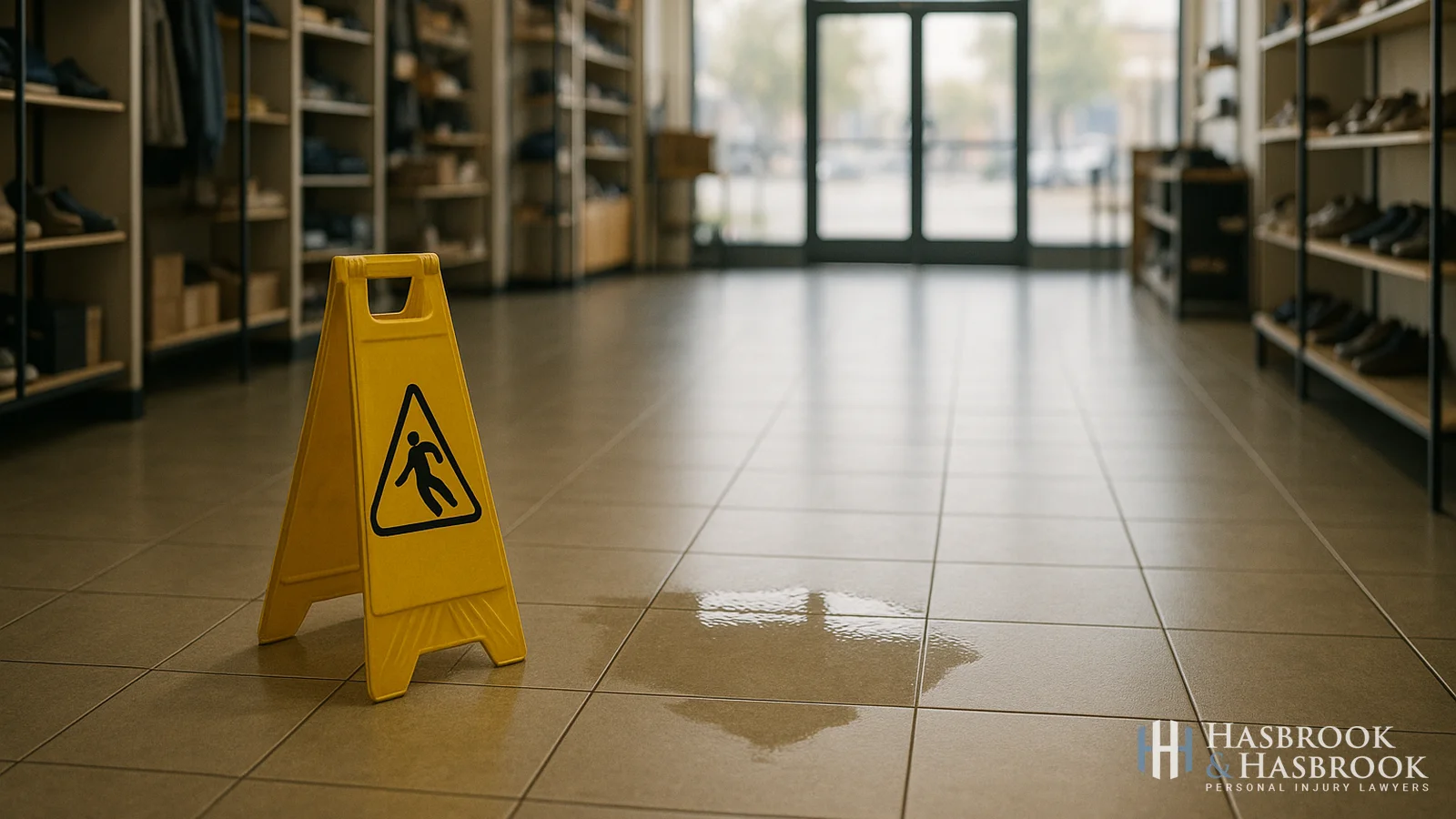
Most people think a fall on someone else’s property is an easy case. It is not. Property owners and their insurers spend millions denying slip and fall claims, arguing the hazard was “open and obvious,” blaming you for not watching where you stepped, or claiming they had no idea the danger existed. Oklahoma law puts the burden on you to prove the owner knew about the hazard (or should have known) and failed to fix it. Without an attorney who understands how premises liability actually works in Oklahoma courts, even a legitimate claim can be denied.

The personal injury team at Hasbrook & Hasbrook is a family-run Oklahoma City injury practice that has handled premises liability cases statewide, from grocery store wet floors to icy apartment walkways. Our firm knows the defense tactics, the legal standards, and the evidence it takes to win. Challenges that make slip and fall cases harder to win on your own are real; this page explains why and what you can do about it.
Key Takeaways
- Oklahoma uses a three-tier duty of care system. Most store customers and restaurant patrons are invitees and are owed the highest duty, including active inspection for hazards.
- Modified comparative negligence (23 O.S. § 13) lets you recover when your share of fault is 50% or less; above that threshold, you recover nothing.
- You have two years to file a lawsuit (12 O.S. § 95), but surveillance footage often disappears within days.
- Whether the new $500,000 noneconomic damages cap under 23 O.S. § 61.3 survives constitutional review remains an open question after Beason v. I.E. Miller Services.
- We charge 25% pre-litigation, not 33% to 40%. On a $300,000 settlement, that difference puts an extra $25,000 to $45,000 in your pocket.
Why you need a slip and fall lawyer in Oklahoma
Premises liability law is technical, property owners contest these claims aggressively, and the plaintiff’s burden of proof in premises cases falls on you. Without experienced counsel, insurance adjusters use procedural gaps and legal doctrines to deny or undervalue your claim.
Unlike a car accident where a police report documents the collision, a slip and fall requires you to prove the owner had notice of a dangerous condition and failed to address it. Oklahoma recognizes two types of notice:
- Actual notice: the owner knew about the hazard (an employee was told about a spill and did nothing).
- Constructive notice: the hazard existed long enough that a reasonable owner should have discovered and corrected it through routine inspection.
Proving constructive notice often requires surveillance video timestamps, maintenance logs, employee shift schedules, and inspection records. An experienced attorney demands this evidence early, ideally through a preservation letter sent within 24 to 48 hours.
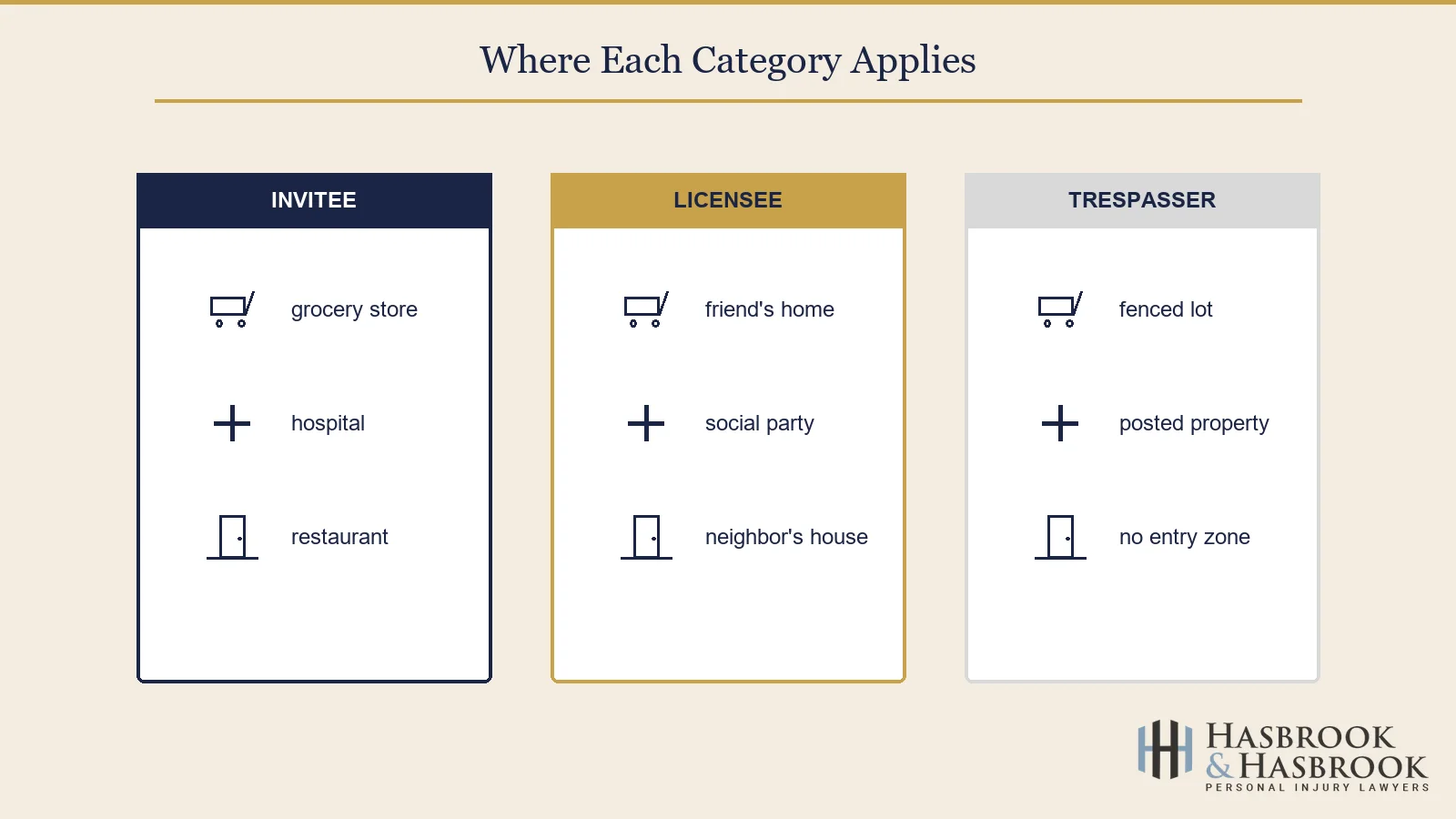
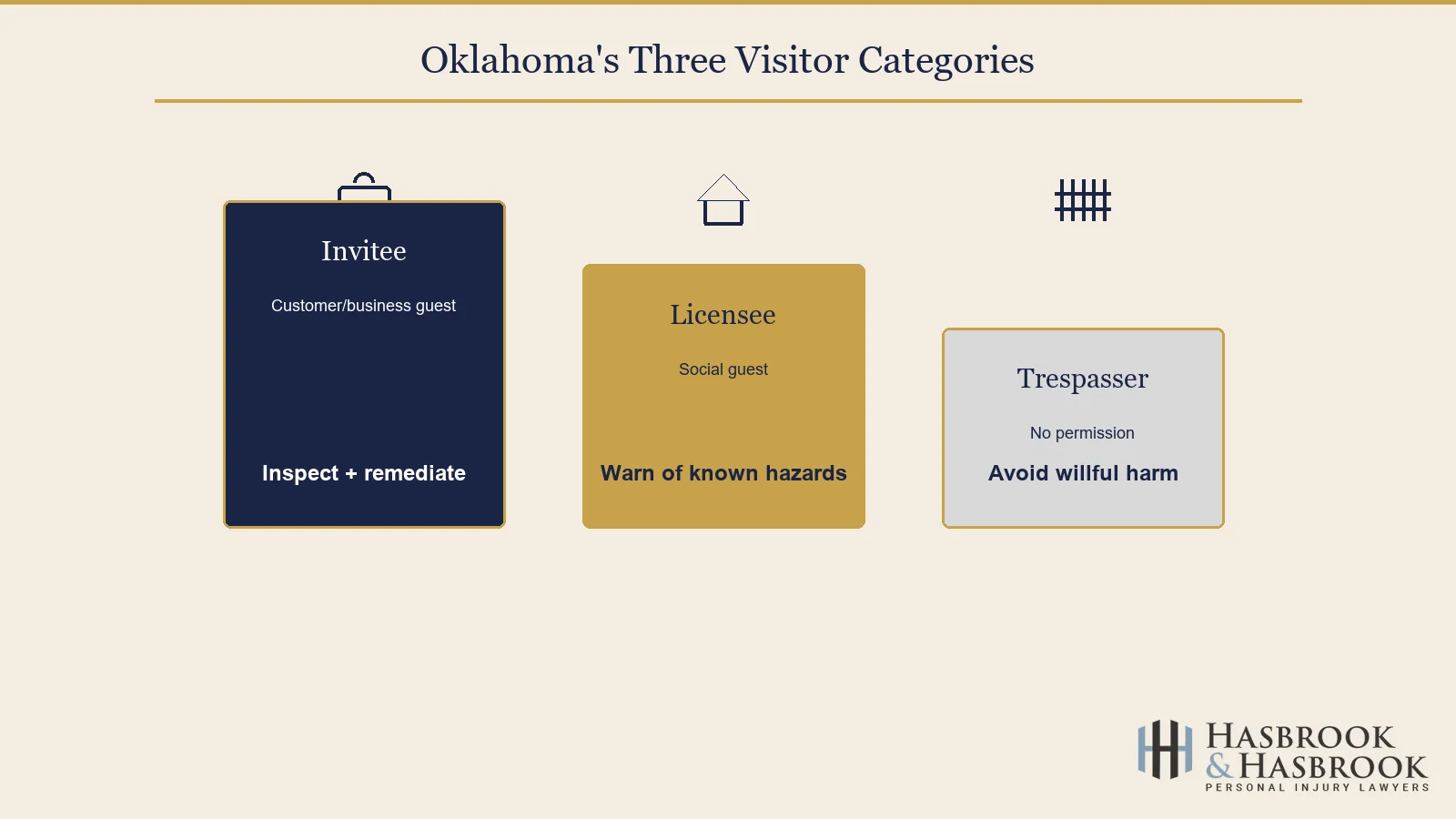
Oklahoma also uses a duty of care tier system tied to why you were on the property:
| Visitor Status | Definition | Duty of Care Owed | Common Examples |
|---|---|---|---|
| Invitee | On the property for the owner’s business benefit | Highest: must inspect, discover, and fix or warn of hazards | Store customers, restaurant patrons, hotel guests |
| Licensee | On the property with permission, not for the owner’s benefit | Moderate: must warn of known hidden dangers | Social guests, door-to-door salespeople |
| Trespasser | On the property without permission | Lowest: must not willfully or wantonly injure | Uninvited individuals |
If you slipped in a grocery store, you were an invitee, and the store owed you the highest duty of care. Insurers also deploy the “open and obvious” doctrine in nearly every case. A skilled attorney counters this defense by showing you were distracted by a legitimate reason (such as merchandise displays), that the hazard was partially concealed, or that the owner had a duty to remedy the condition regardless of visibility. For a closer look, see our page on common slip and fall defense strategies.



Common slip and fall injuries
Falls cause more than 9 million injuries each year in the United States, making them the leading cause of nonfatal unintentional injury, according to the CDC. On hard commercial flooring, concrete, or asphalt, the injuries can be severe and permanent.
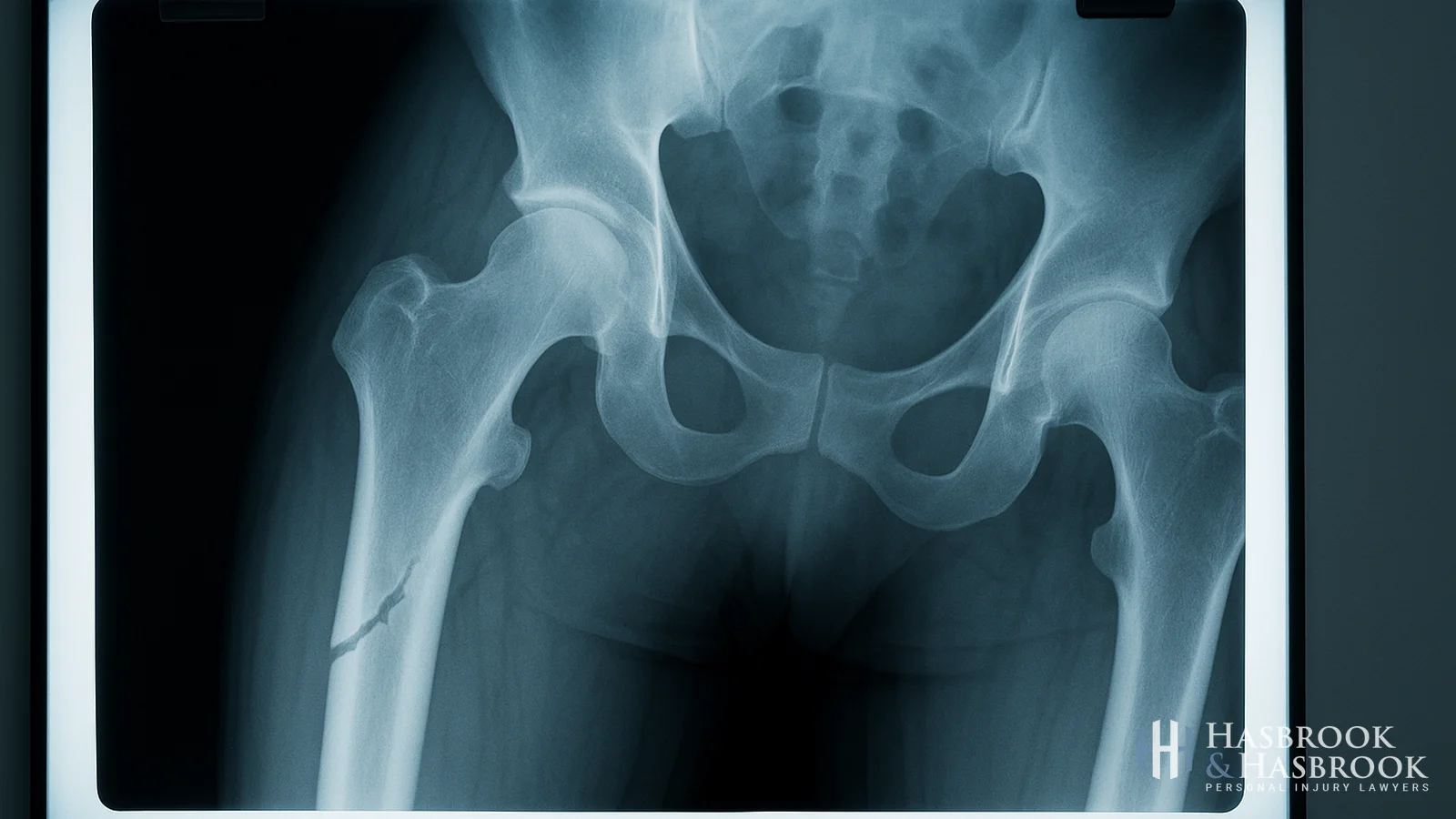
- Hip fractures. Common in older adults; recovery often requires surgery, and many never regain prior mobility.
- Traumatic brain injuries. Concussions, contusions, and more severe brain injuries from slip and fall accidents with symptoms that may not appear for days.
- Broken bones. Wrists, arms, and ankles break when people try to catch themselves; vertebral and pelvic fractures often require surgery. See our page on fractures from slip and fall accidents.
- Herniated discs and back injuries. The force of a fall can rupture spinal discs, causing chronic pain or, in serious cases, the kind of damage our team handling Oklahoma spinal cord injury cases manages.
- Knee injuries. Meniscus tears, ACL injuries, and patellar fractures.
- Soft tissue injuries. Sprains and torn muscles that may not show on initial imaging but cause long-term pain insurers minimize.
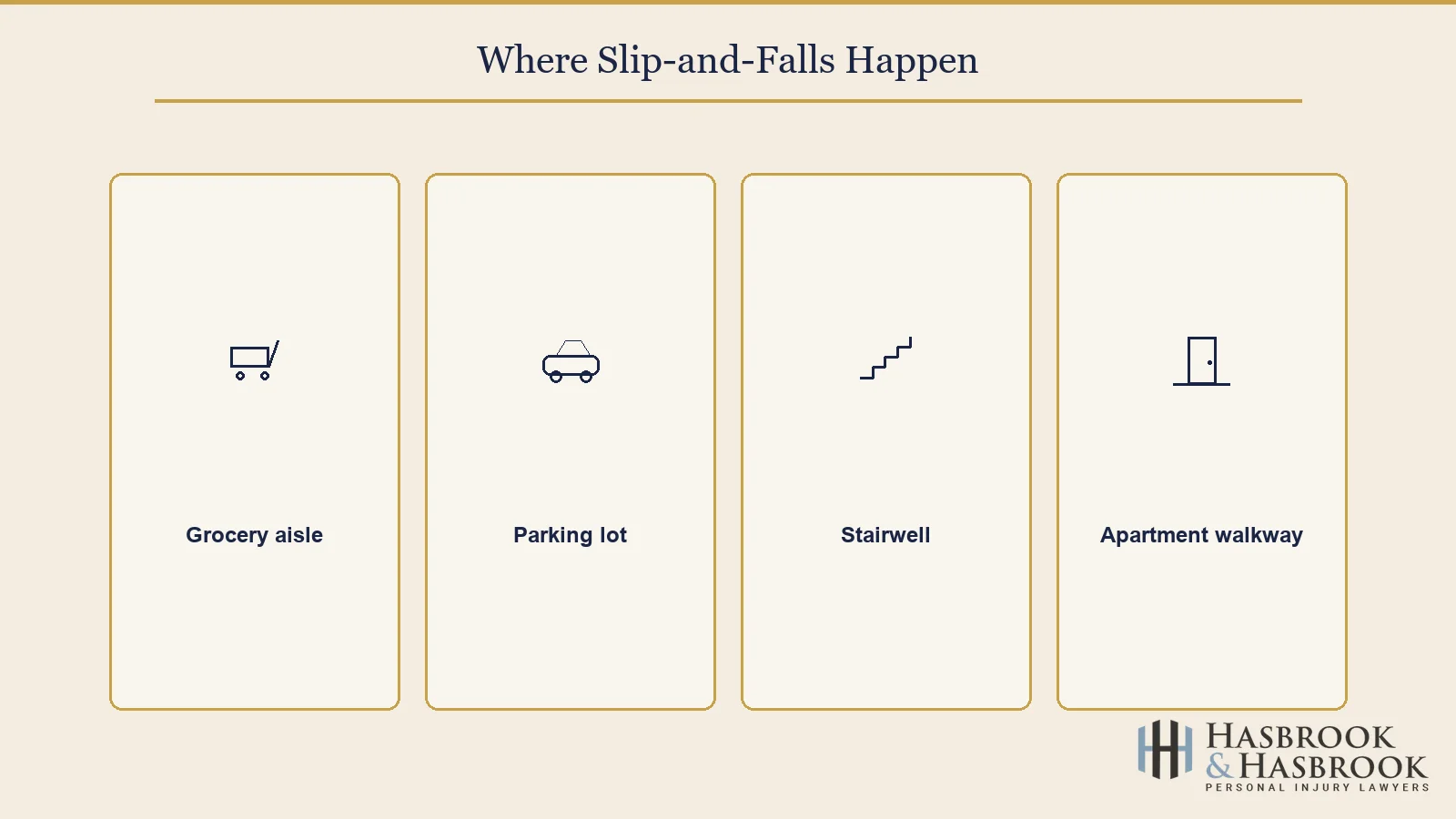
Where do slip and fall accidents in Oklahoma typically happen?
Slip and falls happen most often in grocery stores and restaurants, retail parking lots, apartment complex walkways and stairwells, hotels, hospitals, and government property such as sidewalks and post offices. The location dictates both the legal theory and the defendant.
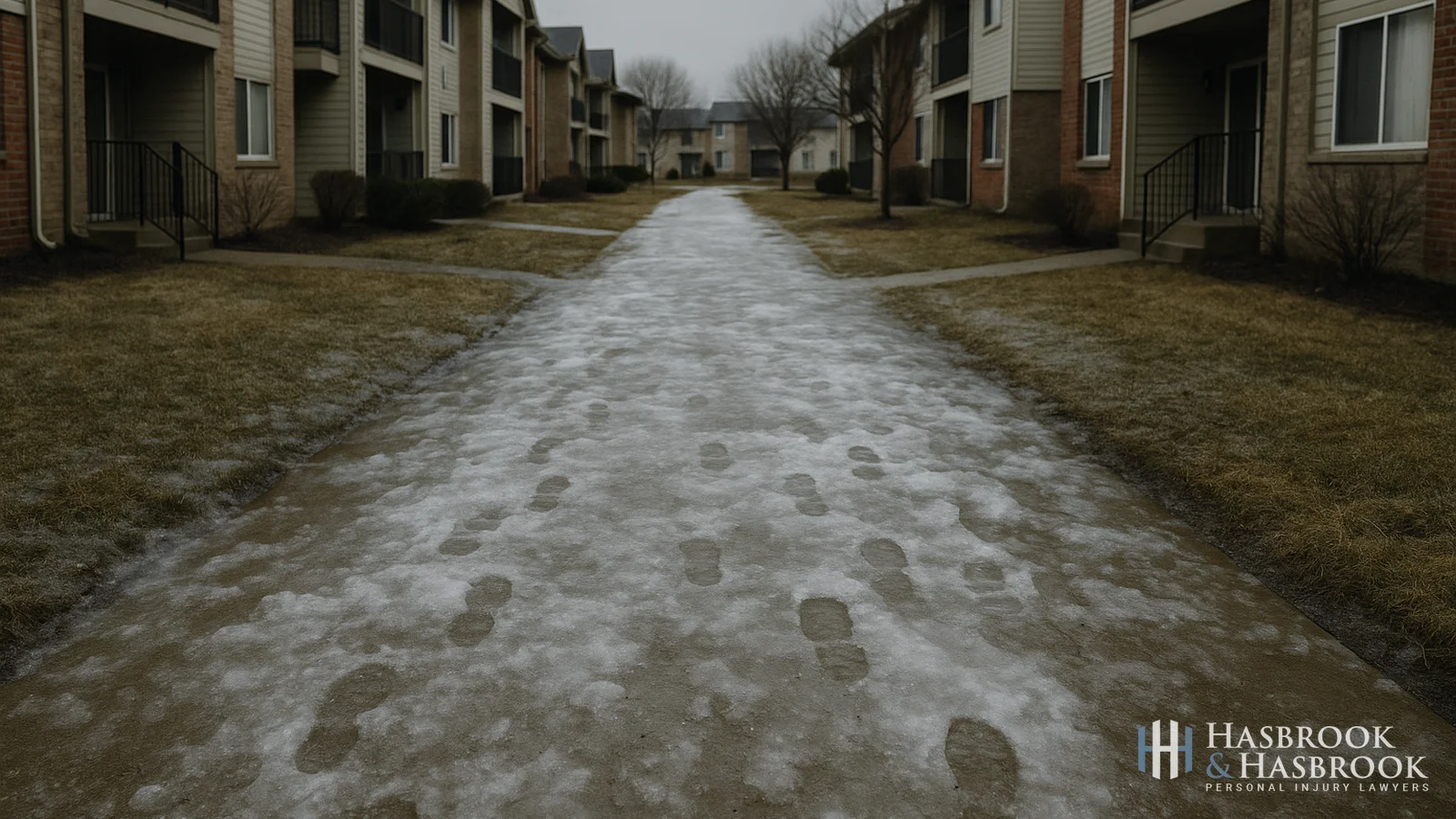
Oklahoma’s freeze-thaw weather drives falls from November through March. Owners have a duty to treat walkways, parking lots, and entrances within a reasonable time after ice or snow accumulates. Apartment complexes that fail to salt or sand icy surfaces put every tenant and visitor at risk.
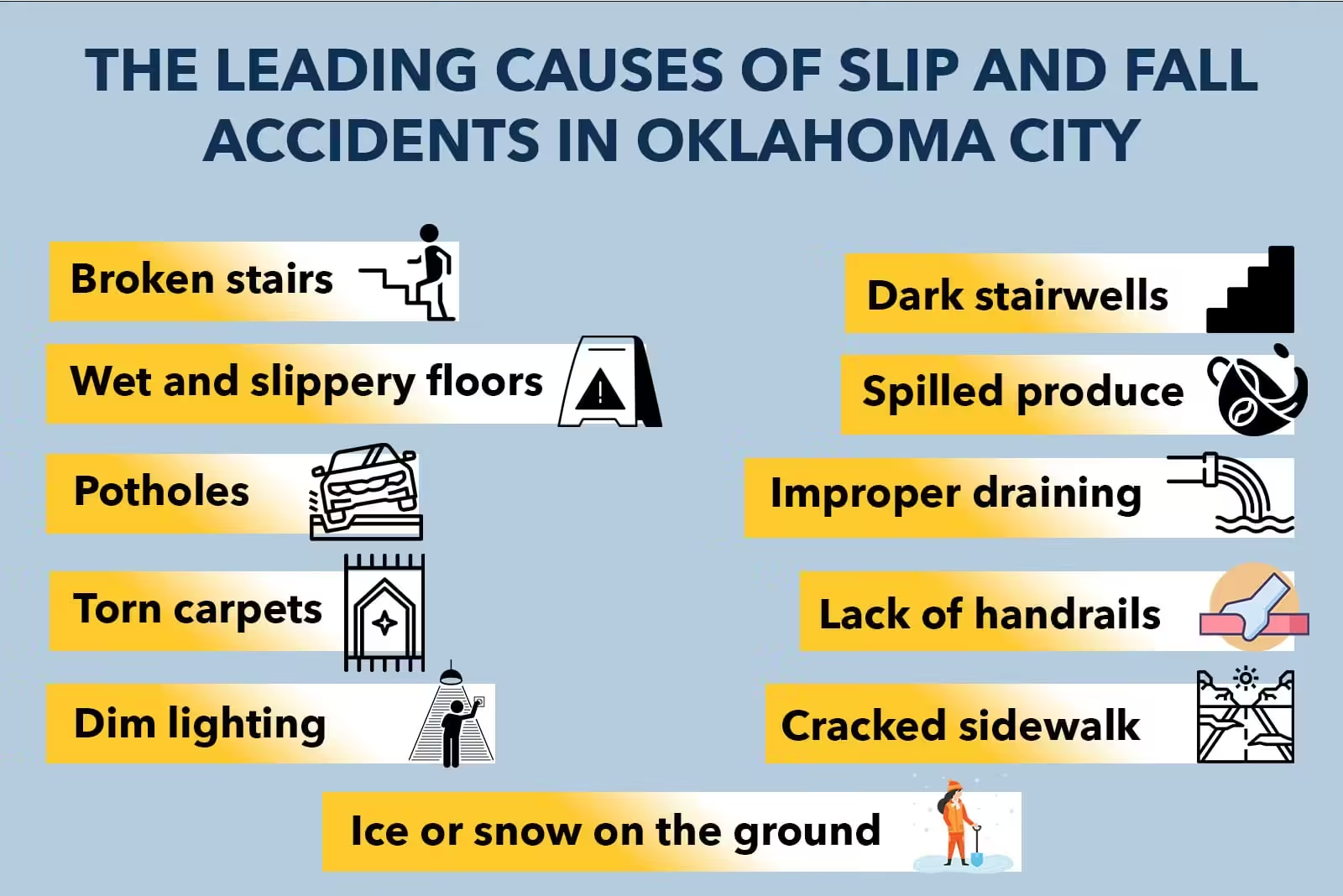
The hazards we see most often:
- Wet floors in grocery stores and restaurants. Spills from produce misters, leaking freezer cases, mopping without warning signs, and unattended drink spills. Chains where we have handled Braum’s slip and fall claims, Walmart Oklahoma City slip and fall claims, and Target slip and fall lawsuits in Oklahoma City are among the most common locations.
- Uneven sidewalks and parking lots. Cracked concrete, potholes, raised expansion joints, and deteriorated asphalt.
- Poor lighting. Burned-out bulbs in stairwells, dim parking garages, and inadequate exterior lighting.
- Loose or damaged floor coverings. Torn carpet, buckled vinyl, loose mats, and missing transition strips.
- Stairway defects. Missing handrails, broken steps, inconsistent risers, and worn treads. Building code violations are strong evidence of negligence.
- Cluttered walkways. Merchandise stacked in aisles, extension cords, and debris in common areas.
- Government property. Falls on city sidewalks, in courthouses, or at public schools require a notice claim under filing a claim under the GTCA with a much shorter deadline.

What compensation can you recover after a slip and fall?
You can recover compensation for medical expenses you have paid, lost wages, pain and suffering, diminished quality of life, and in some cases, punitive damages. Oklahoma is a “paid, not incurred” state. For a broader view of valuation, see our overview of how injury claim values are calculated.
Under 12 O.S. § 3009.1, your recoverable medical damages are limited to amounts actually paid, not the full amount billed. Document every payment, including health insurance, out-of-pocket costs, and any medical liens. For a full breakdown, see our page on recoverable damages in a slip and fall case, and see our FAQ on how to strengthen your slip and fall case.
| Type of Damage | What It Covers | Key Oklahoma Rules |
|---|---|---|
| Medical expenses (past) | ER, surgery, hospitalization, physical therapy, imaging, prescriptions | Paid or incurred only; must prove amounts actually paid |
| Medical expenses (future) | Ongoing care, future surgeries, long-term physical therapy, medical devices | Must be supported by medical expert testimony |
| Lost wages and earning capacity | Past income lost during recovery and reduced ability to earn going forward | Past wages from pay records; future capacity often requires a vocational expert |
| Pain and suffering | Physical pain, emotional distress, anxiety, depression, loss of sleep | Capped at $500,000 under 23 O.S. § 61.3 (eff. Sept. 2025), with exceptions for reckless conduct, severe physical injury, and permanent mental injury. Constitutionality is an open question. |
| Loss of enjoyment of life | Inability to participate in hobbies, activities, and routines you enjoyed before | Recoverable separately from pain and suffering in Oklahoma |
| Punitive damages | Punishment for grossly negligent or reckless conduct | Capped at $100,000 or actual damages (whichever is greater) under 23 O.S. § 9.1; see examples of punitive damage awards in Oklahoma |
Slip and fall injuries often look minor at first but worsen over time. A bruised hip can turn out to be a fracture; a sore back can become a herniated disc requiring surgery. Get a full medical evaluation immediately. For more on valuing your specific claim, see slip and fall case value in Oklahoma.



What Oklahoma law says about slip and fall cases
Oklahoma law requires you to prove negligence, applies a comparative fault system that can reduce your compensation, imposes a two-year statute of limitations, and classifies visitors into three tiers that determine the duty of care owed.
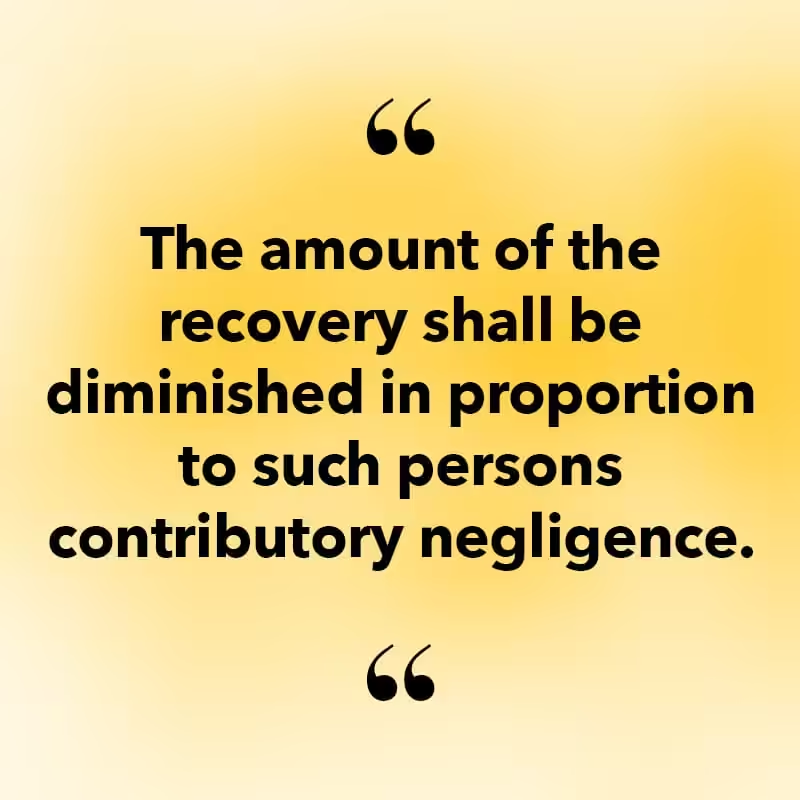
23 O.S. § 13: Comparative Negligence. Oklahoma follows a modified comparative negligence system. Your compensation is reduced by your share of fault, and if your share exceeds 50%, you recover nothing. Insurers use this aggressively, arguing you were texting while walking, wearing inappropriate footwear, or ignoring a warning sign. For more, see our comparative versus contributory negligence overview and our backgrounder on Oklahoma’s modified comparative fault framework.
12 O.S. § 95: Statute of Limitations. You have two years from the date of your fall. Miss the deadline and your claim is permanently barred, regardless of whether you are still in treatment. Surveillance footage is overwritten, witnesses move, and maintenance records are discarded. See our pages on the two-year window to file a slip and fall lawsuit and the Oklahoma’s personal injury filing deadline.
23 O.S. § 61.3: Noneconomic Damages Cap (open question). The Legislature replaced the prior cap (struck down in Beason v. I.E. Miller Services) with a $500,000 cap effective September 1, 2025. Whether the new statute will survive the same special-law challenge under Article 5, § 46 of the Oklahoma Constitution is an open question that has not reached the Oklahoma Supreme Court. Wrongful death, reckless conduct, and permanent physical or mental injury are statutorily exempt.
Oklahoma premises liability law also incorporates the Restatement (Second) of Torts, which requires owners to inspect, correct known hazards, warn of hazards that cannot be corrected immediately, and maintain reasonably safe conditions. Under 76 O.S. § 1, every person is responsible for injuries caused by lack of ordinary care. The open and obvious doctrine is not a complete defense; even when a hazard is visible, an owner may still be liable if visitors must encounter it.
Slip and fall at work: workers’ compensation vs. third-party premises liability
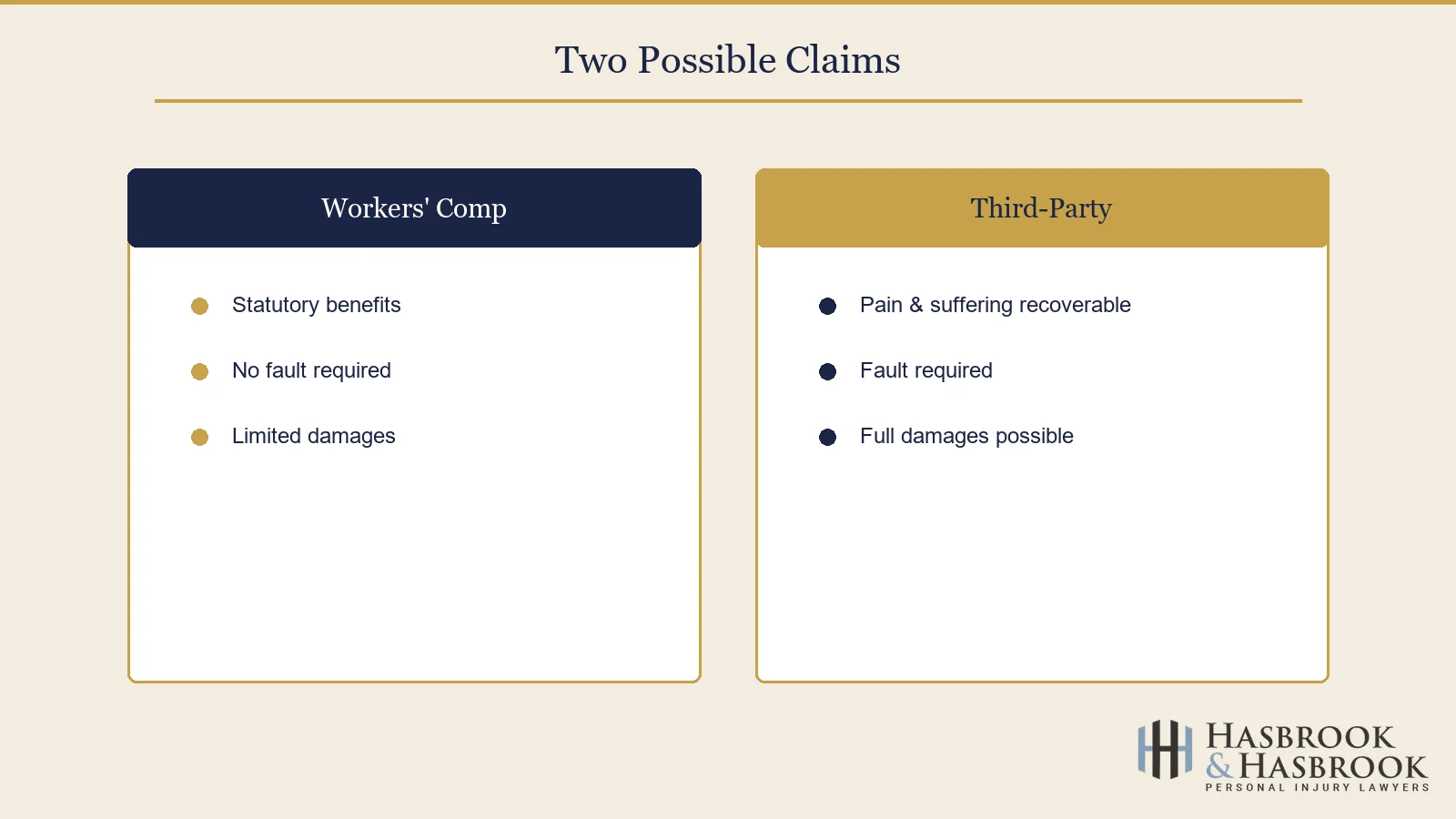
If you fell on the job, your primary remedy against your employer is workers’ compensation. Under 85A O.S. § 5, workers’ comp is the exclusive remedy for most workplace injuries, regardless of fault. It pays medical care and a portion of lost wages but does not pay for pain and suffering.
You may still have a separate third-party premises liability claim when someone other than your employer caused or controlled the hazard, for example a delivery driver who falls in a customer’s parking lot, or a contractor injured on defective stairs. A third-party claim runs alongside workers’ comp and recovers damages workers’ comp does not. The right call depends on who owned the property, who created the hazard, and your employment status at the time.
How insurance companies handle slip and fall claims
The property owner’s liability insurer is not on your side. Common tactics, expanded in our guide to insurance company negotiations:
- Recorded statement requests. An adjuster calls within days. You are not required to give one, and casual remarks like “I’m feeling okay” follow your case to trial.
- Disputing medical causation. The carrier argues injuries were pre-existing and demands years of medical history.
- Blaming you. Under 23 O.S. § 13, every percentage point of fault reduces your recovery. The insurer investigates footwear, phone records, and your familiarity with the property.
- Lowball offers and delay. Quick offers come before you understand the full extent of your injuries; stalling pushes you toward the deadline.
Having an attorney levels the field. For a sense of settlement versus trial considerations, see our guide.

Steps to take after a slip and fall accident
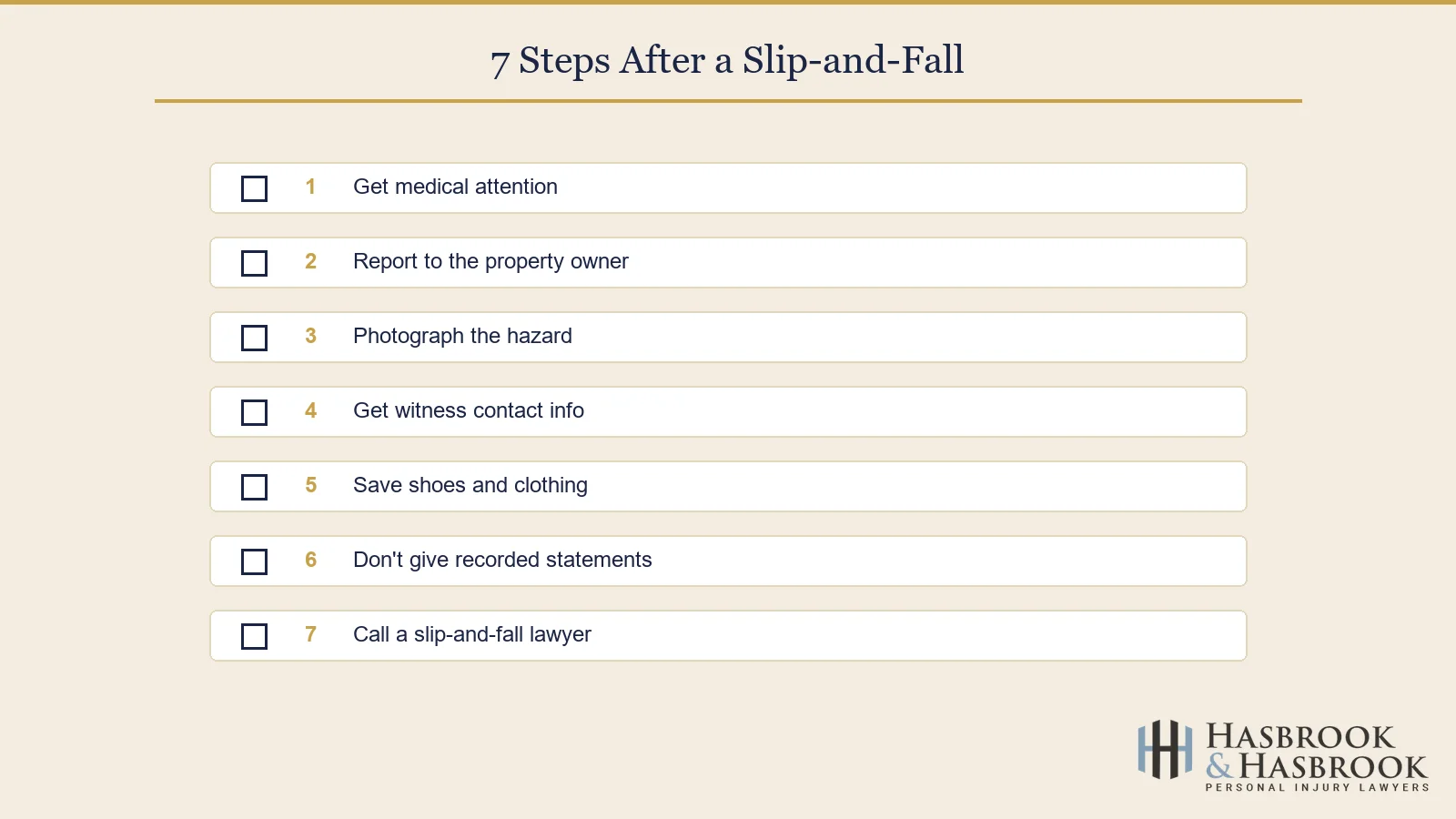
What you do in the first hours and days can make or break your case. For a printable checklist, see our guide on actions to take after a slip and fall.

- Get medical attention right away. Adrenaline can mask fractures, soft tissue tears, and concussions. A same-day medical record links the fall to your injuries.
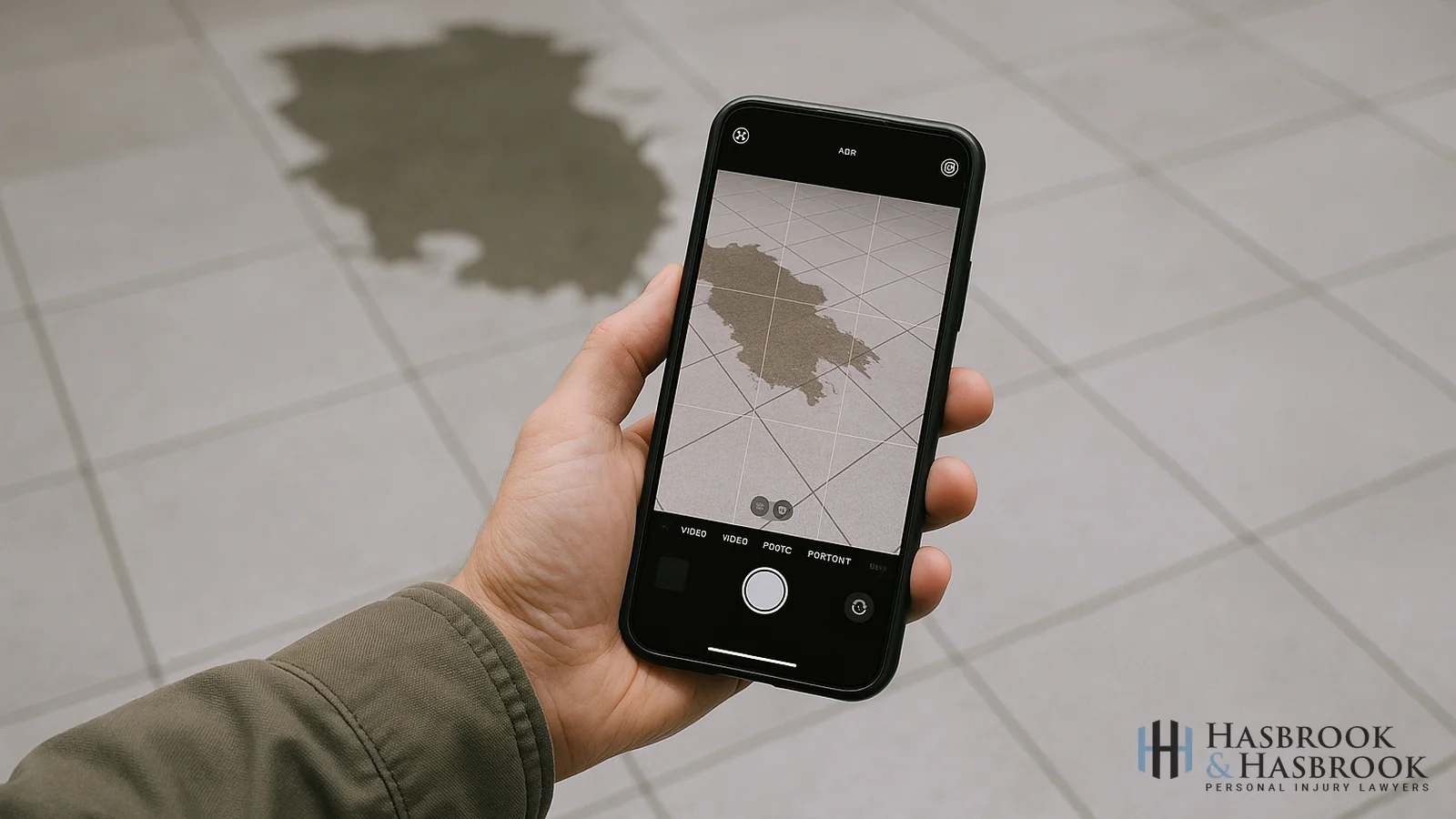
- Document the scene. Photograph the spot, the hazard, surrounding warning signs (or their absence), your injuries, and your clothing and footwear. Our guide on medical documentation after a slip and fall walks through this.
- Report the incident. Tell the manager. Ask for a written incident report and request a copy.
- Get witness information. Names, phone numbers, and email addresses for anyone who saw you fall or saw the hazard.
- Preserve physical evidence. Keep the shoes and clothing you were wearing. Do not wash or discard them.
- Decline a recorded statement. You are not required to give one to the property owner’s insurer.
- Contact a slip and fall attorney. Early legal involvement triggers a preservation demand for surveillance footage that is often overwritten within days. Cases that go to litigation may involve depositions about what you witnessed, your clothing, and your immediate report.
Why choose Hasbrook & Hasbrook for your slip and fall case
Our firm is family-run with decades of premises liability experience in Oklahoma courts. Here is what sets our firm apart in slip and fall cases:
- Deep premises liability experience. We have handled cases at grocery stores, big-box retailers, restaurants, apartment complexes, hotels, office buildings, and government properties across Oklahoma, including chains where we know the internal policies and defense playbooks.
- Oklahoma law and Oklahoma courts. We know the judges, the local procedures, and what Oklahoma juries expect.
- We prepare every case for trial. Insurers track which firms try cases. Willingness to take a case to verdict drives better settlements.
- 25% pre-litigation contingency fee, not 33% to 40%. On a $300,000 settlement, that puts an extra $25,000 to $45,000 in your pocket. We advance all costs (filing fees, experts, medical records). You owe nothing unless we recover. See our background on how contingency fee arrangements work.
We also handle related claims that may arise from the same incident, including premises liability claims in Oklahoma City, falls in long-term care facilities, serious injury claims from falls, and families seeking wrongful death recovery from a fatal fall.
Frequently asked questions about slip and fall cases in Oklahoma
How much is my slip and fall case worth in Oklahoma?
The value depends on injury severity, medical expenses paid, lost income, and the strength of evidence. Soft tissue injuries may settle for a few thousand dollars; fractures, traumatic brain injuries, or spinal damage can reach six figures or higher. We give a realistic range during a free consultation.
How long do I have to file a slip and fall lawsuit in Oklahoma?
Under 12 O.S. § 95, you have two years from the date of the accident. Miss the deadline and your right to sue is lost. Evidence preservation, especially surveillance footage, must happen in the first days and weeks.
Can I recover compensation if I was partially at fault for the fall?
Yes, when your share of fault is 50% or less. Under 23 O.S. § 13, your compensation is reduced by your assigned percentage. At 20% fault on a $200,000 case, you recover $160,000. Above 50%, you recover nothing.
What does it cost to hire a slip and fall lawyer in Oklahoma City?
Nothing upfront. We handle these cases on a 25% pre-litigation contingency fee, lower than the 33% to 40% charged by most Oklahoma personal injury attorneys. If we do not win, you owe nothing.
What should I do after a slip and fall accident?
Get medical attention, document the scene with photos, report the incident in writing, collect witness contacts, preserve clothing and footwear, decline a recorded statement, and contact a slip and fall attorney to send a preservation demand for surveillance footage.
What must I prove in a slip and fall case in Oklahoma?
Four elements: (1) the owner owed you a duty of care based on your status as invitee, licensee, or trespasser; (2) a dangerous condition existed; (3) the owner had actual or constructive notice; and (4) the condition caused your injuries. The notice element is the most contested part.
Can I sue a business if I slipped on a wet floor with no warning sign?
Yes, but the absence of a sign alone does not guarantee a win. You must still prove the business knew or should have known about the wet floor. An employee mopping without a sign is strong evidence; a drink spilled five seconds before you walked by may not give the business reasonable time to discover it.
Do I need a lawyer for a slip and fall in Oklahoma?
You are not legally required, but the evidence strongly favors doing so. Slip and fall claims are among the most actively contested personal injury cases in Oklahoma. See our background on choosing legal representation after a fall and preparing for your first consultation.

Ready to talk to an Oklahoma slip and fall lawyer?
If you were injured in a slip and fall on someone else’s property, you have a limited window to protect your rights and preserve evidence. Surveillance footage gets overwritten, witnesses forget details, and maintenance records disappear.

Call (405) 605-2426 to speak with us or reach our office through our contact form for a free consultation with the firm’s managing attorney. No fee unless we win. Let the team at Hasbrook & Hasbrook review your case, explain your legal options in plain language, and tell you what we think your claim is worth, with no obligation.
We serve clients throughout the Oklahoma City metro area, including those who need a slip and fall lawyer serving Midwest City.