Oklahoma’s child car seat law, 47 O.S. § 11-1112, requires children to ride rear-facing until age 2 or until they outgrow the seat’s rear-facing limits, use a harnessed car seat until age 4, and use a car seat or booster from 4 through 7 unless taller than 4 feet 9 inches. At 8, a properly secured seat belt is enough.
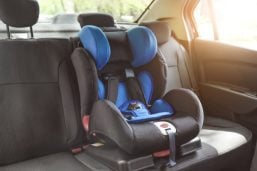 Our twins were born before our oldest turned two, so my wife and I spent a lot of time researching car seats. At the time, the Honda Odyssey was the only minivan that safely fit three car seats in one row. According to the CDC, car crashes are a leading cause of death for children: in 2017 alone, 675 children died in crashes nationwide, about 116,000 more were injured, and 35% of the children killed were not buckled properly.
This page covers what Oklahoma law requires at each age, what a ticket costs, and one rule most parents have never heard of: a car seat mistake cannot be used against your child’s injury claim.
Oklahoma car seat laws by age
The requirements turn on age and height, plus the limits printed on the seat itself. The age tiers are unchanged as of 2026; they date to the statute’s 2015 amendment.
| Child’s age | What the law requires | Source |
|---|---|---|
| Under 2 | Rear-facing car seat, until age 2 or the seat’s rear-facing weight or height limit, whichever comes first | § 11-1112(A)(1) |
| 2 through 3 | Car seat with a harness (forward-facing allowed once rear-facing is outgrown) | § 11-1112(A)(1) |
| 4 through 7 | Car seat or booster seat, unless the child is taller than 4 feet 9 inches | § 11-1112(A)(2) |
| 8 or older, or taller than 4 feet 9 inches | Properly secured seat belt | § 11-1112(B) |
Two details are easy to miss. Rear-facing is measured against the seat, not just the calendar: age 2 or the manufacturer’s rear-facing limit, whichever comes first, controls. And a qualifying seat is one that meets federal safety standard 49 C.F.R. § 571.213, so check the label and stay within its weight limit.
When can my child use a booster seat in Oklahoma?
Under § 11-1112(A)(2), a child who is at least 4 may ride in either a harnessed car seat or a booster; safety groups recommend keeping the harness until the child outgrows it. A booster stays required through age 7 unless your child passes 4 feet 9 inches first.
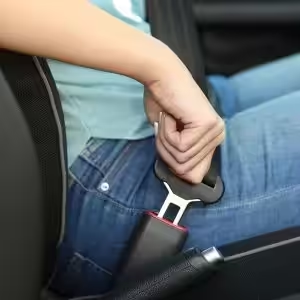
Before dropping the booster, run the seat belt fit test: the shoulder belt should cross the chest and shoulder without touching the neck or face, and the lap belt should rest snugly across the upper thighs, not the stomach. If the belt does not fit that way yet, keep the booster even after the law stops requiring it.



Can a child ride in the front seat in Oklahoma?
The statute does not set a front-seat age; it says how a child must be restrained, not where the child must sit. Still, keep children in the back seat as long as possible, and never put a rear-facing seat in front of an active passenger air bag. For more detail, see where your child should sit in the car.
What is the penalty for breaking Oklahoma’s car seat law?
The penalty is smaller than most parents fear. Under § 11-1112(F):
- The fine is $50, plus court costs.
- First offense, with proof you bought or borrowed a seat: the fine is suspended and court costs are capped at $15.
- No license points. The Department of Public Safety cannot assess points to your driving record for a car seat violation.
The law also has exemptions, listed in § 11-1112(C): vehicles that are not required to have seat belts (school buses, taxicabs, mopeds, motorcycles), ambulances and emergency vehicles, vehicles in which every seat belt is already in use, and children who cannot ride in a restraint for medical reasons documented in writing by a physician.
Can a car seat mistake be used against your child’s injury claim?
No. If your child is hurt in a crash, Oklahoma law does not let the insurance company use a car seat violation to reduce the child’s recovery. Under § 11-1112(D), a violation is not admissible in a civil case when the injured plaintiff is a child under 16, and in a claim brought on behalf of a young child, failure to properly restrain the child cannot be used in aggravation or mitigation of damages. In plain terms, your child’s claim turns on the injuries and the other driver’s conduct, not on a parent’s mistake with the harness or booster.
Adults are treated differently: for a plaintiff 16 or older, restraint evidence can come in. Expect the adjuster to run a parent’s claim and a child’s claim under different rules; we deal with that split constantly in Oklahoma City car accident claims.
Children’s cases also carry extra procedural steps. A minor’s settlement generally needs court approval of the minor settlement, and the first days after the wreck matter most; here is what to do when your child is injured in an Oklahoma crash. If the restraint itself left bruising or internal damage, that is its own claim category: seat belt injuries from a crash.

How do you choose between car seats and boosters?
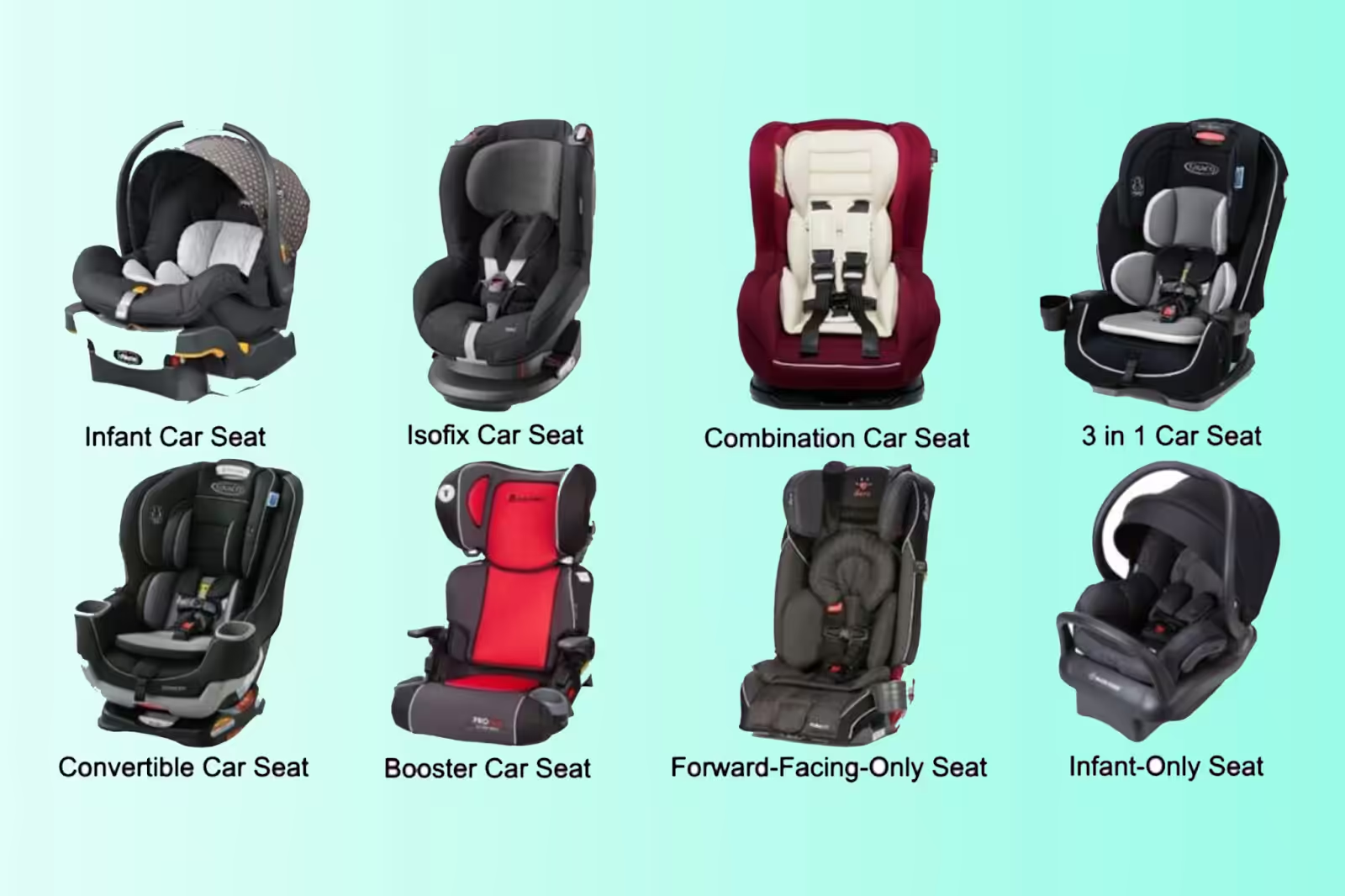
Match the seat to your child’s size and its label, and check the expiration date first. The main categories:
- Infant car seats: rear-facing only, sized for newborns and babies.
- Convertible car seats: start rear-facing, then turn forward-facing as your child grows.
- All-in-one car seats: convert from rear-facing to forward-facing to booster, covering the whole span the law regulates.
- Booster seats: raise your child so the adult lap and shoulder belt fit correctly.
Buckle the harness snug at the shoulders on every ride, and retire any seat that is expired or has been through a crash; a used seat is only safe if you know its full history. NHTSA’s car seat and booster seat finder compares seats by age and size and lists free inspection locations staffed by certified child passenger safety technicians.
Where can you get free car seat help in Oklahoma City?
Oklahoma runs real child safety support programs for parents, including help paying for a seat:
- Oklahoma Highway Safety Office child passenger safety program, which also offers financial assistance for car seats to families who qualify
- Oklahoma State Department of Health car seat safety program
- OU Health (OU Children’s Hospital)
- Central Oklahoma Healthy Start
Oklahoma car seat law FAQs
How long does my child have to ride rear-facing in Oklahoma?
Until age 2, or until the child reaches the rear-facing weight or height limit allowed by the seat’s manufacturer, whichever comes first. A forward-facing harnessed seat is the next step.
What are the booster seat requirements in Oklahoma?
Children at least 4 but younger than 8 must ride in a car seat or booster seat unless they are taller than 4 feet 9 inches. At age 8 or that height, a properly secured seat belt satisfies the law.
Is a used car seat legal in Oklahoma?
Yes, if it meets federal standards and still works as designed. Skip any seat that is expired, damaged, has been in a crash, or comes without its labels and history.
Can the insurance company reduce my child’s claim over a car seat violation?
No. For an injured child under 16, the violation is not admissible, and a young child’s restraint status cannot be used to cut damages under § 11-1112(D).


Talk to an Oklahoma City child injury lawyer
 If your child was hurt in a wreck, get answers before you talk to any adjuster. At Hasbrook & Hasbrook, we handle child injury claims in Oklahoma City, including the car seat and seat belt questions that come with them. The consultation is free, you pay nothing up front, and you owe no fees unless we recover money for you. Call (405) 605-2426 or get help with your child’s car seat claim.