Big-box retail stores move millions of Oklahoma shoppers through hundreds of thousands of square feet of constantly trafficked floor space. Refrigerated aisles drip condensation onto tile, food service stations generate spills, garden centers track in water and soil, and busy entrances collect rain and sleet. When a fall happens, the injured person faces a corporate claims operation built to minimize payouts. What separates successful claims from failed ones is usually the gap between what corporate policy requires and what happens at store level.
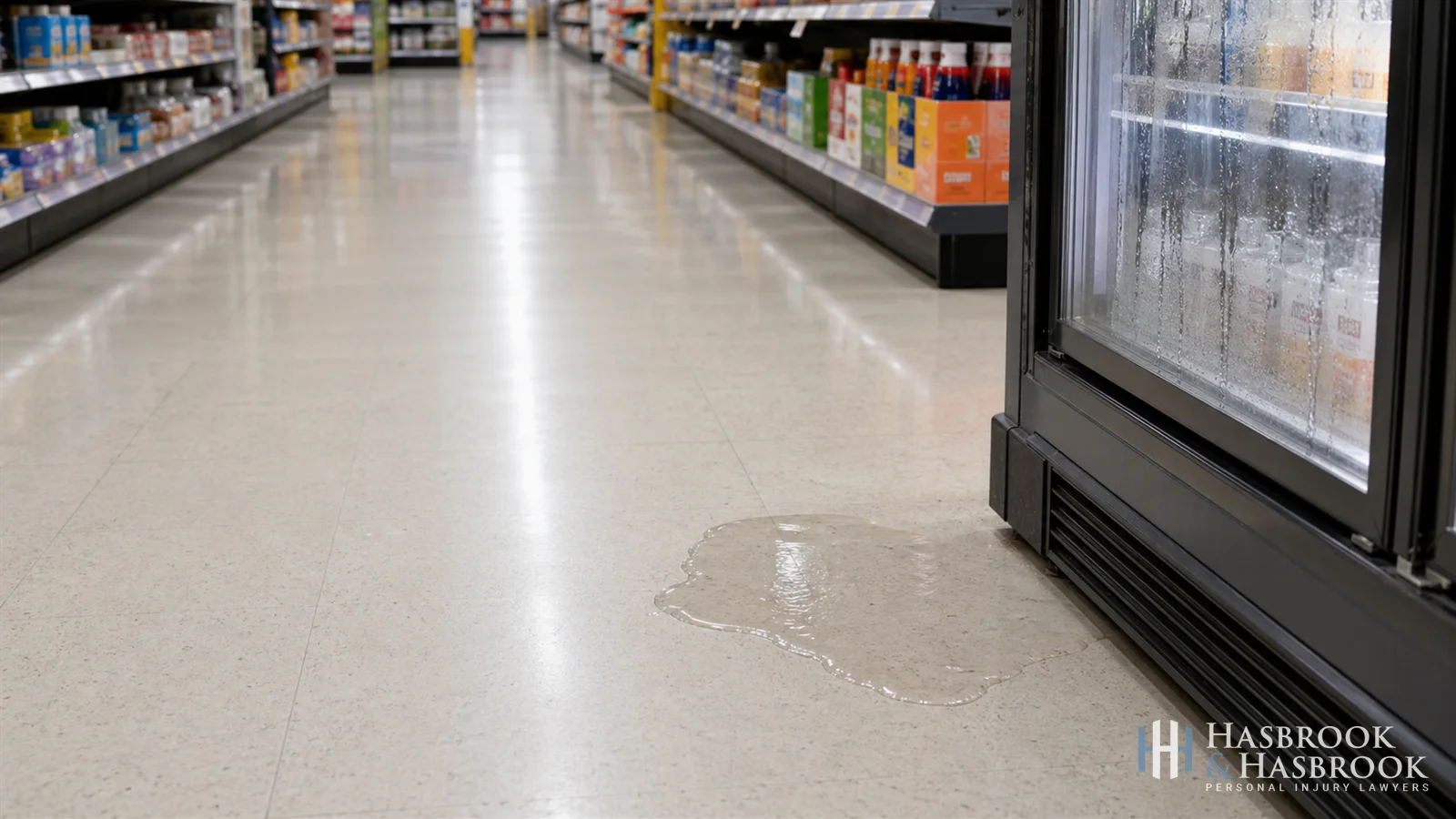
Where slip and fall accidents happen in big-box retail stores
Certain zones inside large-format stores produce injuries at higher rates than others. Knowing exactly where a fall occurred matters because each location carries its own inspection expectations under the store’s own operating procedures.
- Entrances and exits: Rain, sleet, and snow track inside on shoe soles. Wet mats and bare tile near automatic doors are among the most common injury sites in retail falls.
- Refrigerated aisles: Cooler doors and freezer units produce condensation that pools in front of the equipment. Dairy and frozen food sections are recurring hazard zones year-round.
- Garden center transitions: Soil, mulch, water from hose-downs, and uneven surfaces between outdoor and indoor sections create overlapping hazards in a short stretch of floor.
- Food service and sample areas: Demonstrations, deli counters, and self-service stations produce spills that may go unaddressed during busy store hours.
- Auto and hardware departments: Oil, coolant, and lubricants from damaged packaging spread into near-invisible slick films that remain hazardous well after the original spill thins out.
Knowing the steps to take right after a fall in any of these locations preserves the evidence a claim depends on.



What Oklahoma law requires of property owners
A big-box retailer owes customers the highest duty recognized under Oklahoma negligent property maintenance law: the invitee duty. Every shopper who enters during business hours is an invitee. That duty requires the store to inspect regularly for dangerous conditions and to either repair them or post a warning before someone is hurt.
Notice is where most retail fall claims turn. Actual notice means an employee saw the hazard. Constructive notice means it existed long enough that a reasonably careful retailer would have found it. Our page on notice proof in Oklahoma slip-and-fall cases explains the evidence supporting each type.
Corporate policies versus what actually happens at store level
Every major retail chain publishes internal operating procedures that set inspection schedules, hazard-reporting requirements, and response times. The store you walked into operates under its own manager, staffing levels, and daily routines. Those realities often diverge from what the corporate manual requires.
A company-wide policy might mandate aisle safety checks every 30 minutes. The store’s actual sweep logs on the day of your fall might show a three-hour gap. That discrepancy is not a procedural footnote; it is evidence the store fell short of the standard of care it set for itself.
Discovery in big-box cases typically pursues three document categories: the applicable corporate inspection SOP, the store-level sweep logs for the relevant period, and any internal communications about the hazardous area. Our slip-and-fall intake checklist covers the information to gather immediately after the fall.
Surveillance footage and how retailers retain it
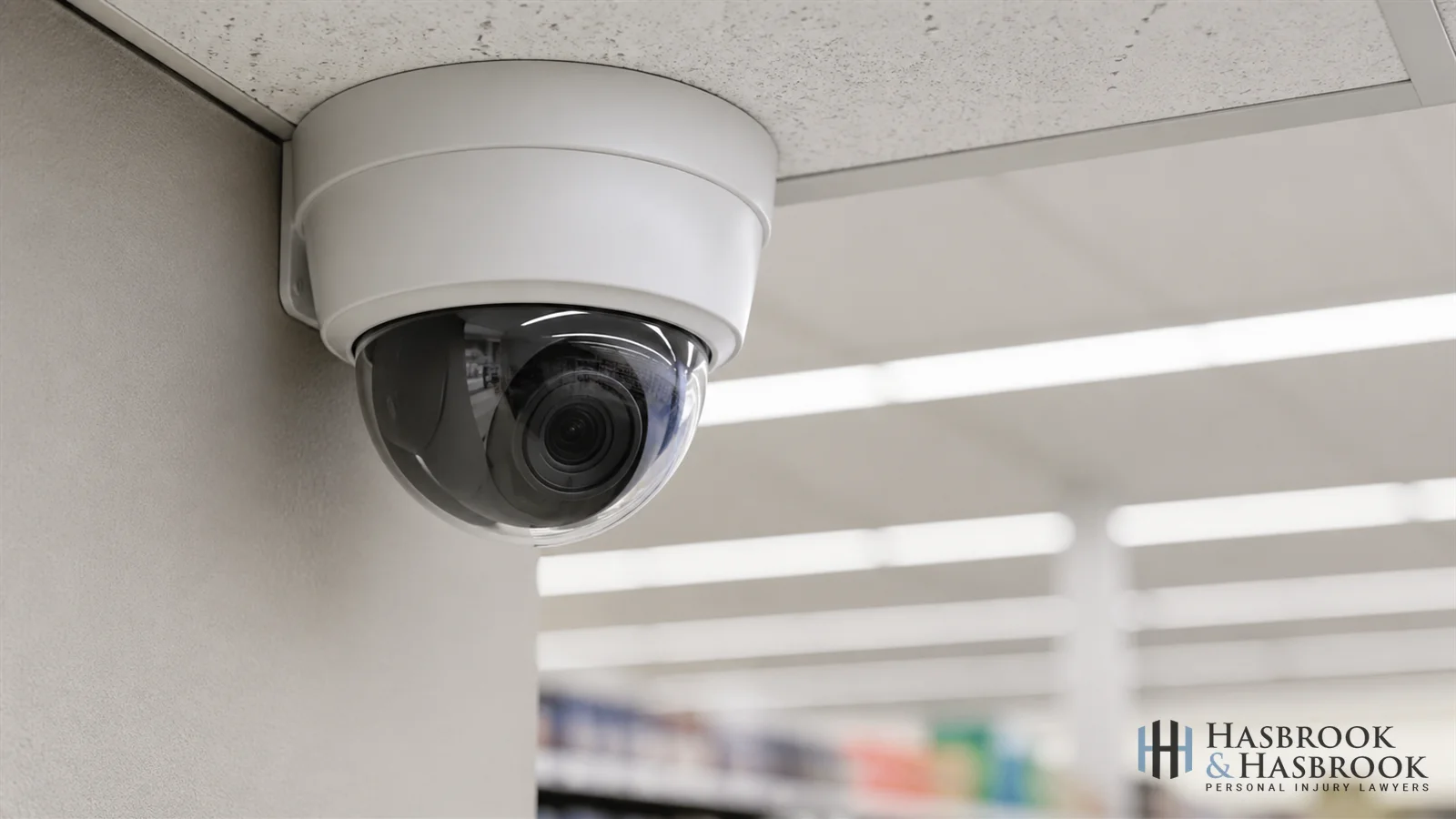
Large retail stores run extensive camera networks throughout their facilities. Those systems almost certainly recorded conditions in the area where your fall occurred. The controlling question is how long the footage survives before the system overwrites it.
Oklahoma has no statute requiring private businesses to retain security footage for a set period. In practice, big-box chains run on rolling overwrite schedules: 7 to 14 days for older analog systems, 30 to 60 days for most modern digital systems, and up to 90 days at some higher-volume locations. A written preservation demand sent to the store’s corporate legal department creates a legal duty to hold the footage. Our FAQ on security camera footage in premises cases covers what that demand accomplishes and when to send it. When footage survives, it shows how long the hazard sat on the floor, whether any employee walked past it, and whether warning cones appeared before the accident. The slip-and-fall evidence preservation checklist details the full set of documents to protect.


Sweep logs and what discovery can reveal
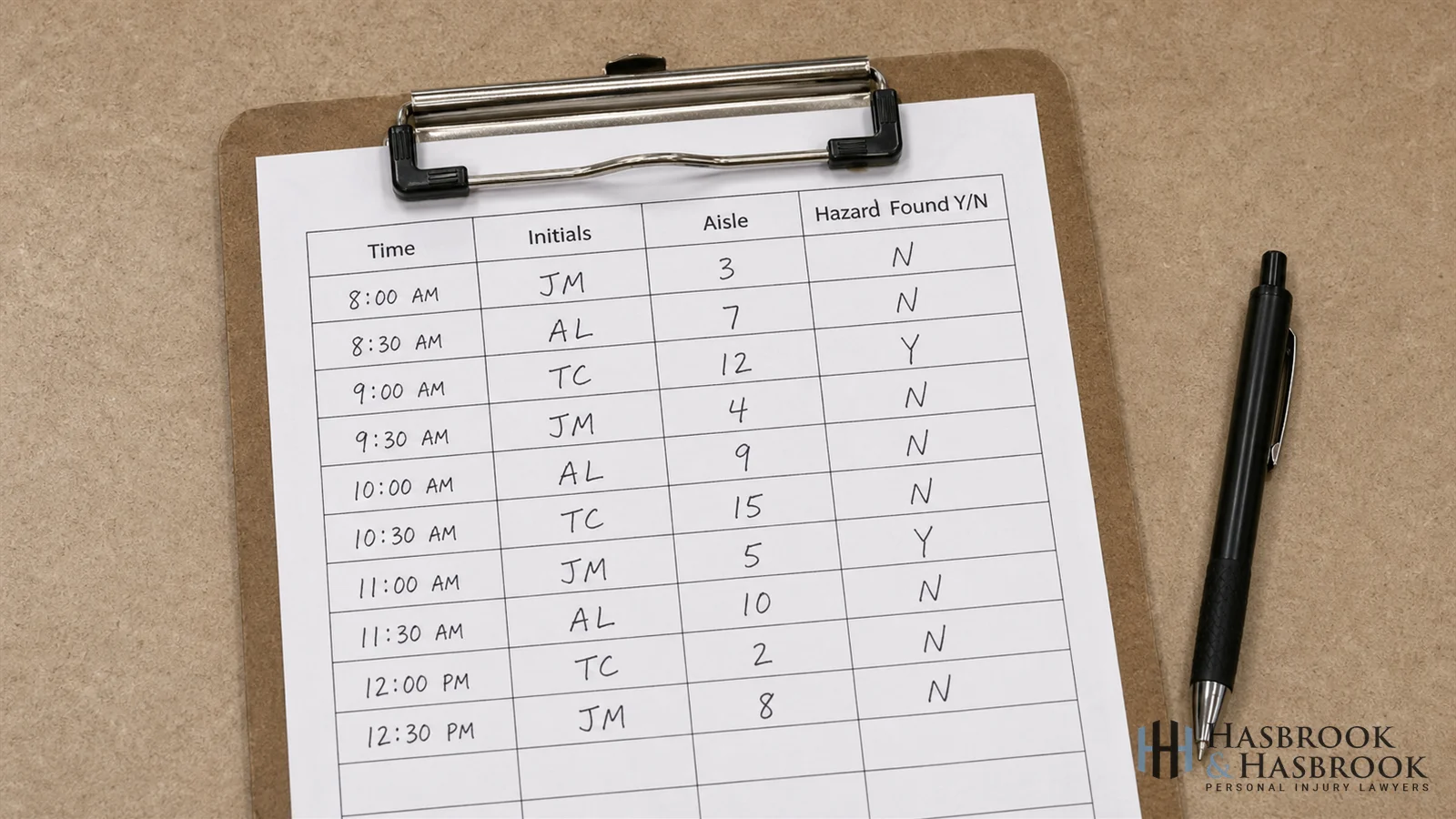
Sweep logs document who checked which areas, at what time, and whether any hazard was noted. Most large chains require employees to record these checks on paper or through a tablet-based system. Those records are discoverable in litigation.
When you request them, one of three patterns typically emerges: a logged inspection just before the fall, suggesting the hazard appeared afterward; a gap spanning the window when the hazard was likely on the floor, supporting constructive notice; or records that are missing, inconsistent, or not produced, which raises separate evidentiary issues. Our notice proof and documentation guide shows how attorneys build a constructive notice timeline from inspection records, incident reports, and witness accounts. A corporate SOP requiring hourly checks against store logs showing a four-hour gap is a difficult defense.
Common injuries from retail store falls
Falls account for more emergency department visits from non-fatal injuries than any other cause, according to the Centers for Disease Control and Prevention. On hard tile floors, most serious retail fall outcomes involve the head, spine, hip, and wrist.
- Hip and wrist fractures: Instinctive bracing loads the wrists. Hip fractures often require surgery. Our page on broken bone injuries covers the documentation these claims require.
- Head injuries: A hard floor impact can produce a concussion or more serious concussion and TBI claims symptoms that appear hours or days after the fall.
- Spinal injuries: Compression on landing and sudden torque can produce disc herniations and, in serious cases, paralysis injuries with lasting neurological effects.
- Knee and shoulder damage: Twisting to catch yourself tears ligaments. Landing on an outstretched arm stresses the rotator cuff and shoulder joint.
Reviewing the types of damages available for these injuries helps frame the full scope of a claim.
What you have to prove to win a claim
To recover from a retailer in Oklahoma, you must establish duty, breach, causation, and actual damages. Notice is where most cases turn. You must show the store either knew about the specific hazard or that it existed long enough that a properly diligent retailer would have found it. Our FAQ on proving a store knew about the hazard breaks down the evidence each type of notice requires.
Some jurisdictions apply a mode-of-operation rule, which would let a plaintiff establish liability by showing a retailer’s self-service format creates a foreseeable recurring risk of hazards, without proof of notice for a specific condition. Oklahoma courts have not expressly adopted this doctrine. Building a case through sweep logs, surveillance, and witness accounts remains the established path. This notice requirement is part of what makes these claims more difficult than they initially appear.

Comparative fault and the open-and-obvious defense
Retailers routinely raise two defenses. The open-and-obvious defense argues the hazard was visible enough that a reasonable shopper would have avoided it. Oklahoma courts treat this as a factor in the comparative fault analysis, not a complete bar to recovery.
Under 23 O.S. § 13, Oklahoma follows modified comparative fault. You can recover as long as your own negligence does not exceed 50 percent of the total fault. Recovery is barred only when your negligence is of a greater degree than the defendant’s. Our page on comparative fault in slip-and-fall cases explains how fault is allocated in retail fall claims. For a full list of defenses the store may raise, our practice page covers the range.
How long you have to file a slip-and-fall claim
Oklahoma’s personal injury limitations period is two years from the date of the fall, under 12 O.S. § 95. Missing that deadline almost always ends the claim. Our post on Oklahoma’s statute of limitations for personal injury explains exceptions, including tolling for minors. A separate breakdown covers how long after a fall you can sue in specific circumstances.
Talk to an Oklahoma City slip-and-fall attorney
our trial attorneys handle slip-and-fall claims against large retail chains throughout Oklahoma. We know the corporate claims process these stores use, which documents to request, and the tight timeline for preserving footage and inspection records. Call (405) 605-2426 or use our our personal injury attorneys for a free consultation.
For retailer-specific resources, see our pages on Walmart slip-and-fall cases in Oklahoma City and Target slip-and-fall claims.

Frequently asked questions
Does the store have to have known about the hazard before I can sue?
No. Constructive notice is sufficient. You must show the hazard existed long enough that a store conducting reasonable inspections would have found it. Sweep logs showing an inspection gap, surveillance capturing the hazard in place, and witness accounts all support constructive notice. Our FAQ on whether you need witnesses explains what eyewitness testimony adds.
Can I still recover if I was partially at fault for the fall?
Yes, in most cases. Oklahoma’s modified comparative fault rule allows recovery as long as your fault does not exceed 50 percent of the total. At 30 percent fault, you recover 70 percent of your proven damages. Our FAQ on what happens when you share fault in a fall walks through the calculation with examples.
How do I preserve the store’s surveillance footage before it is deleted?
Send a written preservation demand to the store’s corporate legal or risk management department as soon as possible. Courts recognize this as triggering a duty to hold the footage. An attorney can send the letter the same day you retain them. Waiting more than two weeks significantly raises the overwrite risk.
Are big-box cases harder to win than cases against smaller stores?
They can be more complex. According to the Insurance Information Institute, slip-and-fall accidents are among the most common premises liability claims against commercial businesses, and large retailers respond with professional adjusters and established defenses. They may contact you before you retain an attorney. That same corporate structure generates a paper trail a small store would never have: inspection SOPs, sweep logs, and incident databases. When those records show a gap between corporate requirements and store-level practice, they become the plaintiff’s most powerful evidence. Our FAQ on maximizing your slip-and-fall recovery covers how to build the strongest case.