Filing an insurance claim after an Oklahoma car accident moves on two tracks: a property damage claim for your vehicle and a personal injury claim for medical care, lost income, and pain. What you do in the first 72 hours, what your policy covers, and where insurers tend to delay or deny separates a clean payout from months of back and forth.

Oklahoma is a fault state, so the at-fault driver’s liability carrier pays for the other driver’s losses. Your own carrier may also play a role through collision, medical payments (MedPay), or uninsured/underinsured motorist (UM/UIM) coverage. we represent injury victims handle Oklahoma City car accident claims from first carrier call through settlement or trial. The guide below covers the process the way we explain it to new clients.

Immediate Steps After an Accident

What you do at the scene shapes every later conversation with the carrier. Adjusters open a file the moment they get notice, and gaps in the early record are the first thing they use to discount a claim.

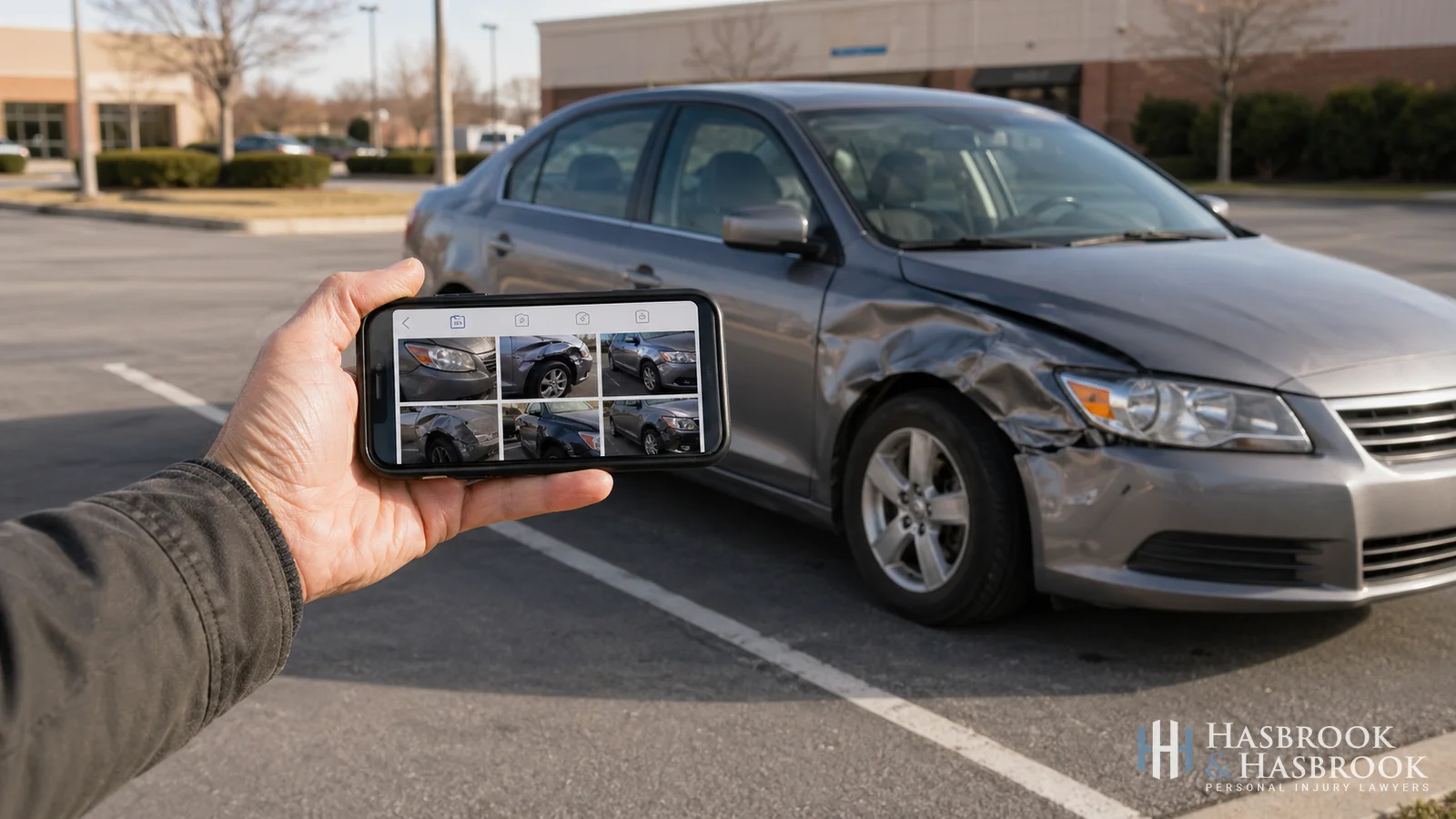
Hand holding smartphone documenting car accident scene

  1. Call 911 from a safe spot. Oklahoma drivers must report any wreck involving injury, death, or apparent damage above $500 under 47 O.S. § 10-107. The officer’s collision report anchors the claim file.
  2. Exchange information. 47 O.S. § 10-104 requires every driver to share name, address, registration, and insurance. Photograph the other driver’s license and insurance card.
  3. Photograph everything. Vehicle positions, debris, skid marks, traffic controls, and visible injuries. Pictures taken before cars are moved are the best evidence in a contested liability claim.
  4. Get medical care the same day. Soft tissue injuries often surface 24 to 72 hours later. A same-day visit links symptoms to the wreck in a way an adjuster cannot easily challenge.
  5. Save everything in one folder. Collision report number, repair estimates, prescription receipts, mileage logs, and any texts with the other driver.

For a deeper checklist, see what to do immediately after a car accident.

What Auto Insurance Is Required in Oklahoma?

Oklahoma’s compulsory liability law, 47 O.S. § 7-204, sets the floor every driver must carry:

  • $25,000 bodily injury per person
  • $50,000 bodily injury per accident
  • $25,000 property damage per accident

These are minimums, not recommendations. A single ER visit and a totaled vehicle can blow through a $25,000/$25,000 policy in an afternoon. When the at-fault driver carries only state minimums, the rest of your loss comes from your own UM/UIM coverage. Our UM/UIM reference covers stacking and how UIM interacts with liability limits under 36 O.S. § 3636. If the other driver had no insurance, see handling an uninsured driver.

Notify Your Insurance Company

Almost every auto policy has a “prompt notice” clause, so failing to report the wreck can give your own carrier grounds to deny coverage. Notify your insurer within 24 to 72 hours, even if you do not plan to file a first-party claim. On the first call, share the basics: date, time, location, the other driver’s insurer and policy number, the collision report number, and that you were injured and are seeking treatment. Skip the recorded statement, fault percentage guesses, and any claim-value estimate.

You owe your own carrier reasonable cooperation, but you owe the at-fault driver’s carrier nothing beyond identifying yourself. See recorded statements and talking to the other driver’s insurance company.

Insurance Carrier Account Registration and Claim Numbers

Most major insurers route first-notice-of-loss through a phone line plus an online portal. Setting up the portal on day one gives you a paper trail of every upload and settlement letter. Common carrier intake numbers and portals:

Write down the claim number; reference it on every later call.

The Insurer’s Process: How Adjusters Evaluate Your Claim

Insurance claims process diagram for Oklahoma car accidents

Once a carrier opens a file, the work splits between two adjusters who rarely talk to each other:

  1. Property damage adjuster. Orders an estimate, decides repair vs. total loss, and calculates actual cash value if totaled. See totaled vehicles and diminished value claims.
  2. Bodily injury adjuster. Waits. Insurers will not seriously evaluate an injury claim until you finish treatment or reach maximum medical improvement, because file value depends on final bills, diagnosis, and any permanent impairment.

Behind the scenes, the bodily injury adjuster runs the file through scoring software (Colossus and Mitchell ClaimIQ are most common), which produces a recommended settlement range from ICD codes, treatment type, and impairment ratings. That range is what you are negotiating against, which is why diagnosis specificity matters more than raw bill total. See how insurers process accident claims.

Handling an Insurance Claim for Car Accident Injuries

Treatment to settlement timeline infographic

The injury claim follows a predictable arc: treatment, records gathering, demand letter, negotiation, release. Once treatment ends, request complete records and itemized bills from every provider plus a narrative report on causation and prognosis. The written demand lays out liability, the medical narrative, bills, lost wages, and a settlement number with a deadline. See what happens after the demand letter is sent.

The first counter is almost always low. The gap between first offer and final number on a documented file is often two to four times. Our guide to avoiding lowball offers explains what counts as movement. Settlement is final: once you sign the release you cannot reopen the claim, with narrow exceptions covered in reopening a settled claim.

Settle property damage first; settle the injury claim last. Property damage releases are narrow and routine. Bodily injury releases close the entire claim, and signing one before treatment ends is the most common mistake we see. See the average car accident settlement and collision damage compensation for ranges.

Common Challenges in Car Accident Insurance Claims

Even a well-documented claim runs into a few standard insurer plays:

  • Disputed liability. Oklahoma uses modified comparative fault under 23 O.S. § 13: you recover if you are 50 percent or less at fault, and your award drops by your share. Adjusters routinely assign 10 to 30 percent fault to shave the file. See how insurers determine fault and how fault percentages affect recovery.
  • Lowball offers. First offers on documented soft tissue cases often come in 30 to 50 percent below actual claim value. The fix is documentation, not louder demands. Responding to a lowball offer covers the counter strategy.
  • Delay tactics. Repeat requests for the same records and “still evaluating” updates are designed to wear claimants down. Oklahoma’s Unfair Claim Settlement Practices Act (36 O.S. § 1250.5) bars the worst conduct; patterned delay can support a bad-faith claim.
  • Denials. A denial letter must state a reason. Many denials are based on incomplete records or a misread of the policy. Insurance bad faith covers when a denial crosses the line.
  • Surveillance and social media. Insurers hire investigators on larger claims. Anything posted publicly surfaces in the file. The carrier may also subpoena cell phone records.

Filing Deadlines and the Oklahoma Statute of Limitations

Oklahoma gives a personal injury plaintiff two years from the date of the wreck to file a lawsuit under 12 O.S. § 95. Property damage runs two years as well. Two traps:

  • “Filing a claim” is not “filing a lawsuit.” If negotiations drag past two years without a court filing, the claim is dead even if the adjuster is still emailing you. See the car accident deadline and the Oklahoma statute of limitations.
  • Government vehicles change the math. A claim against a city, county, or state vehicle falls under the Governmental Tort Claims Act, which requires written notice within one year. See governmental tort claims for the notice form.

Benefits of Legal Help in Insurance Claims

Hands reviewing demand letter and medical records

Not every claim needs a lawyer. A clear-liability rear-end with a $1,500 ER visit and a fixable bumper usually settles fine alone. The picture changes when disputed fault, surgery or imaging findings, lost wages beyond a couple of weeks, minimum-limits exposure with UIM in play, or an outright denial enter the file.

The Insurance Research Council’s 2014 Attorney Involvement in Auto Injury Claims study found represented claimants received average net payouts roughly 40 percent higher than unrepresented claimants on comparable injury claims. The study has caveats, but it tracks with what we see locally: a documented file in a structured demand outperforms an unrepresented negotiation. See handling a claim on your own and signs you need a lawyer.

Frequently Asked Questions

How long does the insurance claim process take in Oklahoma?

A property damage claim on a routine wreck closes in two to four weeks. An injury claim typically runs four to nine months, because most of that time is treatment. Once a complete demand goes out, a carrier should respond within 30 to 60 days.

What if the other driver is uninsured or underinsured?

If you carry UM/UIM coverage, you file the claim with your own carrier. It is evaluated on the same liability and damages standards as a third-party claim, but you are dealing with your own insurer. Oklahoma allows stacking in some scenarios, so policy details matter.

Do I have to give a recorded statement to the insurance company?

You owe your own insurer reasonable cooperation, which usually includes a recorded statement once treatment has begun. You owe the at-fault driver’s insurer nothing of the sort. Decline politely or refer them to your attorney.

Can I still file a claim if I was partly at fault?

Yes, as long as your share of fault is 50 percent or less. Oklahoma’s modified comparative fault rule reduces your recovery by your fault percentage. A $60,000 claim with 20 percent claimant fault pays $48,000.

What if the insurance company denies my claim?

Read the denial letter, identify the stated reason, and respond in writing with documents that address it. Many denials are paper problems, not merit problems. If unsupported, the next step is a Department of Insurance complaint, a bad-faith claim, or a lawsuit. File complaints at oid.ok.gov.

Should I accept the first settlement offer?

Almost never on an injury claim. The first offer reflects the carrier’s lowest-defensible internal valuation, not the file’s actual value. See accepting a settlement offer for the full checklist.

Talk to an Oklahoma City Car Accident Lawyer

Insurance claims reward documentation, patience, and a clear read of when the carrier is negotiating in good faith and when it is stalling. If your claim has stalled, been denied, or feels off, a free consultation clarifies whether the file needs a lawyer or just a different next step. Call our firm at 405-605-2426. We handle Oklahoma City car accident insurance claims on contingency: no fee unless we recover for you.

Hasbrook and Hasbrook Lawyers

Contact Hasbrook & Hasbrook Today

If you or a loved one has been injured due to someone else’s negligence, don’t wait to seek the legal help you need and deserve.

The experienced personal injury attorneys at Hasbrook & Hasbrook are here to fight for your rights and maximize your compensation.

Contact us today to schedule your free consultation and take the first step toward securing the justice you deserve.

Call today for a free case review 405-605-2426
Hasbrook & Hasbrook logo
Oklahoma City Office
400 N Walker Ave #130, Oklahoma City, OK
Email
cth@oklahomalawyer.com
Office Hours
Mon to Fri: 8 AM to 5 PM
Saturday: 8 AM to 5 PM
Sunday: Closed
Areas We Serve
Our personal injury lawyers at Hasbrook & Hasbrook represent people injured in accidents throughout Oklahoma, including: Oklahoma City, Bethany, Del City, Ardmore, Owasso, Enid, Edmond, Muskogee, Stillwater, Shawnee, Ponca City, Norman, Moore, Midwest City, Lawton, Jenks, Duncan, Broken Arrow, Bixby, Bartlesville, Yukon, and Tulsa.
About Our Firm
We believe in holding insurance companies accountable. Accountability enhances our community’s safety and is pivotal in preventing additional needless tragedies. As personal injury attorneys, we choose to represent people instead of corporations and insurance companies. Our mission emphasizes the importance of safety standards and justice, seeking to prevent tragedies and transform lives impacted by negligence. Through accountability, we ensure a safer community for all of us.
How can we help?
Main Contact Form