A side-impact, or T-bone, truck accident happens when a commercial truck strikes the side of a passenger vehicle, or the reverse, most often at intersections and interchange ramps. Because a loaded truck can weigh 80,000 pounds against a 3,000 to 4,000-pound car, these crashes cause unusually severe injuries. Oklahoma generally requires filing suit within two years under 12 O.S. § 95.
What Is a Side-Impact Truck Accident
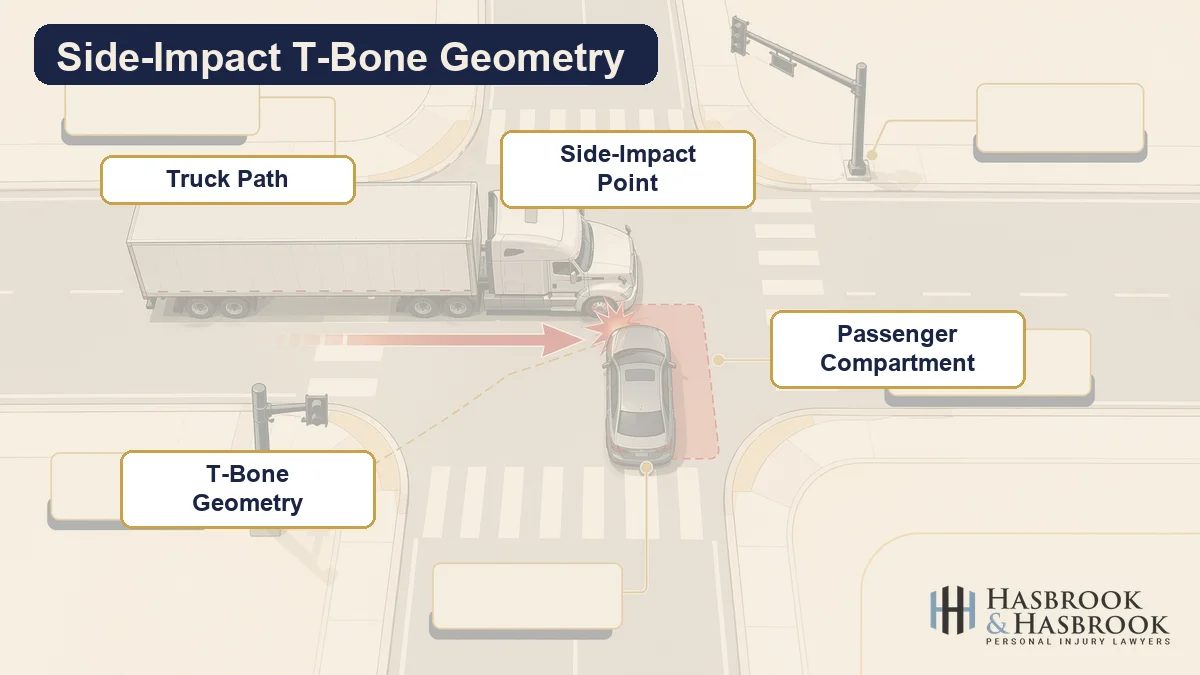
A car door was never built to absorb a crash the way a bumper is. That gap in protection defines a side-impact truck wreck, whether the truck squares up on a vehicle crossing an intersection (a T-bone hit) or drifts sideways into a lane it doesn’t own (a sideswipe). Either way, whatever crumple-zone engineering a car has up front never comes into play, because the energy lands directly on the passenger compartment instead.
The mismatch in size makes it worse. A loaded truck can run 80,000 pounds against a 3,000 to 4,000-pound sedan, so the energy transferred into the smaller vehicle’s side is far beyond what door beams and side airbags are built to absorb.



Where and Why These Crashes Happen in Midwest City
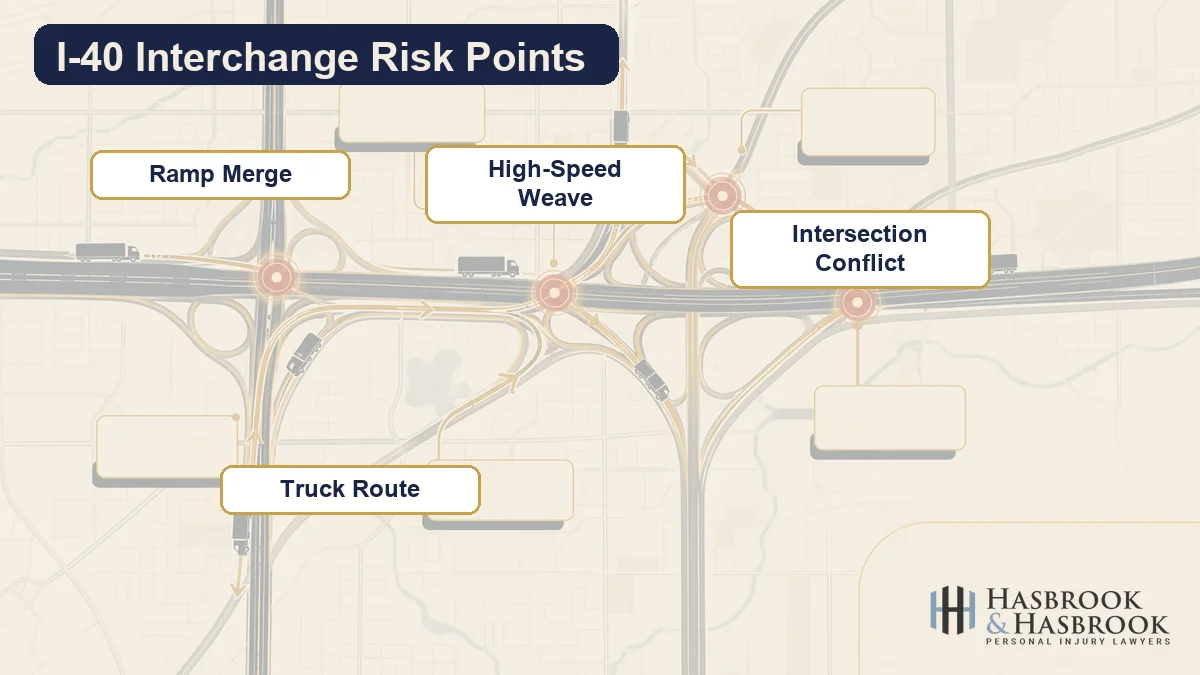
Around Midwest City, the pattern repeats at the same handful of locations: ramps feeding I-40, the interchange where I-40 meets Air Depot Boulevard, and the stretch of SE 29th Street where commuter traffic and freight share the same lanes. The recurring triggers are familiar ones: a truck that doesn’t yield before entering an intersection, a driver who runs a red light, a merge made without clearing the trailer’s wide no-zones first (our page on Midwest City no-zone truck collisions covers that scenario separately), a driver distracted by dispatch traffic or onboard logging systems, impairment, and the ice or crosswind conditions Oklahoma winters bring to the I-40 corridor.
Who Can Be Held Liable, and Oklahoma’s Comparative Fault Rule
Fault often runs deeper than the driver. A trucking company that hires drivers with known safety violations, sets delivery schedules that pressure drivers to skip rest, or fails to train drivers on intersection protocol can be independently liable for negligent hiring or negligent supervision, separate from whatever the driver did behind the wheel. If a shifted or improperly secured load altered the truck’s handling at the point of impact, the shipper or loader may share liability too. Our FAQ on suing the driver versus the trucking company walks through how that decision gets made.
Oklahoma follows a modified comparative negligence rule, 23 O.S. § 13: your recovery is reduced by your own share of fault, but it is barred only if your fault is greater than the combined fault of everyone else responsible for the crash. Being partly at fault for a side-impact collision does not, by itself, end your claim.
Filing Deadlines, Including Claims Against Government Trucks
The general deadline noted above has an important exception when the truck involved belongs to a government entity, for example a city fleet vehicle, a state agency truck, or a Tinker Air Force Base contractor operating under government authority. In those cases, the Governmental Tort Claims Act, 51 O.S. § 156, requires written notice of the claim within one year of the loss as a prerequisite to suit, a separate and shorter deadline that can extinguish the claim long before the ordinary filing window closes.


Injuries and Evidence in Side-Impact Truck Cases
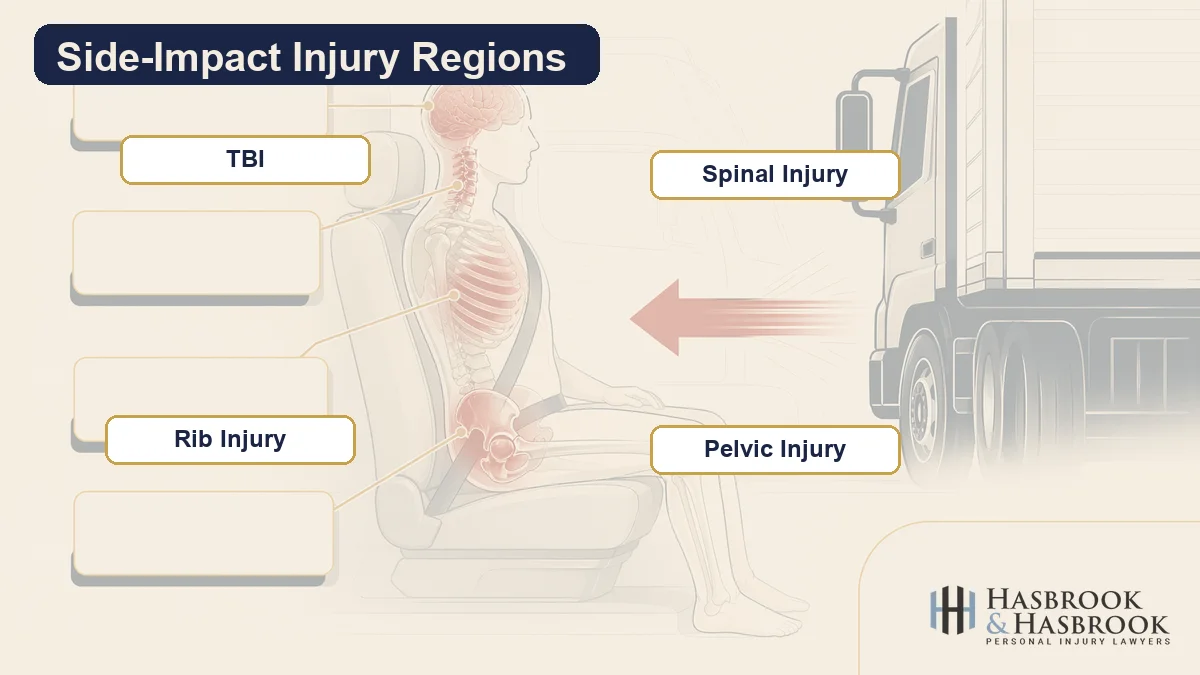
Where the force lands shapes the injury. A door intrudes at head height and shoulder height, not the areas a car is designed to protect, so people caught in these wrecks tend to show up at the hospital with a recognizable cluster of harm: closed-head trauma, disc and vertebral damage in the neck and lower back, broken ribs severe enough to compromise breathing, lacerated organs from the compartment crushing inward, and pelvic fractures where the door meets the hip.
Evidence in these cases can disappear within days. Intersection cameras run by the City of Midwest City or ODOT, along with signal-timing data, are typically overwritten on short cycles, so a preservation demand needs to go out within 48 to 72 hours. Hasbrook & Hasbrook sends those demands early, along with requests for the truck’s federally required electronic logging device data, dash-cam footage, and the driver’s prior violation history, before a carrier’s retention window closes.
Damages Available After a Side-Impact Truck Crash
What’s recoverable splits into the billable losses (medical treatment, future care, lost income and earning capacity) and the losses that don’t come with a receipt (pain, disfigurement, the loss of a normal life). One thing sets a truck claim apart from an ordinary car-crash claim before any of that math starts: carriers hauling general freight are required to hold at least $750,000 in liability coverage under federal financial-responsibility rules, and many carry considerably more.
Where a carrier acted with reckless disregard, for example ignoring a known pattern of unsafe driving, a jury may also award punitive damages against the trucking company under 23 O.S. § 9.1. If a family member died in the crash, surviving relatives may bring a wrongful death claim for a fatal Midwest City truck collision under 12 O.S. § 1053.
Frequently Asked Questions About Midwest City Side-Impact Truck Accidents
How do I know whether the truck had the right of way?
Traffic signals, yield signs, and the road rules in effect at the time of the crash control right-of-way. Traffic camera footage and signal-timing records are usually the clearest evidence, and a red-light violation or failure to yield generally supports a finding of negligence against the truck driver.
How long does a side-impact truck case usually take?
Most cases resolve in six months to two years, depending on how contested liability is and how long medical treatment lasts. Cases needing accident reconstruction or multiple depositions typically take longer.
What does it cost to hire a truck accident lawyer?
These cases are handled on a contingency fee basis: no fee is owed unless we recover money for you.

Talk to a Midwest City Side-Impact Truck Accident Lawyer
Hasbrook & Hasbrook represents people hurt in side-impact truck collisions across Midwest City and handles other Midwest City truck accident claims as part of our broader truck accident lawyer representation across the metro. Consultations cost nothing, and you owe no fee unless we recover money for you.
Call (405) 605-2426 or start a free side-impact case review online.